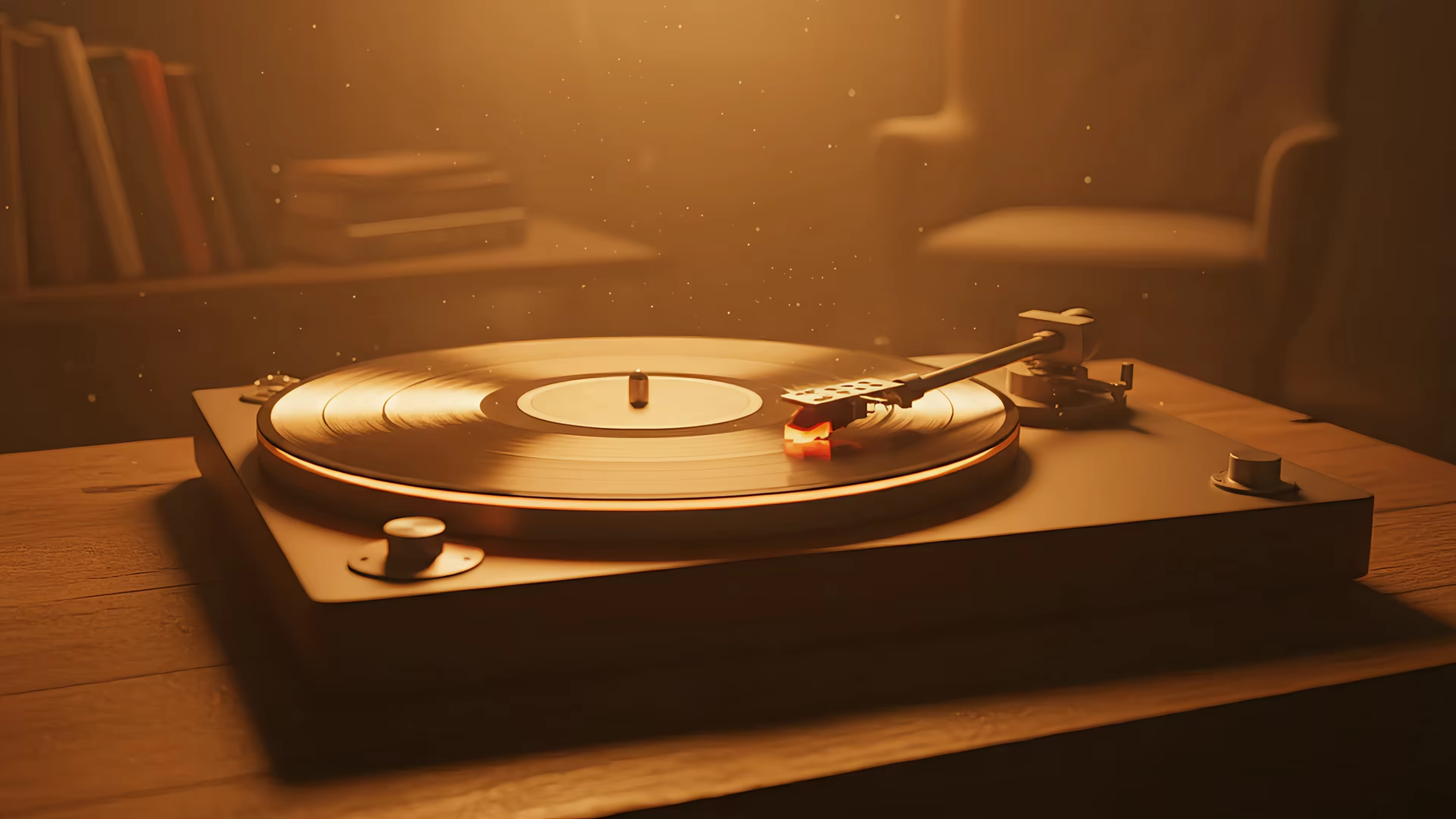
8 Essential 80s Slow Songs for Your Desktop Vibe
Some nights, your Mac is basically a tiny stage, and you're the only person in the audience. You've got a half-finished doc open, maybe a browser tab you're pretending is work, and the room is asking for a synth pad with excellent posture. That's where 80s slow songs hit hardest. They're not just background music, they're emotional lighting, the sonic equivalent of a rain-streaked window and a desk lamp that says, "I contain multitudes."
The 80s were especially good at this because the decade leaned hard into major keys and polished production. In one sample of 1,000 1980s tracks, C Major was the most common key, appearing in 118 songs, and the broader analysis says popular songs from 1960 to 1990 were written in a major key roughly 80% to 100% of the time, which helps explain why so many 80s slow songs feel direct rather than brooding for sport. The slowest songs across six decades also trended downward by about 30 BPM over time, so "slow" became less about dragging your feet and more about letting a song breathe in public like it owns the place. If you want the deeper rabbit hole, the Plexamp streaming guide is a decent companion tab for anyone who likes organizing feelings with folders.
1. Time After Time by Cyndi Lauper
This is the one you put on when your brain needs a soft landing, not a dramatic intervention. "Time After Time" sits right in that sweet spot where the synths shimmer, the drum feel stays restrained, and Cyndi Lauper sounds vulnerable without turning the whole thing into a puddle. It's the kind of ballad that knows less is more, which is rare enough in the 80s to deserve a small parade.
Why it works on a Mac at 11 p.m.
The song moves patiently, which makes it ideal for late-night work sessions where you're pretending that answering one email is the same as finishing the project. Put it on with decent headphones and the production details land properly, especially if you like hearing how a track can feel intimate without being tiny. That restraint pairs beautifully with a lofi wallpaper or a minimal wallpaper, because the visual motion stays subtle while the song does the emotional heavy lifting.
Practical rule: if the track makes you straighten your posture and stare meaningfully at your screen for no reason, you've picked the right wallpaper.
It's also one of those songs that keeps living new lives, which is why it keeps showing up in compilations, movies, and cover versions without feeling tired. On a desktop, it's the musical equivalent of leaving one lamp on and calling it intentional.
2. Against All Odds by Phil Collins
Phil Collins knew exactly how to weaponize a drum machine. "Against All Odds" is all breath and ache, with a vocal delivery that sounds like he's trying to keep himself composed while the arrangement opens the emotional floodgates behind him. It's a power ballad, yes, but it doesn't bludgeon you. It leans in and says, "You already know this is a bad idea, right?"
The clean production is part of the charm. The verses leave room for vulnerability, then the chorus arrives with the kind of controlled drama that made 80s ballads feel cinematic without needing a smoke machine in the living room. If you're matching it to a wallpaper, a fireplace scene is the obvious move, because this song wants warmth, glow, and just a little melancholy pretending to be practical.
Best listening setup
- Use quiet speakers or headphones. The vocal nuance matters more than sheer volume.
- Let the drum pattern do its job. It's more intricate than it first sounds.
- Match it with a slow visual. Flames, soft light, or a dark scene with steady motion all fit.
The track is also useful when you need a song that feels emotionally serious without turning the room into a therapy waiting area. That balance is very 80s, very Phil Collins, and very useful when your lock screen should look like it has feelings.
3. Total Eclipse of the Heart by Bonnie Tyler
A song like "Total Eclipse of the Heart" doesn't drift into the room, it kicks the door open with stage fog, spotlight glare, and enough emotional excess to shake the desk. Bonnie Tyler sells every second of it. Her voice sounds like it's wrestling the arrangement for control, and that tension is exactly why the track still works. It's huge, unapologetic, and a little ridiculous in the best possible way.
Jim Steinman loads the production with strings, synths, and drum layers, then Tyler slices straight through the whole thing with that raspy, weathered delivery. The result is pure 80s melodrama with no apology attached. If you like the louder side of 80s romance, this is the track that justifies the synthwave aesthetic, especially if you want neon, purple glow, and a desktop that looks ready for a breakup scene in a thunderstorm.
There's a reason this one keeps coming back in pop culture. TV, memes, karaoke disasters, it all makes sense here, because the song thrives on going too far and somehow landing on its feet. That same energy makes it perfect for a Mac setup that wants drama instead of restraint. Pair it with a wallpaper that feels like an overlit hallway or a neon city at midnight, then let the whole screen commit to the bit.
4. Every Breath You Take by The Police
This one is the most deceptive slow song in the whole pile. "Every Breath You Take" sounds smooth enough to sit in the background of a dinner party, but the lyric is all possessive tension and anxious surveillance dressed up in clean pop production. Sting's vocal glides over a guitar riff that's so simple it feels obvious, then keeps getting more interesting the longer you listen.
The arrangement is sparse, which is exactly why it works. Drums, bass, guitar, voice, that's the whole machine, and each part gets enough space to matter. It's the kind of track that makes sense both as wallpaper music for a late-night browser session and as a song you stop and listen to. For a visual pairing, something with a cool, vintage edge works well, because this song deserves something a little clean, a little suspicious, and a little timeless.
A good rule for this track
If a slow song sounds friendly but the lyrics feel like they've been reading your mail, that's not a flaw. That's the whole point.
It's also a perfect reminder that 80s slow songs weren't all obvious heartbreak. Some of them wore a clean shirt and then unsettled the room. This one does that with surgical precision.
5. Tears in Heaven by Eric Clapton
There's no way to fake the emotional temperature of "Tears in Heaven." It's a stripped acoustic ballad that sits at the intersection of polished recording and devastating honesty, which is why it lands so hard. Clapton keeps the guitar phrasing restrained, the vocal is fragile in the best possible way, and the arrangement knows exactly when to stay out of the song's way.
The MTV Unplugged performance became as iconic as the studio version, and that matters because the song doesn't need a lot of decoration to do its job. It's about sitting still long enough for something true to hit you. On a Mac, that makes it a strange but useful companion for long work stretches, the kind where your screen becomes the center of the universe and the universe politely asks you to sit down.
Use it when you want your setup to calm down
This is the track for a dark wallpaper or a soft, low-motion scene, something that doesn't compete with the song's emotional plainspoken quality. You don't need fireworks here. You need space, a clean desk, and maybe the rare luxury of not tabbing away from your own thoughts every fifteen seconds.
It's a song with real gravity, so keep the visual side quiet. Let the guitar and voice do the talking. They're very good at it.
6. Don't Give Up by Peter Gabriel and Kate Bush
Some ballads feel like a sigh. "Don't Give Up" feels like a conversation at the exact moment when someone finally says the thing they've been swallowing for months. Peter Gabriel's arrangement has that polished 80s sheen, but the pulse underneath keeps it moving, while Kate Bush comes in like she can hear every bruise in the room. The result is tender, specific, and way more alive than a generic "sad song" ever gets.
This is one of the best examples of why 80s slow songs are worth treating as a category, not just a nostalgia playlist. The song addresses despair without slang, sentimentality, or fake pep talks. It feels lived-in, and that gives it a different kind of power. If you want a visual to match, go for a scene that feels awake after midnight, maybe something with a little motion and a lot of quiet.
Put it on when the room needs honesty
- Read the lyrics first. They sharpen the impact.
- Listen on headphones. Tiny production details matter here.
- Don't multitask too hard. This one wants actual attention.
The song's emotional clarity makes it feel modern even now. It's not trying to rescue anyone. It's just trying to be heard, and that's somehow enough.
7. Nothing Compares 2 U by Sinéad O'Connor
Prince wrote it, but Sinéad O'Connor made it seismic. "Nothing Compares 2 U" is almost brutally bare, just voice and piano with enough space around them to make every breath count. Her delivery has hurt in it, yes, but also rage and disbelief and the kind of exhaustion that only shows up after the first wave of grief has already spent itself.
That starkness is why the song still works. There's no glossy distraction to soften the edges. When she hits the title line, it sounds like the feeling is still happening in real time, which is a rare thing in pop balladry and part of why the song became so iconic. It's a natural fit for a minimal wallpaper or a dark scene that knows when to stop showing off and just sit there beautifully.
If you've spent all day staring at a Mac, this is the song that reminds you not every feeling needs to be optimized into productivity. Sometimes the correct response is to sit with the ache and let the song be the adult in the room.
8. Careless Whisper by George Michael and Andrew Ridgeley
The saxophone intro alone could carry this entire list and still have time to flirt with your lock screen. "Careless Whisper" is elegant regret, the sound of specific bad decisions arriving in a white shirt with excellent lighting. George Michael sings it with a kind of controlled sadness that keeps the track intimate, while the arrangement stays polished enough to feel expensive but not sterile.
What makes it work is the specificity. This isn't generic heartbreak, it's about infidelity and the aftermath, which gives the song a sharper edge than a lot of its smoother cousins. It's also one of those tracks that sounds even better when you really listen to the phrasing. The economy is the point. Every note has a reason to be there. For the visual side, neon purple and dark moods are the obvious match, because this song has the glow, the gloss, and the tiny neon ache built right in.
It's the ideal closer for a late-night listening session because it feels both refined and a little silly in the way only the 80s can manage. You know the sax is doing too much. You also know it's perfect.
8-Song Comparison: Iconic 80s Ballads
| Song (Year / Artist) | Arrangement Complexity | Listening Resources | Emotional Outcome | Ideal Use Cases | Key Advantages |
|---|---|---|---|---|---|
| Time After Time (1984, Cyndi Lauper) | Low–Moderate (sparse→anthemic synths) | Good headphones/speakers recommended | Gentle nostalgia, contemplative calm | Focus work, late-night background, coffee shop | Timeless restraint; versatile for background or focus |
| Against All Odds (1984, Phil Collins) | Moderate (drum machine + layered synths) | Quiet space to hear vocal nuance | Yearning, dramatic catharsis | Intimate listening, emotional scenes, live sing-along | Emotionally authentic; memorable hook and dynamics |
| Total Eclipse of the Heart (1983, Bonnie Tyler) | High (maximalist orchestration, multiple sections) | High-fidelity audio to resolve orchestration | Grand, operatic catharsis and release | Theatrical moments, private catharsis, sing-outs | Massive chorus; powerful, technically ambitious vocal |
| Every Breath You Take (1983, The Police) | Low (minimalist, clarity-focused) | Any system; clarity reveals nuance | Ambiguous intimacy; subtly unsettling | Background/study music or close lyrical listening | Iconic riff; enduringly crisp production |
| Tears in Heaven (1992, Eric Clapton) | Low–Moderate (fingerstyle guitar + gentle strings) | Quiet listening or good speakers for detail | Deep sorrow; reflective consolation | Quiet, contemplative listening; grief processing | Genuine emotional authenticity; immaculate phrasing |
| Don't Give Up (1986, Peter Gabriel & Kate Bush) | Moderate–High (layered, beat-driven, dual vocals) | Headphones to appreciate layered production | Empathetic consolation; restrained hope | Mental-health reflection, focused listening | Unique production; strong vocal dialogue and nuance |
| Nothing Compares 2 U (1990, Sinéad O'Connor) | Low (voice + piano minimalism) | Any; ensure vocal clarity | Raw vulnerability; cathartic intensity | Intense emotional listening, video pairing | Brutal vocal honesty; emotionally direct performance |
| Careless Whisper (1984, George Michael) | Low–Moderate (sax-led, elegant arrangement) | Mid-range clarity to showcase sax and vocals | Sophisticated regret; intimate melancholy | Background elegance, focused listening | Iconic sax melody; polished, economical production |
Bring the Vibe to Your Lock Screen
You've got the playlist. Your Mac still needs the outfit. A static image is fine if you enjoy pretending a frozen rectangle is enough to set the mood, but 80s slow songs deserve motion, glow, and a little cinematic nonsense. That's where gifPaper for Mac earns its keep. It sets live wallpapers on your lock screen, desktop, and screen saver, using Apple's native Aerial wallpaper format, so the whole thing feels smooth instead of slapped together like a last-minute school dance flyer.
The fit is obvious. Put "Careless Whisper" next to a neon skyline, "Against All Odds" next to a fireplace, or "Time After Time" next to something lofi and rainy. Then let the wallpaper do what wallpaper is supposed to do, sit there beautifully while you're trying to look focused. The website has a growing collection of 150+ looping 4K live wallpapers with ambient music, free to browse, and the app turns that mood into something you can use every day.
For the practical stuff, the app is a $4.99 one-time purchase at launch, not a subscription, with a 7-day free trial that doesn't ask for a credit card, plus a 30-day money-back guarantee. It requires macOS 26 (Tahoe) or later, and it's distributed directly because Apple's sandboxing prevents live lock screen wallpapers in the Mac App Store. The point is simple, really. You're already staring at your screen for hours, so the screen might as well have taste.
If you want your Mac to feel like it has a soundtrack, a mood, and the good sense to glow in the dark, start with gifPaper. It's the easiest way to pair these 80s slow songs with a live wallpaper that matches the feeling instead of just standing nearby. Go pick a scene, hit play, and let your lock screen become the kind of little drama that makes the whole desk setup behave itself.