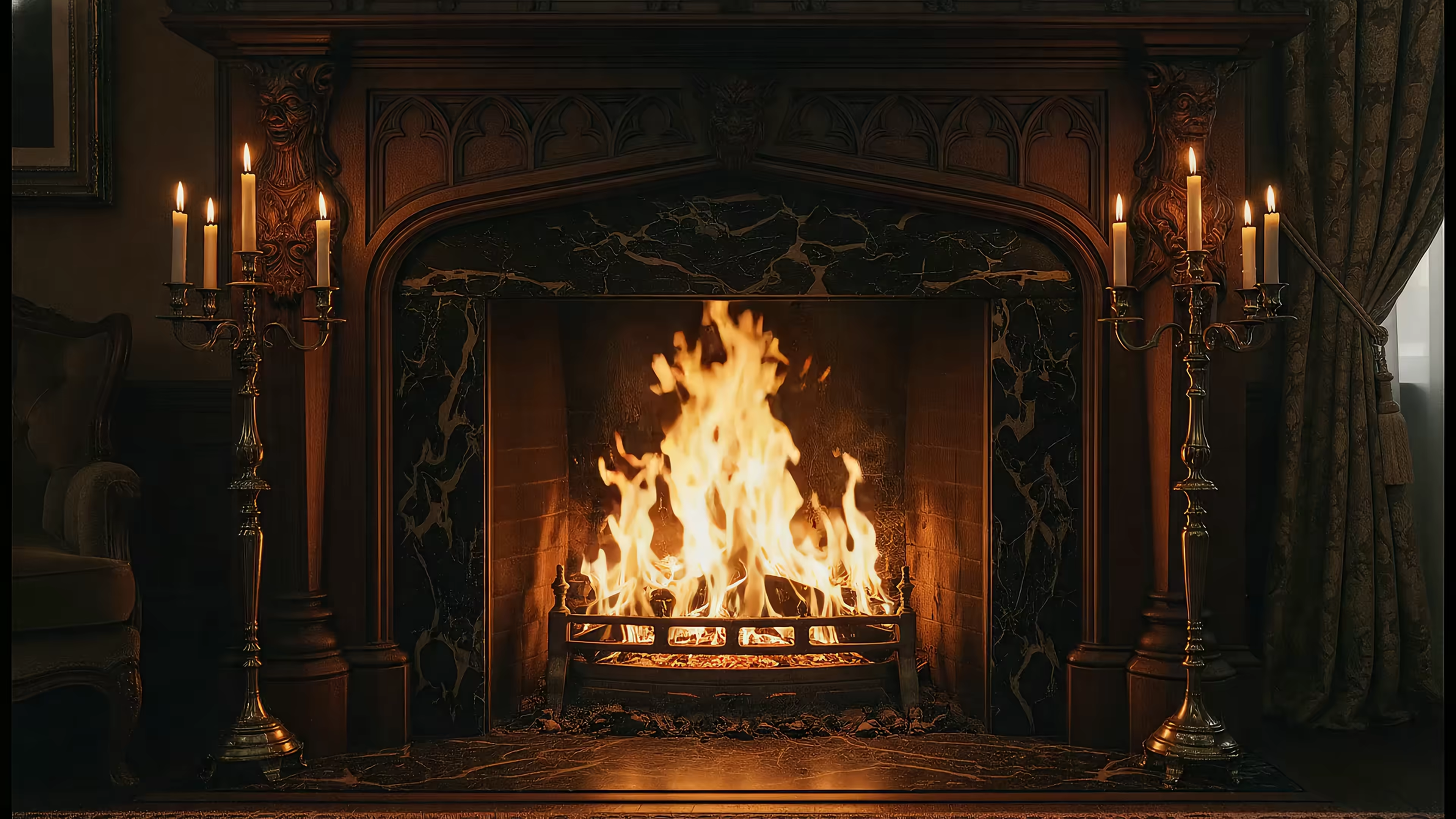
Gothic Aesthetic: More Than Just Black T-Shirts
The gothic aesthetic isn't just about spooky vibes and an excuse to wear black year-round. At its heart, it's about finding a strange kind of beauty in darkness, a profound romance in decay, and a somber grandeur in melancholy. It's a worldview that appreciates the sublime, the mysterious, and the beautifully brooding.
It's a thread that runs through centuries, connecting soaring medieval cathedrals to the bassline of a post-punk song, all the way to your Mac screen. You're going to stare at that screen for hours anyway. Might as well make it interesting.
From Flying Buttresses to Robert Smith's Hair
Before it was a subculture or a literary genre, "Gothic" was an insult. The term was spat out by Renaissance critics who thought the soaring, ornate cathedrals of the Middle Ages were barbaric—the work of the Goths who sacked Rome. They preferred the clean, rounded arches of classical antiquity. They missed the point completely.
Gothic architecture, born in 12th-century France, wasn't just a style; it was an engineering revolution. Builders were obsessed with two things: height and light. They wanted to create spaces that felt otherworldly, stretching impossibly high to draw the eye and soul upward. To pull it off, they developed a toolkit of structural marvels that became the visual language of the gothic aesthetic.
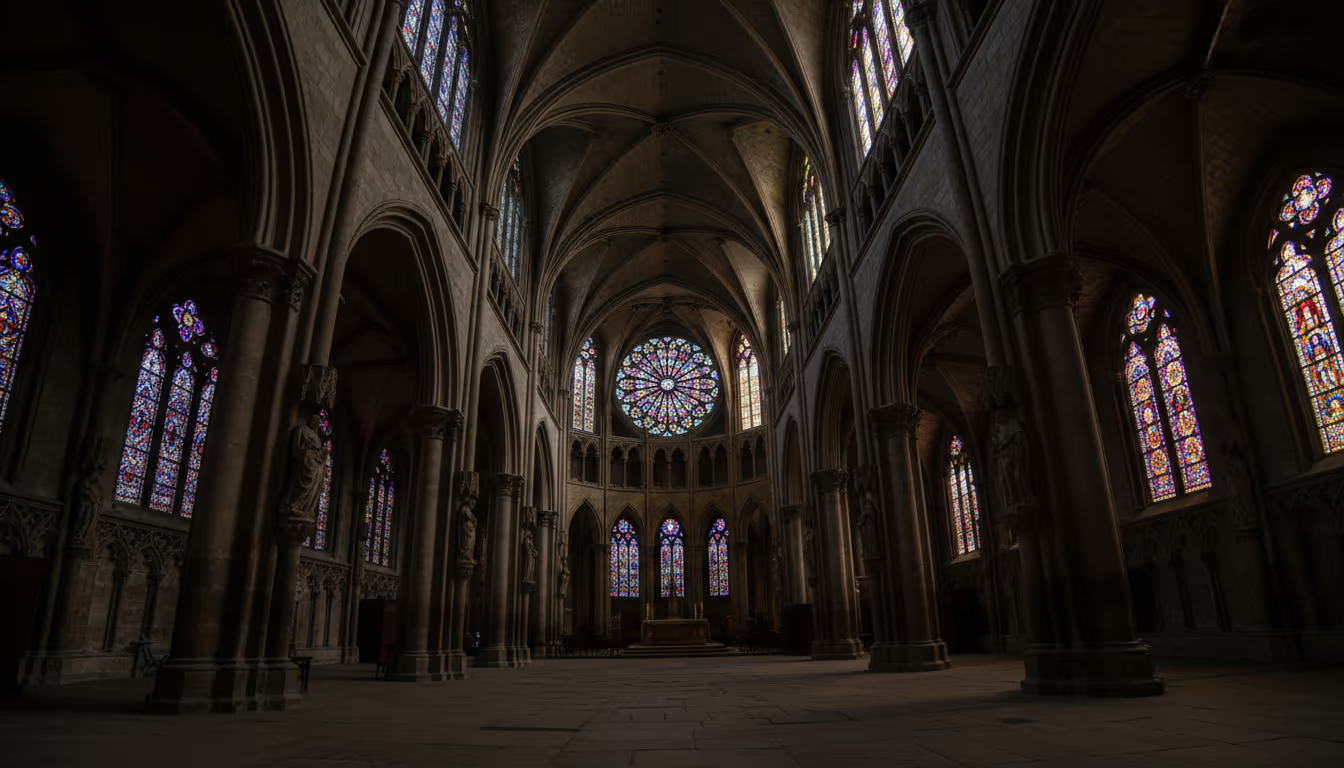
- Pointed Arches: Unlike their round Romanesque predecessors, pointed arches channeled weight downwards far more efficiently. This let them build taller without the whole thing collapsing into a very holy pile of rubble.
- Flying Buttresses: These are the iconic stone arms propping up the upper walls from the outside. They took the building's outward push and safely transferred it to the ground, freeing the walls from their load-bearing duties.
- Rose Windows: With the walls no longer needing to be thick and solid, they could be filled with enormous, intricate stained-glass windows, turning stone spaces into kaleidoscopic light boxes.
The goal was simple, if astronomically ambitious: to make mortals feel small and awestruck. It was an architecture of emotion, designed to overwhelm the senses. This marriage of engineering and artistry created a feeling—a sublime grandeur and mystery that formed the bones of an aesthetic that would be reinterpreted for centuries.
How Victorians Turned Anxiety into an Art Form
The architectural language of shadowy corridors and soaring vaults soon bled into the popular imagination. The gothic aesthetic found a new home on the printed page, where authors hijacked the mood of old castles to explore the darker corners of the human psyche.
It began, as many strange things do, with a nightmare. In 1764, Horace Walpole published The Castle of Otranto, a story that came to him in a dream about an ancient castle and a giant, armored hand. This became the first "Gothic novel," establishing a formula that would echo for generations: crumbling manors, tyrannical patriarchs, supernatural omens, and a constant, creeping sense of dread.
The 19th-century Victorians, with their public obsession with death and elaborate mourning rituals, were the perfect audience. Gothic literature became a safe way for them to explore societal anxieties about science, sanity, and sexuality.
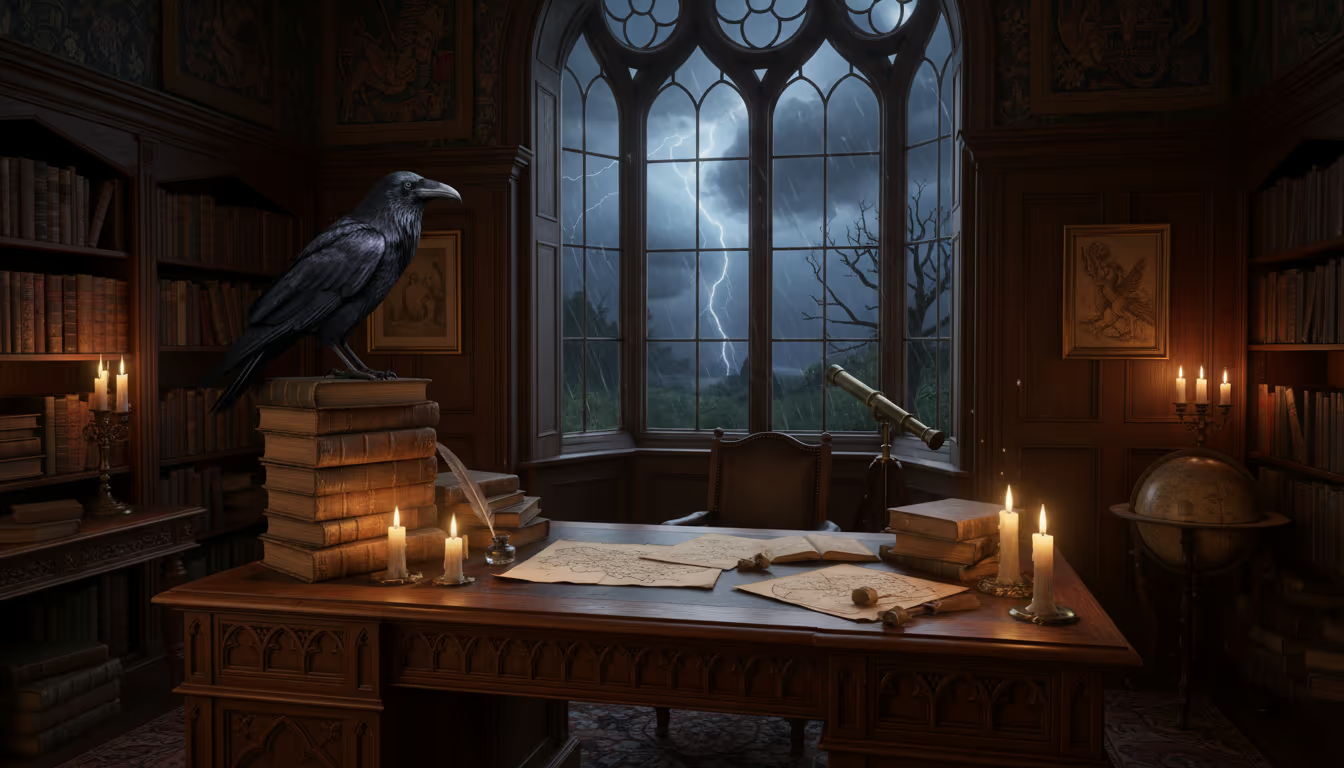
- Mary Shelley's Frankenstein questioned the arrogance of scientific ambition.
- Edgar Allan Poe perfected the psychological tale, dragging readers into the minds of unreliable narrators as they descended into madness.
- Bram Stoker's Dracula blended ancient superstition with modern anxieties, unleashing an aristocratic monster upon industrial London.
The core idea was revolutionary for its time: anxiety wasn't just something to be endured, but something to be explored, dramatized, and even romanticized. The Victorians turned inner turmoil into an art form—a legacy that lives on in gothic fiction and visual culture alike. It also has a lot in common with the bookish melancholy of the dark academia aesthetic.
The Birth of Goth from Post-Punk Sound
For centuries, the gothic aesthetic was about stone arches and haunted castles. Then, in the late 1970s, it found a new home: the British music scene. Goth crawled out from the skeletal remains of post-punk, not just as a sound, but as a full-blown identity—a self-aware rebellion against the aggressive cheerfulness of the 80s.
If the subculture has a patient zero, it's the nine-and-a-half-minute dirge released by Bauhaus in August 1979: "Bela Lugosi's Dead." With its skeletal bassline, scratchy guitar, and Peter Murphy's vampiric baritone, the song wasn't just about a gothic icon; it was gothic. It was slow, spooky, and dead serious about its own drama.
The floodgates opened. Bands like Siouxsie and the Banshees, led by Siouxsie Sioux's commanding stage presence, became foundational. And then there was The Cure. Led by the perpetually melancholic Robert Smith, they took post-punk's gloom and made it poetic. Robert Smith's enormous, teased-out black hair became a cultural landmark in its own right—a chaotic halo of beautiful despair.
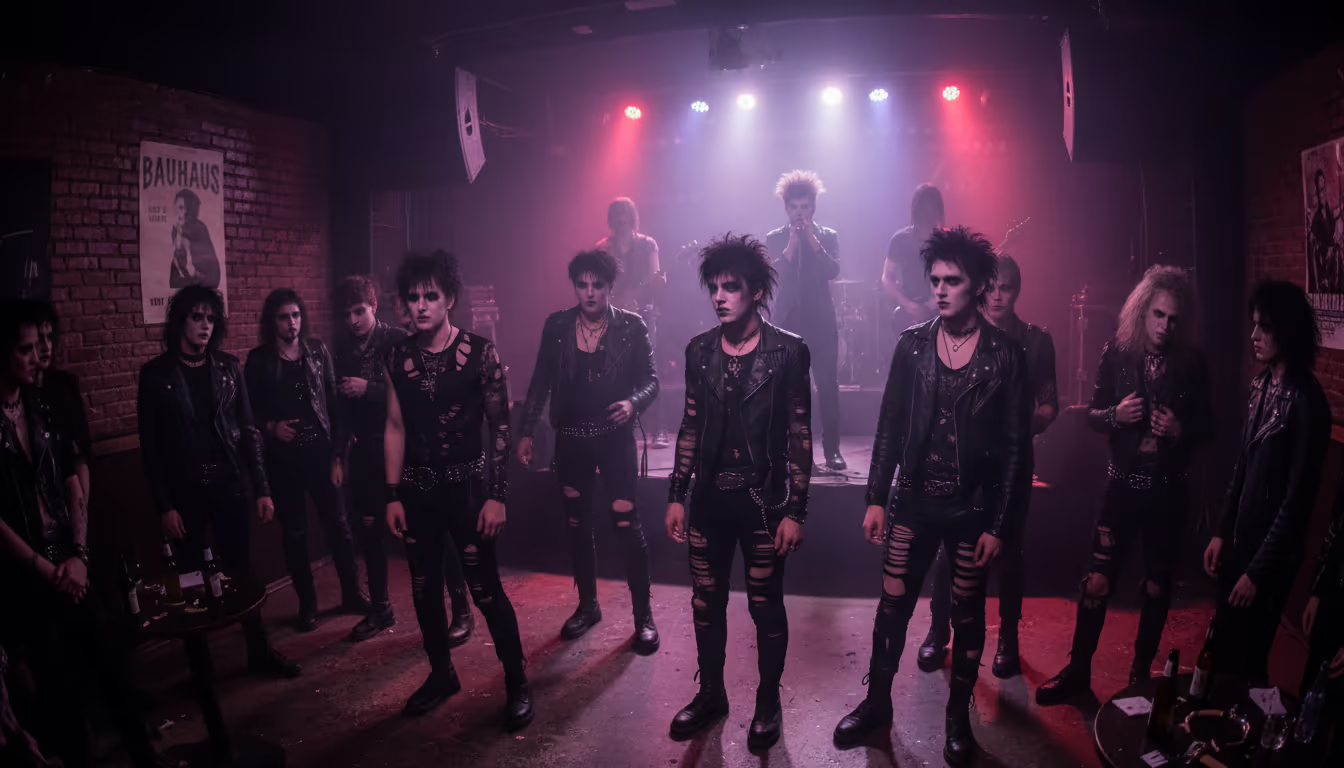
This was a commitment. The black clothes, pale foundation, and heavy eyeliner created a dramatic, almost theatrical mask. It was about creating your own kind of beauty, one that found comfort in the shadows and romance in melancholy. The mood is timeless, whether you're building a medieval castle or just want a really good visual to stare at while contemplating life's mysteries.
Modern Gothic in Media: Tim Burton and Dark Souls
The gothic aesthetic didn't stay in dusty old books. It clawed its way onto the silver screen and into our game consoles, proving that its obsession with grandeur, decay, and romantic struggle is timeless.
You can't talk about modern gothic style without mentioning Tim Burton. His entire career is a masterclass in making the aesthetic work for a new generation. From the cartoonish horror of Beetlejuice to the moody, detective-noir vibes of Wednesday, Burton's visual language is pure gothic. He specializes in twisted fairy tales where outsiders are the heroes, and his settings are characters themselves—all spindly, shadowy, and oozing melancholic charm.
Video games took the architectural soul of gothic and made it explorable. FromSoftware's games, especially Dark Souls and Bloodborne, are essentially playable gothic cathedrals. The worlds of Lothric and Yharnam are breathtaking exercises in gothic design—sprawling cities with soaring spires, crumbling buttresses, and grotesque statues, all sitting under a perpetually dying sun.
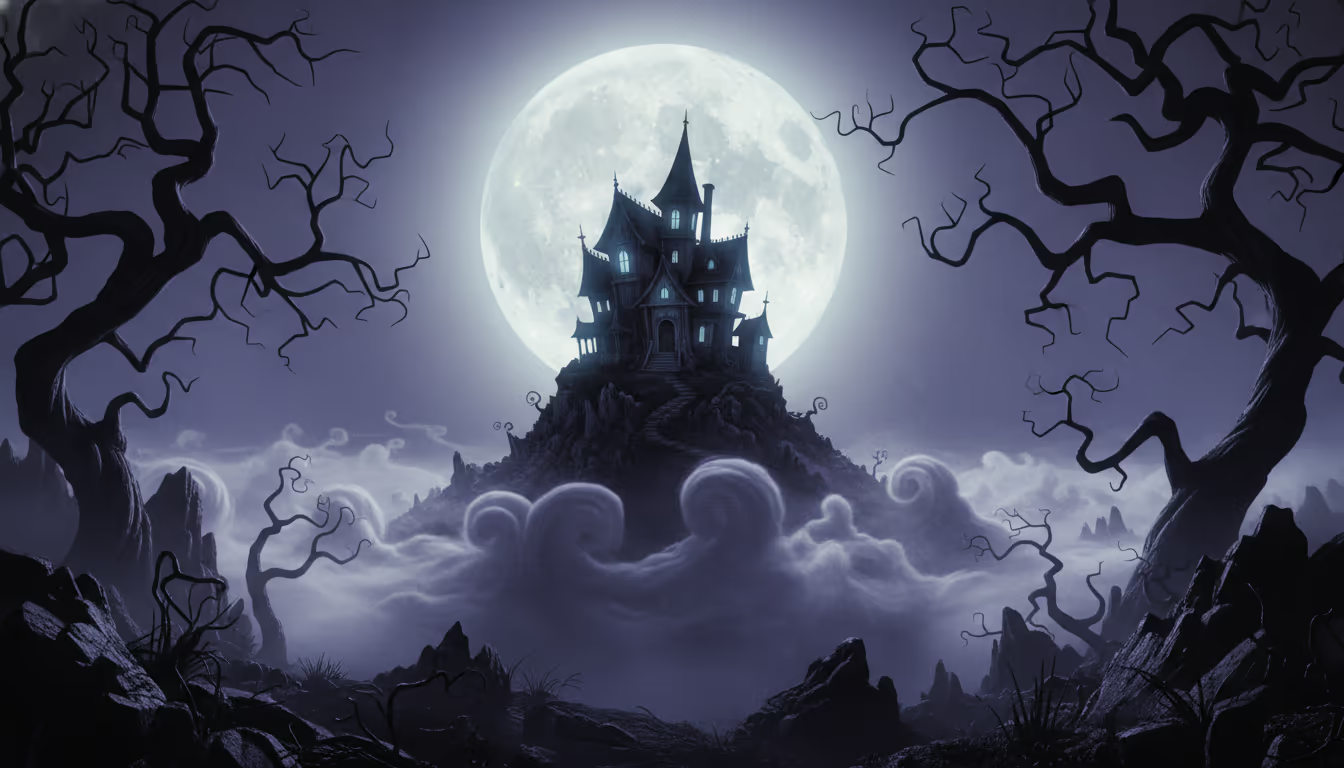
These aren't just backdrops; they are the story. Every decaying castle tells you about a world that has fallen from grace. The player's lonely struggle against overwhelming, monstrous forces is a modern gothic romance. The core appeal is the same as it was in the 12th century: to be humbled and awestruck by an environment that is both beautiful and terrifying. The only difference is now you have a controller in your hand.
Bringing the Gothic Aesthetic to Your Mac
After a whirlwind tour through centuries of architecture, literature, and music, it's time to bring the gothic aesthetic home. Your Mac—the slate where you answer emails and pretend to be productive—is the perfect canvas for a digital space that feels dramatic, romantic, and beautifully moody.
The quickest way to set the scene is with the right wallpaper. A static image is fine, but a living background transforms the entire experience from decoration to atmosphere. It's the difference between a picture of a castle and actually standing in its shadow.
Crafting Your Digital Sanctum
A great wallpaper is the foundation, but the art is in the details. To nail the gothic design, you need a cohesive environment.
- Icon Packs: Ditch the default blue folders. Look for icon sets with muted, desaturated colors that won't clash with your brooding backdrop.
- Color Schemes: Set your system appearance to Dark Mode. It's the obvious first step. Accent colors should be deep and rich—blood red, royal purple, or a faded silver.
- Ambient Audio: Many live wallpapers come with sound. A crackling fire or distant thunder can transform your workspace into another world.
The Essential Tool for a Living Desktop
Other wallpaper apps can feel like a hacky overlay, but gifPaper is different. It's the first and only app that uses Apple's native Aerial format—the same system Apple uses for its own video wallpapers.
This means your lock screen and desktop are perfectly synced. You wake your Mac to a living scene that slows gracefully as you unlock. It's the kind of seamless, immersive detail the gothic aesthetic demands.
One click sets everything: the animated lock screen, the desktop (a beautiful still frame by default, with a toggle for full video), and a screen saver that's finally worth looking at.
You've explored the history and embraced the mood. Now, turn your Mac into a piece of dark, dramatic art with gifPaper for Mac. With a library of over 150 4K looping wallpapers, a 7-day free trial (no credit card needed), and a simple $4.99 one-time purchase, it's the definitive way to bring the gothic aesthetic to life on your screen.