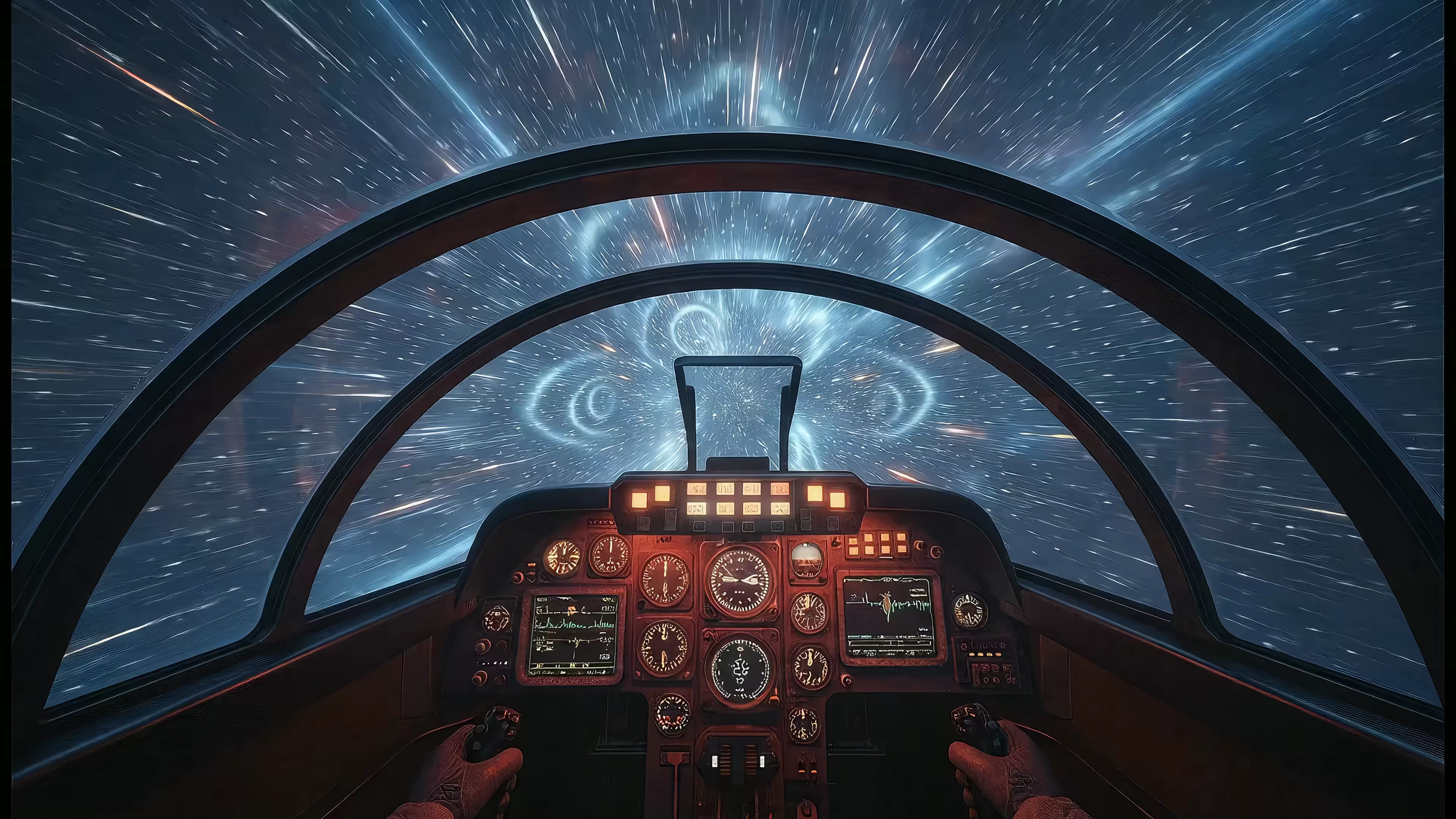
Space Aesthetic: A Guide to Gritty Starships, Utopian Futures, and Cosmic Wonder
The "space aesthetic" isn't one thing. It's a whole universe of styles, from the clean, utopian bridge of the USS Enterprise to the gritty, duct-taped corridors of the Nostromo in Alien. Both are space, but they feel worlds apart.
At its core, the sci-fi aesthetic channels the powerful feelings space gives us: awe, wonder, loneliness, and the quiet, humbling sense of seeing our own world from a great distance. It's less about aliens and laser beams and more about how the vastness of the cosmos makes us feel.
The fulcrum for modern space cinema is Stanley Kubrick's 2001: A Space Odyssey. It sits perfectly between the glamorous, stylized space-age dreams of the 1950s and the grimy, "used future" realism that would dominate the late 1970s. It was clean, but also cold and deeply unsettling. It showed us that space could be both beautiful and terrifying.
What Defines the Cosmic Aesthetic?
The magic of the cosmic aesthetic is its sense of scale. It taps into our deep-seated need to explore the unknown and figure out our place in the universe. Staring at a swirling nebula has a funny way of making your daily anxieties feel refreshingly small.
This feeling is so powerful it has a name for the people who've experienced it firsthand: the "overview effect."
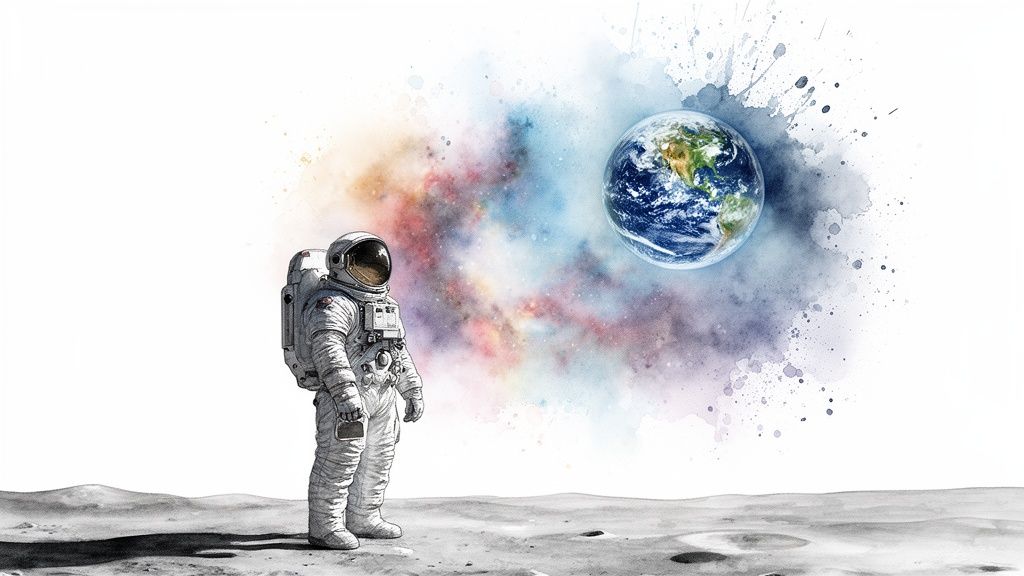
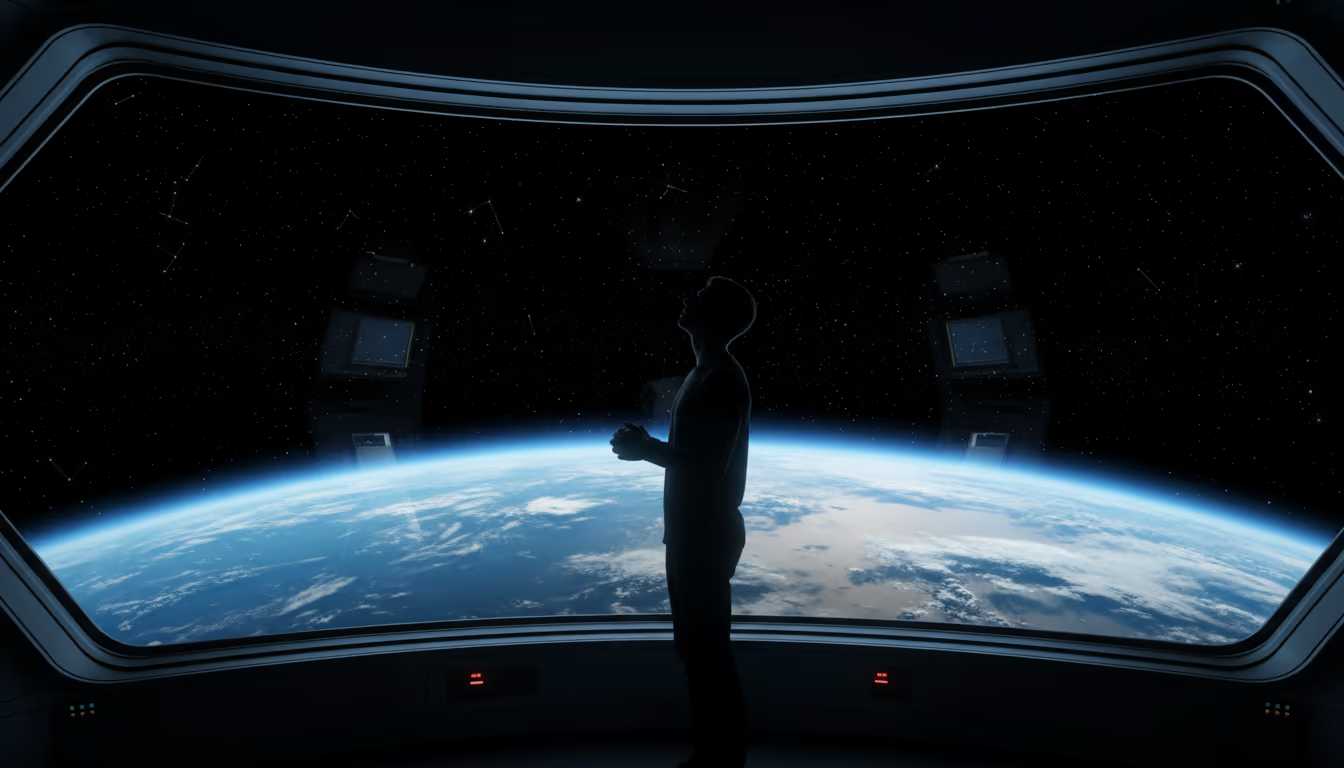
The overview effect is the cognitive shift astronauts report after seeing Earth from orbit—a sudden, overwhelming sense of awe and a profound understanding of how interconnected we all are on this tiny, fragile planet. The space aesthetic, in all its forms, is an attempt to capture a sliver of that feeling without having to leave the atmosphere.
This has created a spectrum of visual styles, each exploring a different facet of our relationship with the great unknown:
- Clean Utopian: Pristine starships, orderly futures, and minimalist design. This is optimism in aesthetic form (Star Trek).
- Gritty Industrial: The "used future." Grimy, functional ships where technology breaks and life is hard (Alien, Outland, The Expanse).
- Glamorous Retro: A stylish, campy, and often psychedelic vision of space travel fueled by mid-century optimism (Barbarella, Flash Gordon).
- Lived-In Mundane: Space as just another backdrop for normal human life, complete with clutter, comfort, and routine (Cowboy Bebop, Firefly).
The outer space aesthetic is always evolving, showing up in places like meteorite jewelry and streetwear fashion. It's a canvas for our biggest questions and a source of endless inspiration.
Utopian Gleam vs. Industrial Grit
The space aesthetic often splits into two camps. On one side, you have the clean, utopian future—all minimalist design, bright lights, and an almost religious sense of order. This is sci-fi at its most hopeful.
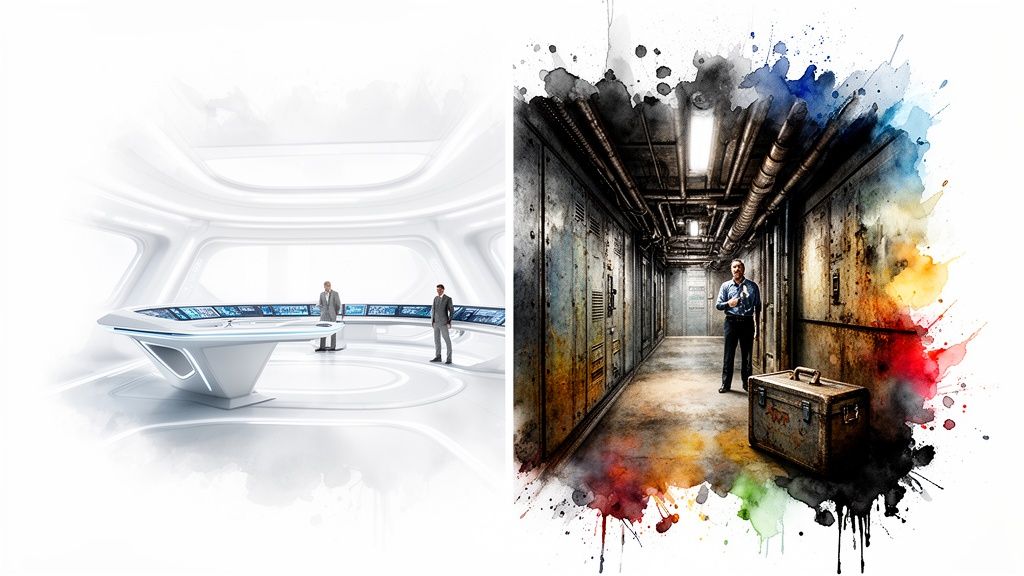
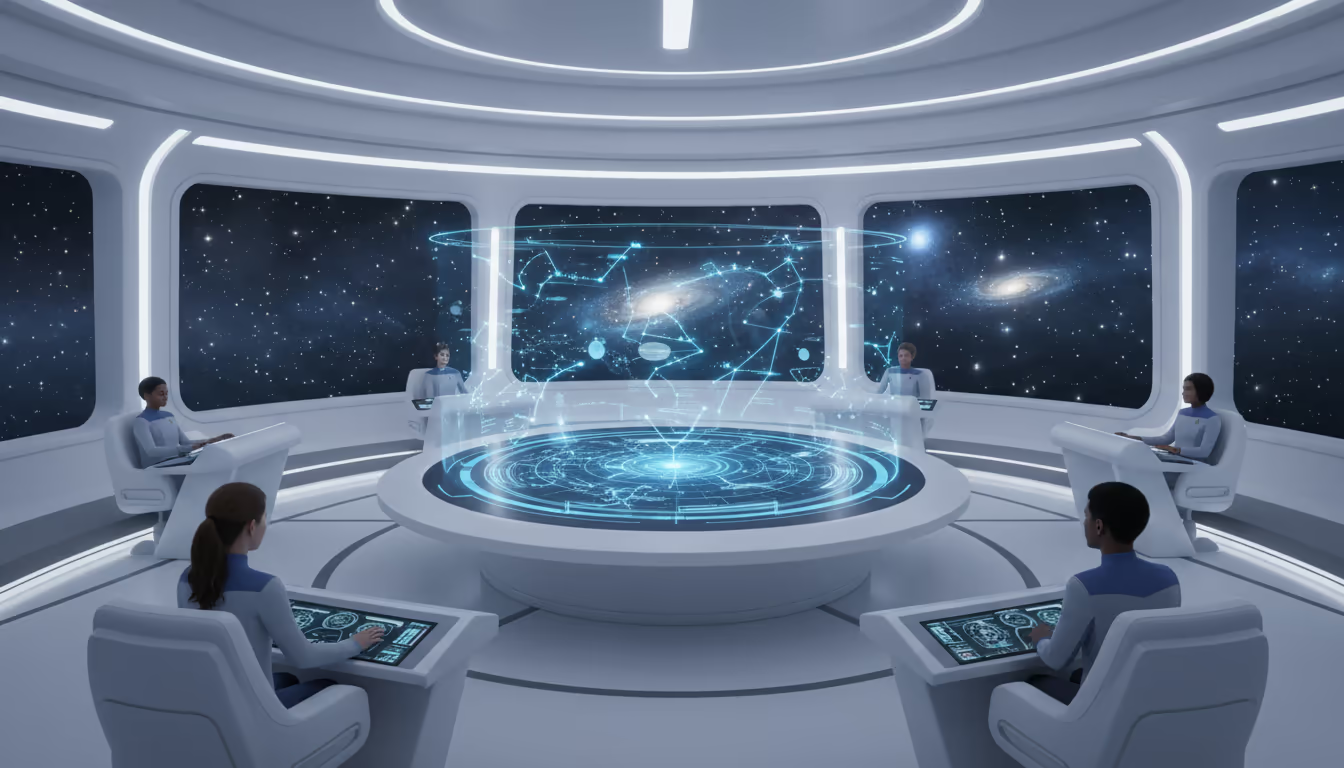
Think of the pristine bridge of the Enterprise in Star Trek. Everything is where it should be, the uniforms are immaculate, and the tech just works. It's a future where humanity has its act together and is now neatly exploring the cosmos. This style, influenced by visionaries like Syd Mead, presents a hopeful future where the day's biggest problem is a philosophical one.
The Rise of the "Used Future"
Then you have the opposite: the gritty, industrial, or "used future." This is space travel for the working class. It's built on the idea that no matter how advanced our tech gets, it will still break down, get dirty, and need a good kick to start working again.
This vision trades sleekness for tangible realism, telling stories of survival against the harsh backdrop of space. The classic example is the Nostromo from Alien—a grimy, claustrophobic freighter where the hallways are a mess of exposed pipes and the crew just wants to get paid. It's not about boldly going; it's about getting the job done without getting eaten.
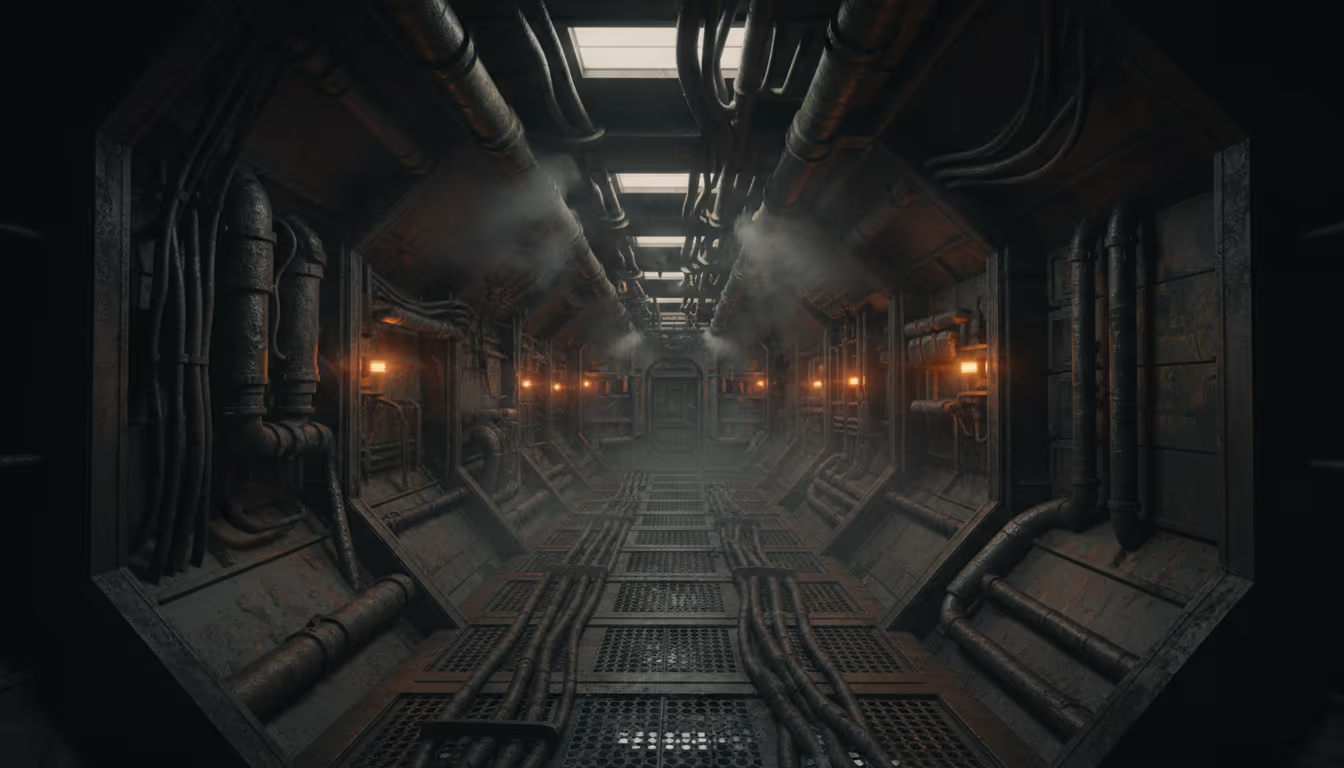
You see this gritty sci-fi aesthetic everywhere, from the rain-soaked streets of Blade Runner to the functional ships of The Expanse. Every scratch and flickering light tells a story. It's a reminder that even on the final frontier, someone still has to take out the trash.
The Glamorous Retro Space Age
Before the "used future" made space feel gritty, there was a different vision—one built on glamour, camp, and unapologetic style. This is the retro space aesthetic, a look less concerned with scientific accuracy and more with speculative, optimistic fun. It's a nostalgic vision of a future that never happened, but maybe should have.

This vibe was a direct reflection of mid-century cultural optimism. It's the vibrant, psychedelic visuals of films like Barbarella, where spaceship interiors are covered in shag carpet, or the bold, primary-colored adventure of Flash Gordon. Forget functional bulkheads; this future had chrome finishes, bubble helmets, and zero-gravity lounges that looked suspiciously like groovy conversation pits.
Key elements were all about form over function: * Bold Colors: Bright oranges, yellows, and reds against clean whites and silvers. * Curvy Shapes: Smooth, organic curves in everything from furniture to spaceship hulls. * High Fashion: Go-go boots, metallic fabrics, and elaborate hairdos that defy physics.
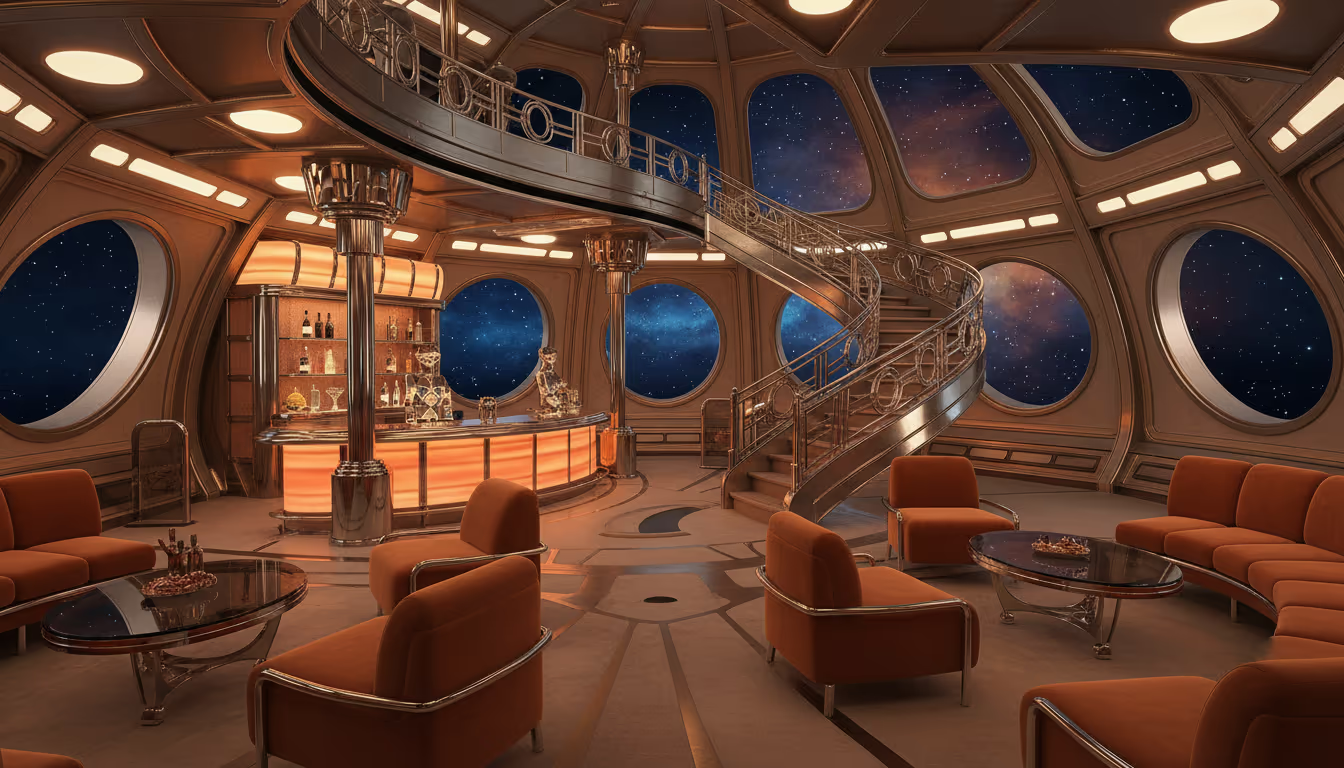
This is the kind of future where you could plausibly defeat an evil emperor and attend a cocktail party in the same outfit. This aesthetic is the direct ancestor of the modern synthwave movement, proving a good vibe never goes out of style.
The Lived-In Universe: Space Is Just Another Place
Not every space fantasy involves gleaming starships. Some of the best sci-fi treats space less like the final frontier and more like just another place to make a living, microwave leftovers, or argue about whose turn it is to do the dishes.
This is the "lived-in" universe. Its beauty is in the mess.
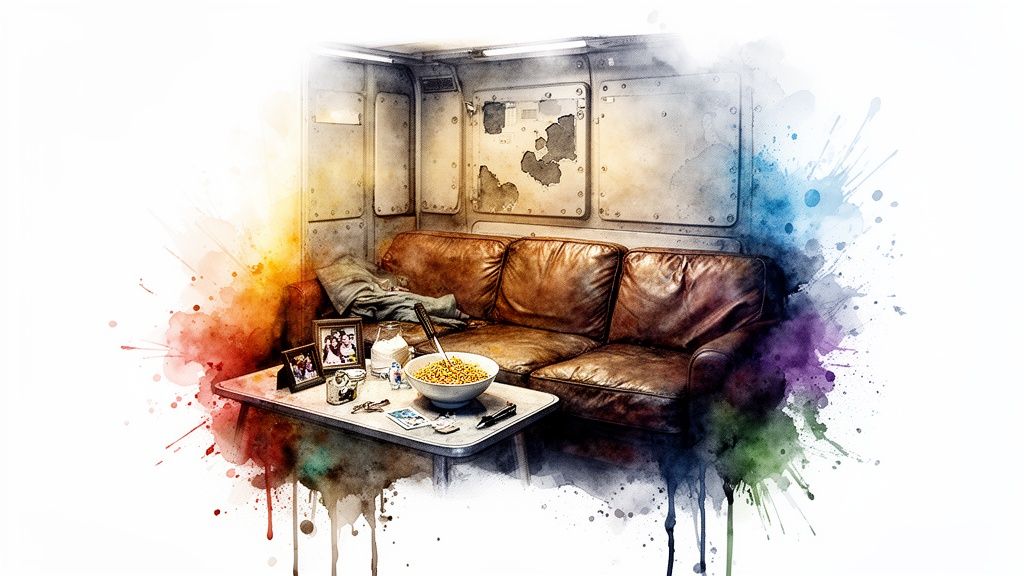
Drawing from classics like Cowboy Bebop and Firefly, this aesthetic is all about the clutter, personal trinkets, and tech that looks like it's been fixed with duct tape one too many times. The bridge of the starship Bebop isn't a pristine command center; it's a lounge with a beat-up couch where someone definitely left a half-eaten bowl of noodles. This approach grounds space travel, making it feel tangible.
It suggests that even centuries from now, orbiting some distant gas giant, people will still be people. They'll be messy, sentimental, and probably a little broke. This aesthetic isn't about the wonder of discovering new worlds. It's about the comfort of making a home in the one you've got—even if it's a rust bucket held together by busted hydraulics and sheer hope.
Why the Cosmic Aesthetic Resonates
There's a reason the space aesthetic has such a gravitational pull. It's not just about pretty pictures of stars. It taps into something fundamental—that very human itch to explore, to discover, and to make sense of our own tiny spot in a vast, silent universe.
Staring into a swirling nebula triggers a specific kind of awe. It's a feeling philosophers call "the sublime." Suddenly, that overflowing inbox or looming deadline feels refreshingly insignificant. That shift in perspective is the real power of the cosmic aesthetic.
A Blank Canvas for Our Biggest Ideas
Space is the ultimate blank canvas. It's a setting where you can explore our biggest themes: hope and isolation, utopia and dystopia. The creative freedom is why the sci-fi aesthetic branches into so many unique styles, each reflecting a different dream or fear about what's next. When you curate your digital space with this kind of art, it's not just decoration. It's a way to connect with bigger ideas.
Choosing a cosmic wallpaper is an act of carving out a personal space for contemplation. For those spending hours at a screen, it's a small way to keep perspective. Whether you prefer the stark beauty of a lone nebula or the lived-in comfort of a starship lounge, the outer space aesthetic gives you a universe of options. And a view that's a little bigger than your office walls.
Bring the Final Frontier to Your Mac Desktop
You spend hours staring at your Mac. You might as well make it a view worth looking at. A static image of a nebula is nice, but a living, breathing cosmic scene? That's a whole other level of commitment to the space aesthetic.
This is where gifPaper comes in.
It's the first and only app that uses Apple's native system to set seamlessly looping 4K videos as your Mac lock screen and desktop. When you wake your Mac, the wallpaper slows to a stop as you unlock—exactly like Apple's own, but with way more cosmic wonder. Other apps use hacky overlays that drain your battery and just don't work on the lock screen.
gifPaper is different. It's built to work the way a Mac should, showing a still frame on the desktop by default to save power, with a toggle for full video animation when you want it.
The entire space wallpaper collection has dozens of options, from gritty industrial sci-fi to clean utopian futures. There are a few neon wallpaper options too, for a more cyberpunk feel.
Find the perfect cosmic backdrop for your next existential crisis, or just for your next spreadsheet. It's your screen; make it interesting.
Ready to upgrade your view? Try gifPaper for Mac with a 7-day free trial—no credit card needed. Get instant access to over 150 live wallpapers and all features. It's a $4.99 one-time purchase to keep forever, not a subscription.