Vaporwave Aesthetic: A Guide to the Internet's Favorite Ghost
Vaporwave is the feeling you get hearing a forgotten pop song echoing through an empty shopping mall at 3 AM. It's an internet-native art movement and music genre born in the early 2010s, built from the digital ghosts of 1980s and 1990s consumer culture. It's a surreal, nostalgic, and deeply ironic collage of obsolete technology, corporate muzak, and a future that never arrived.
Think Greco-Roman busts rendered in primitive CGI, the startup chime of a Windows 95 computer, and the pastel glow of a Miami sunset. It's a beautiful, strange, and melancholic critique of consumerism that looks and sounds like a half-remembered dream. Vaporwave art is a digital séance for a dead future.
The Birth of a Digital Ghost: Origins of Vaporwave
Every internet ghost needs a haunted house. For vaporwave, that house was built in 2011 on the foundation of a single album: Floral Shoppe, released by an artist named Vektroid under the alias Macintosh Plus. This wasn't just music. It was an audio séance, summoning the spirits of forgotten 80s smooth jazz and commercial jingles, then slowing them down until they sounded like they were melting. The album's cover, a Roman bust against a checkerboard background, became the aesthetic's visual ground zero.
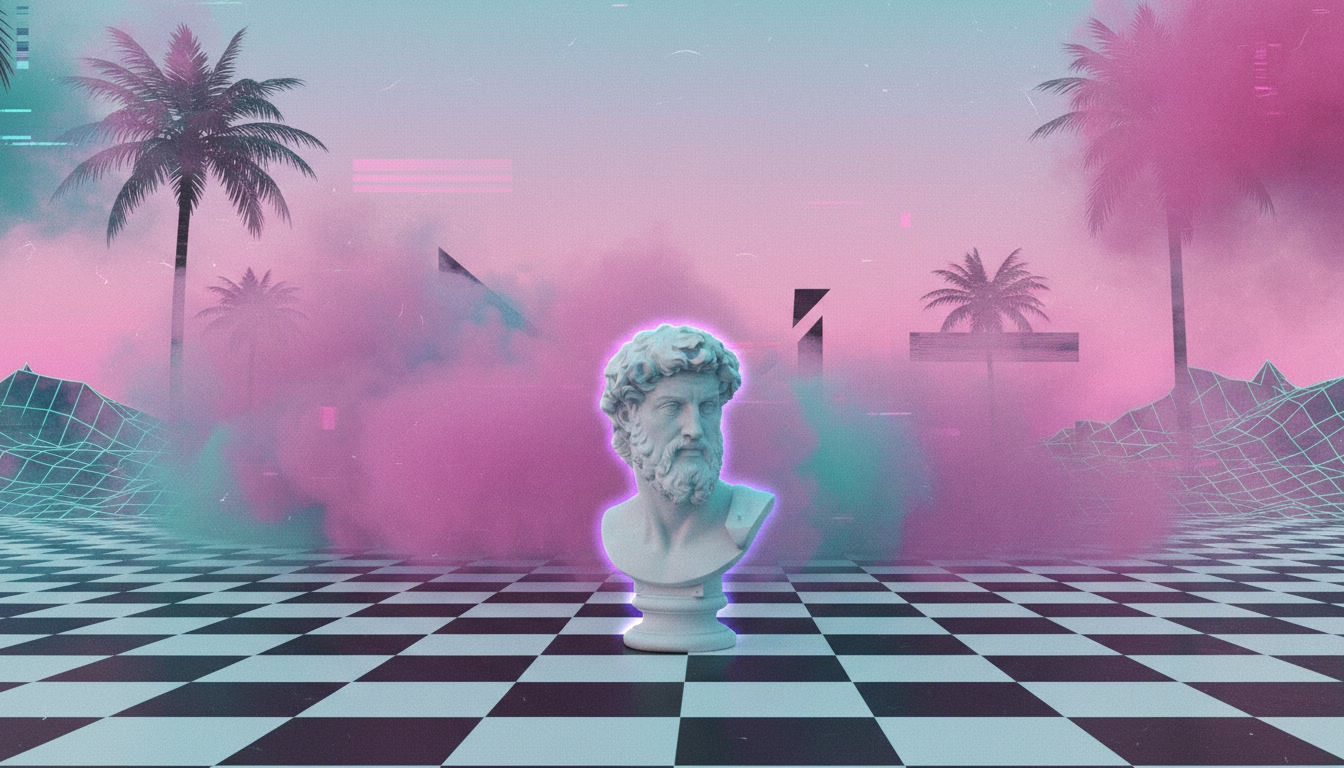
This chopped-and-screwed, sample-based sound became the genre's signature. It was haunting, echo-filled, and felt like wandering through a shopping mall long after closing. The vibe was both comforting and deeply unsettling—a perfect soundtrack for a future left to rust.
But Vektroid didn't conjure this ghost out of thin air. The groundwork was laid by experimental artists like Daniel Lopatin (Chuck Person's Ecco Jams Vol. 1) and James Ferraro, who were already messing with the DNA of consumer culture. They were sampling corporate muzak to create a nostalgia for things nobody was supposed to be nostalgic for.
From this sonic sludge, a distinct visual style emerged on platforms like Tumblr, 4chan, and Reddit. Users cobbled together a chaotic collage of seemingly random artifacts: Roman busts, Windows 95 icons, Japanese text, and glitchy, primitive CGI. It was a look born from collective memory and late-night forum scrolling, perfectly capturing the music's ironic melancholy. This digital ghost, pieced together from the spare parts of a barely-past era, is hypnotic and strange.
Decoding Vaporwave Style: The Core Ingredients
Vaporwave art is a very specific cocktail of visual cues. It's a deliberate clash of high and low culture, ancient history and obsolete tech, creating a distinct visual language you can spot a mile away. To really get what makes the vaporwave aesthetic tick, you have to understand its core ingredients.
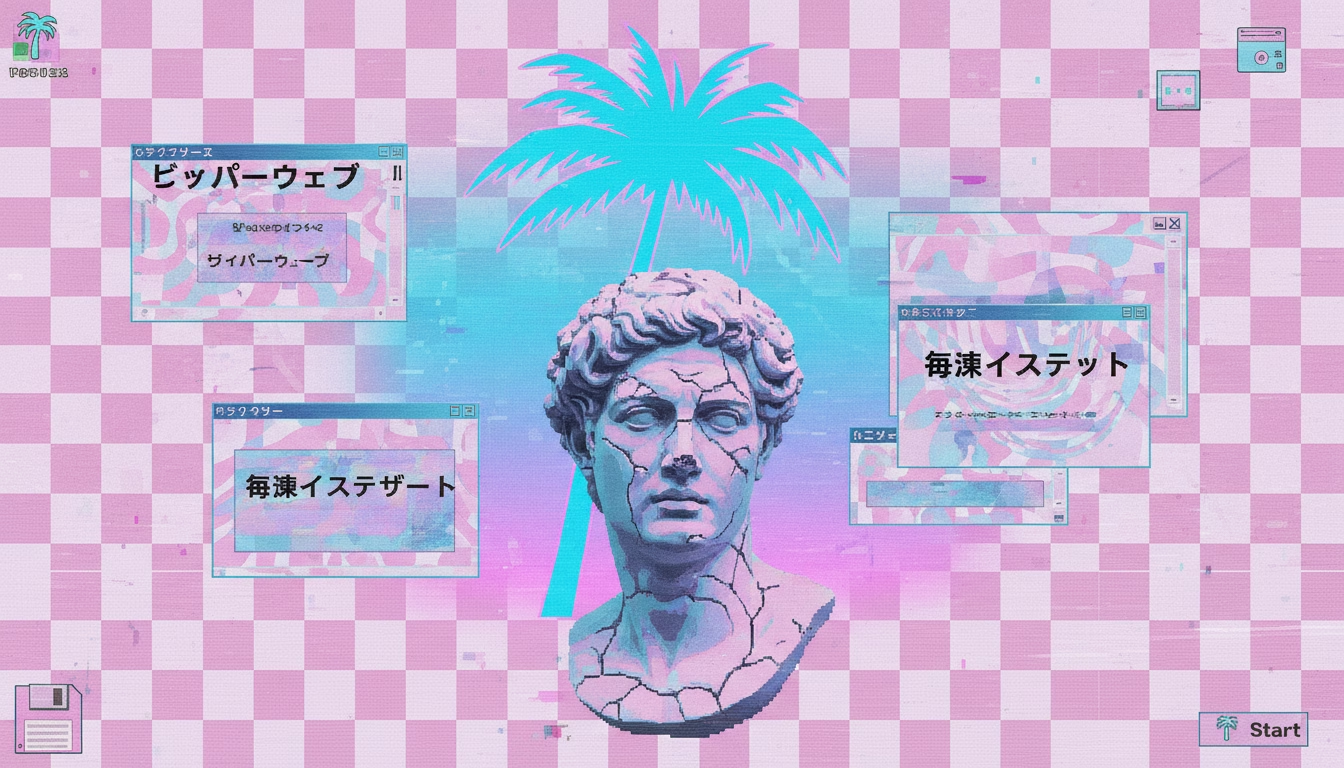
- Roman Busts and Antiquity: One of the most recognizable tropes. These idealized marble statues represent a kind of timeless, classical beauty. When you place that perfection next to a pixelated Windows 95 error message, you get the central tension of vaporwave: the contrast between an idealized past and our disposable, decaying digital present. You will never look like this. It's a statue. But your Mac can.
- Early Digital Nostalgia: A deep fondness for the dawn of the home computer. This includes Windows 95 interfaces, clunky 3D models, and glitch art. It's a longing for a digital world that felt discoverable and strange, not curated by algorithms.
- Japanese Text: Characters (Kanji, Katakana, Hiragana) are sprinkled throughout. This is a direct nod to the 1980s, when Japan's economic boom flooded the West with futuristic technology. For a kid growing up then, brands like Sony and Nintendo were the future. The text bottles that feeling of exotic, high-tech consumerism, a key pillar of the neon aesthetic.
- A E S T H E T I C Full-Width Text: This simple typographic trick spaces out letters, making them feel architectural and monumental. It mimics the look of old computer text and reinforces the slow, dreamy, and slightly broken feel of the entire vaporwave aesthetic.
Vaporwave vs. Synthwave: The Crucial Difference
Let's clear the air. Confusing vaporwave with synthwave is the aesthetic equivalent of confusing a crocodile with an alligator. They look similar from a distance, but they are fundamentally different beasts. They're cousins who both inherited their grandparents' old stuff, but they went through different boxes.
The biggest difference is intent. The synthwave aesthetic is earnest. It genuinely loves the 1980s, celebrating the high-octane energy of sci-fi films and arcade games. It's about feeling powerful and driving a DeLorean into a neon-drenched sunset. There's no irony—just pure, retro-futuristic cool. It's music composed on analog synths, an homage to film composers like John Carpenter.
Vaporwave, on the other hand, is ironic. It looks back at the same era but focuses on the hollow promises of consumer culture. Its mood is melancholic, dreamy, and often unsettling—a critique of capitalism wrapped in the very aesthetic it's critiquing. It's an internet-born genre built on sampling and distorting forgotten pop songs.
| Attribute | Vaporwave | Synthwave |
|---|---|---|
| Mood | Ironic, critical, melancholic | Earnest, energetic, heroic |
| Era Focus | Late 80s - early 90s consumer culture | Early-to-mid 80s sci-fi & action films |
| Key Visuals | Roman busts, Windows 95 UI, malls | Gridlines, supercars, chrome logos |
| Origin | Internet-born, sample-based (2010s) | Analog-influenced, composed (mid-2000s) |
| Feeling | A dream you can't quite remember | The training montage in a movie |
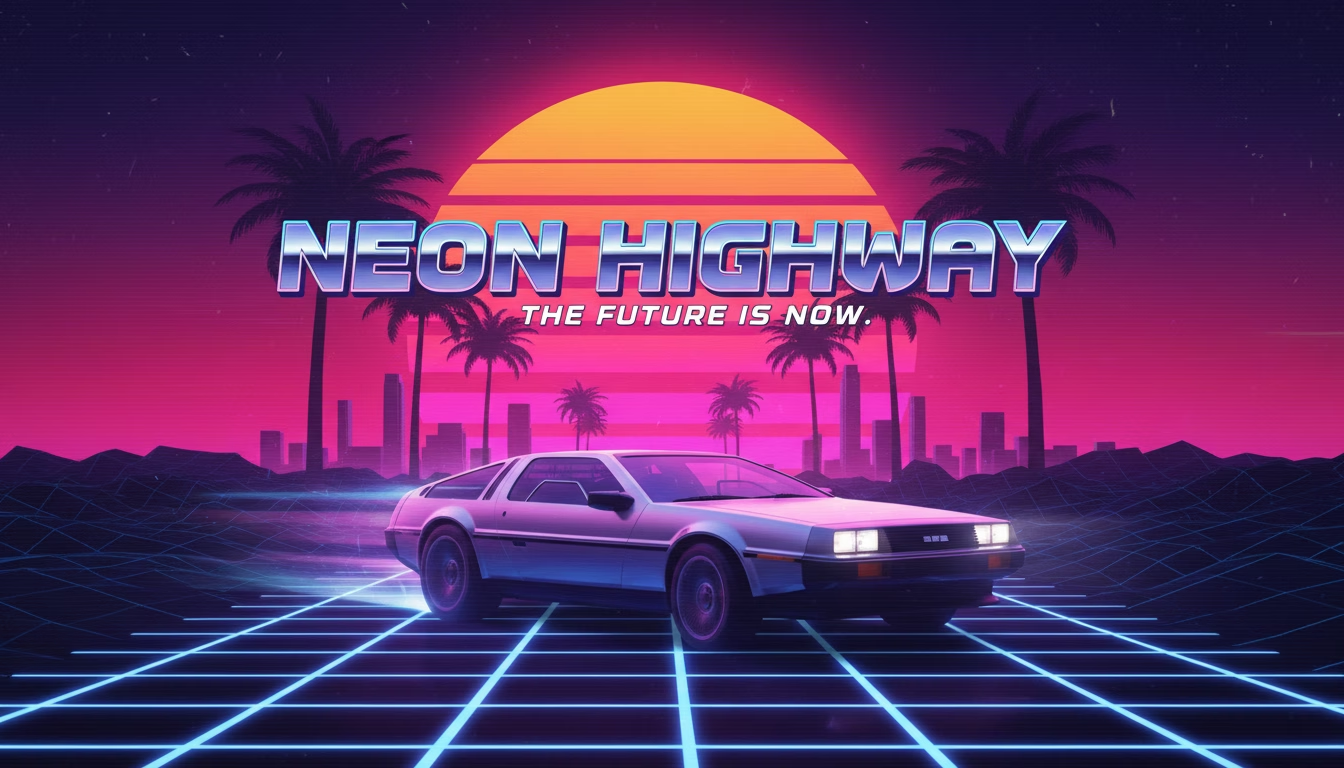
Synthwave found the action movie VHS tapes. Vaporwave found the corporate training videos and warped cassettes of smooth jazz. One is a heroic fantasy; the other is a haunting memory.
The Vaporwave Family Tree: Key Subgenres
Like a glitch in the code, vaporwave mutated almost immediately, branching into a weird and wonderful family of subgenres. Each offshoot took the core DNA—the critique of consumerism, the melancholic nostalgia—and spun it in a new direction.
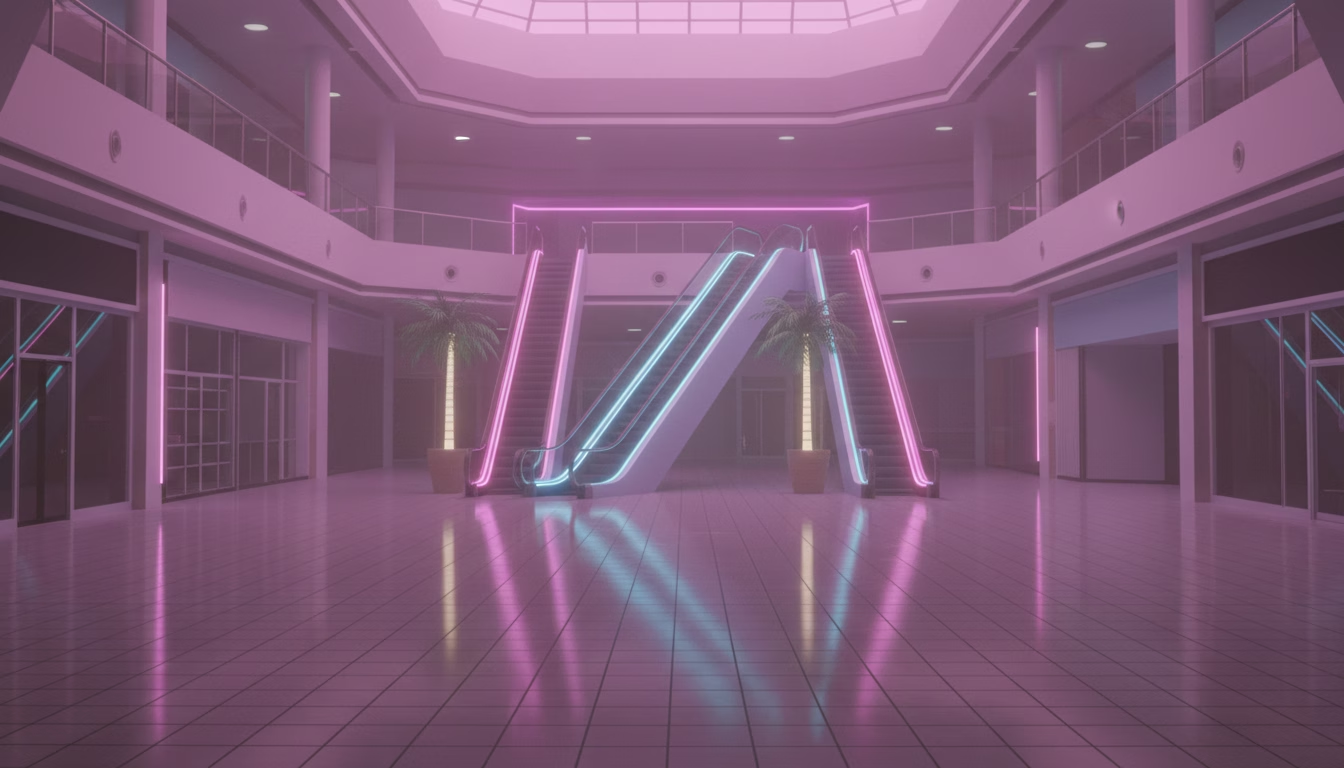
- Mallsoft: If you've ever wondered what a shopping mall sounds like after it has died, that's Mallsoft. It strips away the upbeat samples to focus on the cavernous acoustics of empty commercial spaces. It's the sound of a distant PA announcement echoing through a deserted food court—pure architectural melancholy.
- Future Funk: Vaporwave's energetic, optimistic cousin who discovered disco and anime. Future Funk takes the sampling techniques but applies them to upbeat 70s and 80s city pop and funk. The result is a high-energy, danceable sound that trades melancholy for pure joy, often paired with visuals from vintage anime.
- Simpsonwave: A surreal offshoot from around 2016 that pairs classic vaporwave tracks with heavily edited, psychedelic clips from the early seasons of The Simpsons. The combination of familiar animation with hazy, melancholic music creates a powerful sense of nostalgia for a shared cultural memory, perfectly summarizing what vaporwave does best: making the familiar feel strange and new again.
Bringing the Vaporwave Aesthetic to Your Mac
Alright, enough theory. You're going to stare at your Mac for hours anyway; it might as well have some style. The looping, hypnotic nature of vaporwave art is perfect for a live wallpaper, creating a perpetually chill, retro-futuristic vibe that a static image just can't match.
This is exactly why I built gifPaper for Mac. It's designed to bring this look to your Mac natively—no hacks, no weird workarounds. You can set seamless, 4K loops as your lock screen, desktop, and screen saver, finally doing justice to the aesthetic. Waking your Mac to a living wallpaper that slows as you unlock is a small detail, but it makes a huge difference.
The key is finding a loop that hits the particular flavor of nostalgia you're after. Our neon and purple collections are a great place to start digging.
Your Mac's desktop doesn't have to be a boring, static image. With gifPaper, you can bring the hypnotic, looping visuals of the vaporwave aesthetic directly to your lock screen, desktop, and screen saver. Explore over 150+ 4K live wallpapers with a free 7-day trial—no credit card needed. It's a one-time $4.99 purchase, not a subscription. Learn more at gifpaper.com/macos-app.