7 Abandoned Los Angeles Spots You Can Actually Visit
Trying to find abandoned Los Angeles spots usually goes the same way. You search for moody ruins, get fed a pile of urbex bait, and five minutes later you're reading directions that end with "hop the fence near the loading dock." Charming. Also a solid way to spend your afternoon explaining yourself to security.
Los Angeles is big enough that abandonment shows up in a lot of forms. The city has a 2025 estimated population of 3,869,089, and the metro was estimated at 12.9 million in 2024, which is part of why "abandoned Los Angeles" never means just one thing. In a place this large, empty infrastructure, stalled projects, closed attractions, and half-forgotten civic leftovers all coexist in plain sight (Los Angeles overview).
The better version of this weekend is simpler. Go to places I can legally access, or at least legally view, and enjoy the cracked-concrete melancholy without adding "trespassing situation" to your calendar. Bring water, decent shoes, and a tiny amount of dignity. Leave the bolt cutters at home.
A lot of famous "abandoned" LA spots are not abandoned in the pure ruin-porn sense anyway. Some are partly active, fenced off, under redevelopment, or just stuck in legal limbo, which is why the useful question isn't "what's abandoned?" so much as "what can I realistically see without being a menace?" (practical abandoned LA context)
1. Old Los Angeles Zoo in Griffith Park
The old zoo is the easy recommendation, which doesn't make it boring. It makes it useful. If you want abandoned Los Angeles energy with almost no logistical drama, this is the one.
Right away, you get what people came for. Empty grottoes, old cages, stone enclosures, weird little pockets of shade, and enough concrete melancholy to keep a camera happy for an hour or two.
Why it works
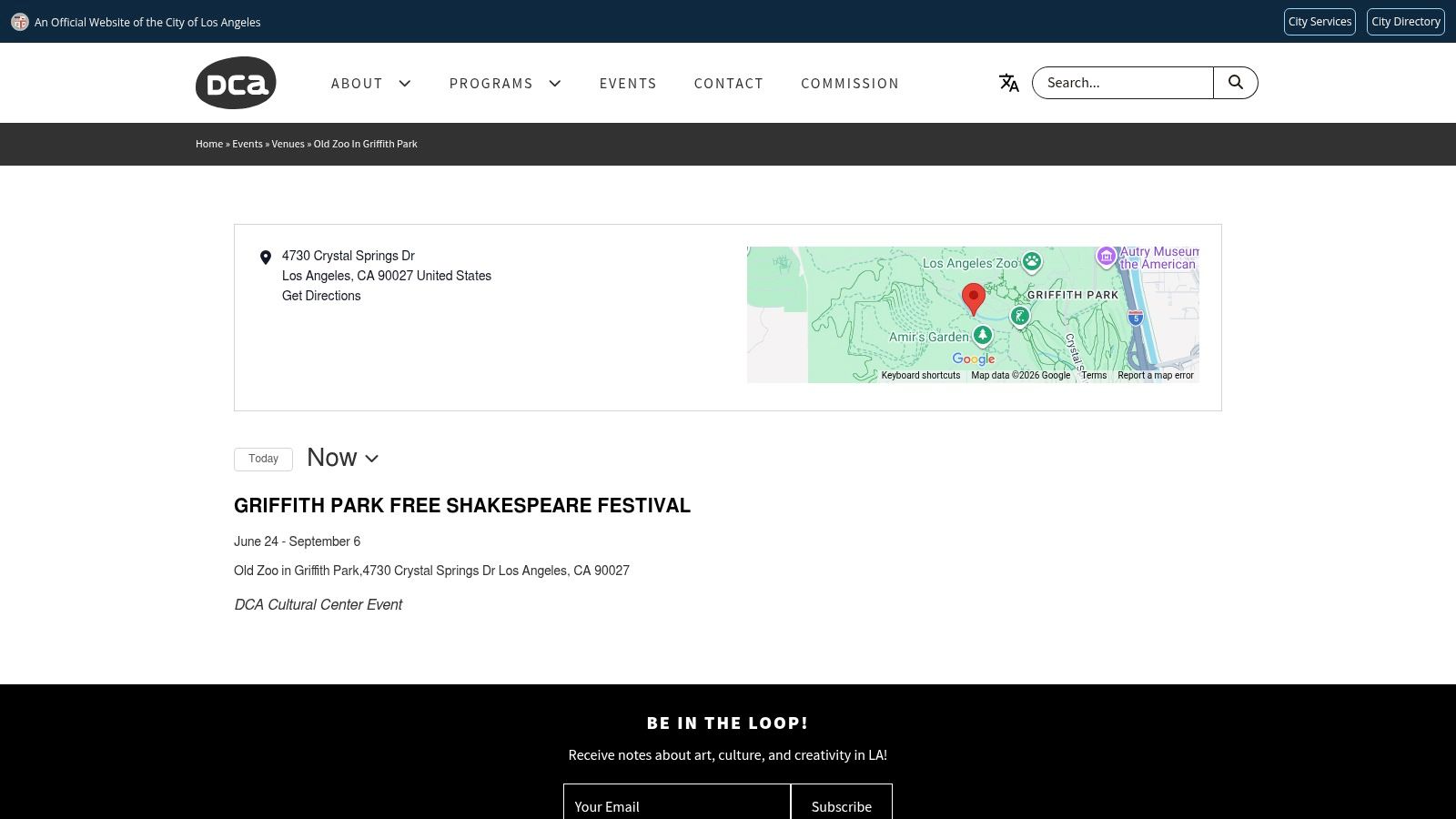
The biggest advantage is access. It's in Griffith Park, it's daylight-friendly, and it doesn't require the kind of planning usually associated with "ruins" content and poor life choices. The city parks page for the Old Zoo in Griffith Park is the practical starting point.
It also works because the remains are legible. You don't have to squint and imagine former use. You can see the bars, the enclosure layouts, the rough geometry of old captive spaces. That's a very different mood from a building that's merely boarded up.
Practical rule: Go early if you want photos that feel eerie instead of "birthday picnic wandered into frame."
There's a nice side effect here too. If the old zoo turns out to be more family outing than gothic expedition, you're still in one of the city's best park systems. That lowers the risk of a dud outing considerably.
For desktop mood-board purposes, the vibe sits somewhere between civic relic and melancholy postcard. If that's your thing, the abandoned house wallpaper scratches a similar itch without requiring sunscreen.
What doesn't
Weekend crowds can blunt the atmosphere. Some corners also show the usual signs of heavy public use, including graffiti and the occasional patch that feels less "haunting ruin" and more "please watch where you're stepping." If you need total solitude, this isn't your masterpiece.
2. San Vicente Mountain Park in the Santa Monica Mountains
You park, walk a little, and end up standing on a Cold War hilltop above Los Angeles with concrete underfoot and haze out toward the ocean. That is a strong return on effort. San Vicente Mountain Park is one of the better picks for people who want the abandoned mood without trespassing, fence-hopping, or explaining themselves to a ranger.
The site was part of the Nike missile defense system, and that history shapes the visit. What remains feels more like a former control site than a giant ruin spectacle, which is useful to know before you show up expecting a rusted apocalypse set. The official page for San Vicente Mountain Park gives the practical details and current access information.
What makes it work is the balance. You get real military leftovers, open public access, and enough elevation to make the city feel distant for a minute. You also get signs, maintained paths, and a setting that reads more "historic overlook" than "forbidden zone." For a lot of people, that is the right trade.
It is especially good for photography. The concrete structures, old platforms, scrub, antennas, and wide sky do plenty together, especially if you want panoramic city photography with a slightly bunker-adjacent mood. History buffs get context without needing to decode random debris, and casual visitors can turn it into a short outing instead of an all-day expedition.
A warning from experience. Midday light is harsh up here.
Go later in the day if you can. The lower sun gives the site more texture, the city reads better in the distance, and the whole place looks less like a hot utility yard and more like the kind of ruin-adjacent scene that ends up as your desktop background for three months. If you want sprawling decay, this is not your stop. If you want legal access, strong atmosphere, and just enough Cold War weirdness to justify the drive, it earns its spot.
3. Fort MacArthur Military Museum in San Pedro
If you want actual interior fortification space, Fort MacArthur is the grown-up option. It has reinforced corridors, plotting rooms, and enough wartime concrete to satisfy anyone who likes history with a bunker accent.
The catch is right in the name. It's a museum. That's not a flaw, but it changes the feel. You're not wandering a forgotten shell. You're visiting a preserved military site with structure, exhibits, and hours I should check before showing up. The Fort MacArthur Military Museum page is where to confirm that.
Why it's still worth it
A lot of abandoned Los Angeles content confuses "uncontrolled" with "interesting." Fort MacArthur proves that you can have authenticity without pretending every worthwhile ruin has to involve a broken lock and a tetanus subplot.
You also get the harbor setting. San Pedro's edge-of-the-city mood does a lot for places like this. The fortification interiors are the star, but the surrounding parkland and coastal views keep it from feeling claustrophobic.
Real concrete military infrastructure beats fake creepiness every time.
This is also the kind of stop that works well for people who want context. You come away knowing what you were looking at, which is more than can be said for many "secret LA spots" lists written by people who seem strongly committed to not naming anything correctly.
What to expect
Expect a cleaner, more interpreted experience than the old zoo or Echo Mountain. Less ruin texture, more documented history. If your ideal outing is "haunted bunker but with parking," this is a very respectable choice.
4. Sunken City from Point Fermin Park
Sunken City is one of the best examples of why this whole topic needs adult supervision. The visuals are excellent. The legal reality is not subtle. The slide area is closed, unstable, and not where you should be proving your commitment to vibes.
The smart version is to see it from legal vantage points near Point Fermin Park. You still get fractured pavement, broken foundations, ocean backdrop, and that weird end-of-the-map feeling San Pedro does so well. Start with the official Point Fermin Park information.
The useful distinction
The term "abandoned" becomes imprecise. Some places are legally accessible ruins. Some are visible remains in dangerous or restricted space. Sunken City belongs in the second group, and that distinction matters more than internet mythology.
You can also fold this stop into a stronger half-day plan. Point Fermin Lighthouse, the coast, and nearby military sites make the area feel like one long conversation between geology, infrastructure, and terrible human confidence.
- Best for coastal ruin photos: You get dramatic forms with minimal effort.
- Best for cautious visitors: The legal overlooks offer sufficient views.
- Worst for rule collectors with a fence-climbing hobby: Don't.
Keep the fantasy on the camera roll
The fenced-off zone is part of the allure, obviously. So is every "forbidden city edge" cliché your brain starts composing the second you see it. Resist. Plenty of abandoned Los Angeles spots are enjoyable without turning yourself into a cautionary local-news segment.
5. Pacific Electric Red Car Viaduct Footings and Corralitas Rail Path
Some ruins shout. These mutter. The old Pacific Electric footings in Silver Lake are small-scale, odd, and much better than they sound in a sentence.
People call this area Silver Lake's Stonehenge, which is a little dramatic and therefore completely in the spirit of Los Angeles. What you get are surviving concrete footings from a former transit structure, visible from public routes, plus nearby path alignments that keep the old right-of-way mood intact.
Why this one sneaks up on you
This is not a mega-site. It's a quick stop. But that compactness is the charm. You don't need a tactical backpack or a dawn departure. You need curiosity and the ability to appreciate leftover transit bones in a residential setting.
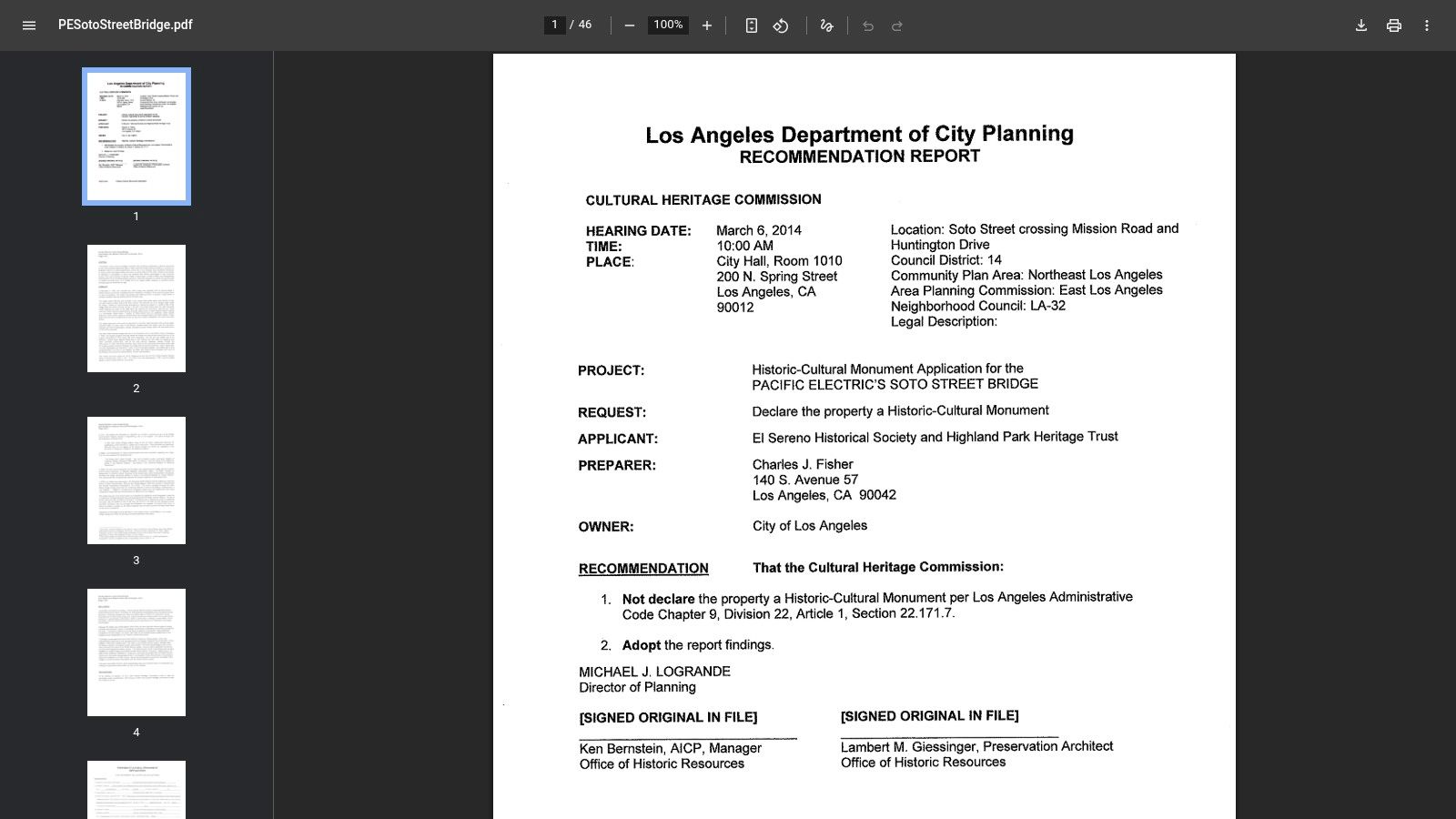
The historic designation is part of the appeal, and the relevant city planning document on the Pacific Electric structure context helps anchor it in real preservation history.
Field note: Be respectful here. People live nearby, and nobody enjoys being treated like background scenery in someone else's "abandoned city" montage.
This stop is especially good if your favorite abandoned Los Angeles sites are really about infrastructure memory. Old rails, leftover supports, route traces, the city showing you where it used to move differently. That's catnip for a certain kind of brain.
The aesthetic cousin on the wallpaper side is pure industrial melancholy. The dark tower wallpaper gets that same "civilization recently misplaced itself" feeling, but with less residential guilt and more 4K looping drama.
The downside
Scale. That's the limitation. If you need towering structures or an all-afternoon destination, this won't carry the day by itself. Pair it with other Eastside stops and it becomes much stronger.
6. Echo Mountain White City ruins
Start this one early and bring water like you mean it. Echo Mountain gives you the abandoned-LA payoff without the usual trespassing nonsense, because the ruins are reached by a legitimate public trail and viewed in plain sight. You get crumbling resort remains, big basin views, and the satisfying feeling that you worked for the photos.
The old Mount Lowe Railway resort left behind foundations, terraces, stair fragments, and scattered masonry high above Altadena. The site has more presence than the city-side relics on this list. It feels less like a quick curiosity and more like a full outing with history attached.
The practical starting point is the Angeles National Forest trail guide for Echo Mountain. Read it before you go. Conditions, closures, and heat can turn a fun ruin hike into a dumb lesson.
What makes Echo Mountain land so well is the contrast between the setting and the remains. You climb through chaparral and exposed switchbacks, then hit the bones of an old pleasure resort sitting above one of the most developed urban basins in the country. It is theatrical in exactly the right way. If your goal is abandoned aesthetics without hopping fences, this is one of the cleanest picks in Los Angeles.
For the desktop version of that mood, the dark tower wallpaper delivers all the crumbling grandeur, none of the uphill breathing noises.
What catches people out
Heat and exposure do the gatekeeping here. The hike is straightforward to follow, but Southern California sun punishes sloppy planning fast.
- Carry extra water: The descent can feel much longer once you've cooked yourself on the climb.
- Check trail status before leaving home: Storm damage and closures happen.
- Wear real shoes: Loose dirt and rocky sections are a bad place for fashion experiments.
This is one of the best legal ruin experiences in LA. The trade-off is simple. You earn it with sweat.
7. Bridge to Nowhere
The name is doing a lot of work here, and for once it earns it. A concrete arch left stranded after the road to it vanished is exactly the kind of sentence that makes abandoned Los Angeles lists inevitable.
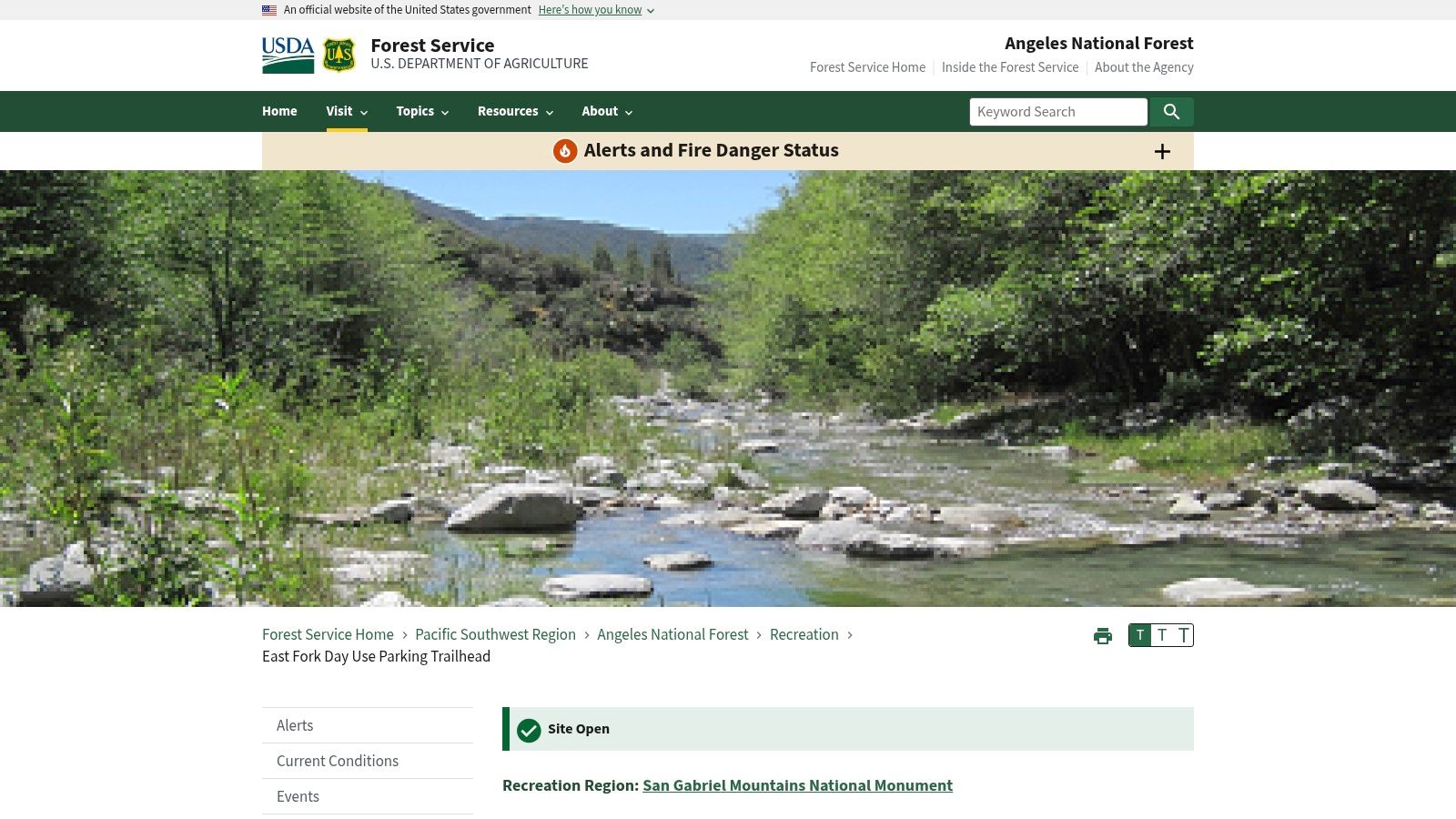
The site sits out in the East Fork area of the San Gabriel Mountains, and the approach is a real hike with river crossings. This is not the "swing by after coffee" option. It's an outing. The official East Fork trailhead guidance from the US Forest Service is mandatory reading before you go because access details can change.
Why people keep going
Because it's absurd in the best possible way. A substantial piece of infrastructure, stranded in a canyon, reached by walking through water and rock to visit a monument to plans that lost an argument with nature.
It also photographs beautifully. Not in a delicate urban-decay way. In a blunt, cinematic, "civil engineering had dreams" way.
The honest warning
This is the most demanding trip here. Multiple crossings, a longer route, and conditions that can shift make it a poor choice for inexperienced hikers or anyone treating preparation as a personal insult.
Regional housing and development data underline something odd about Los Angeles more broadly. LA County recorded 49,900 home sales in 2024, up from 47,600 in 2023 but still well below 69,200 in 2019 and the 125,900 peak in 2003, which is a reminder that growth and turnover don't move in neat straight lines in this region (Los Angeles County housing indicators). The Bridge to Nowhere feels like the infrastructure version of that lesson. Building happens. Plans stall. Nature intervenes. The leftovers remain.
Some ruins are pretty. This one is funny, majestic, and mildly unreasonable. That's why it's famous.
Abandoned Los Angeles: 7-Site Comparison
| Site | Access & Effort | Resource Requirements | Expected Outcomes | Ideal Use Cases | Key Advantages |
|---|---|---|---|---|---|
| Old Los Angeles Zoo (Old Zoo Picnic Area), Griffith Park | Easy; short walks, daylight access | Minimal, free entry, basic parking/picnic supplies | Photogenic animal enclosures, casual trails, picnic atmosphere | Family outings, urban ruin photography, short nature breaks | Central, free, highly photogenic and family-friendly |
| San Vicente Mountain Park (Nike Missile Site LA-96C) | Moderate; short drive/hike to exposed summit | Minimal, water/sun protection, no fee | Interpretive Cold War panels, wide city-to-ocean vistas | Quick historical visits, panoramic landscape photography | Panoramic views with informative signage; low-hassle visit |
| Fort MacArthur Military Museum at Battery Osgood–Farley | Easy but scheduled; museum hours and parking | Low, check museum hours, small parking area | Interior WWII battery galleries, plotting rooms, harbor views | Educational visits, interior military-history photography | Access to authentic interiors and curated exhibits |
| "Sunken City" landslide ruins (view from Point Fermin Park) | Very easy to view; entry to slide area prohibited | Minimal, viewing from overlooks, obey closures | Dramatic fractured pavement/coastline vistas from safe overlooks | Coastal photography, short sightseeing loops | High-drama coastal visuals within city limits; combine with nearby sites |
| Pacific Electric Red Car Viaduct Footings & Corralitas Rail Path, Silver Lake | Very easy; street-level viewing and short walk | Minimal, no permits, be respectful in residential area | Historic concrete pylons and transit-history visuals | Quick urban shoots, transit-history interest, paired walks | No permits required, central location, designated historic resource |
| Echo Mountain "White City" ruins (Mount Lowe Railway) | Strenuous; 5–6 mile round-trip hike, exposed | Moderate, hiking gear, water, maps, check forest alerts | Authentic resort/railway ruins with sweeping basin views | Ruins-focused hikes, landscape photography, historical exploration | Rich historical context, genuine alpine ruins and big vistas |
| Bridge to Nowhere (1936 arch), East Fork, San Gabriel Mountains | High effort; multi-mile river-canyon hike with crossings | High, river-crossing gear, hiking prep, check USFS rules/permits | Iconic concrete arch, wilderness river canyon experience, optional bungee | Adventure hikes, dramatic photography, bucket-list visits | Iconic remote structure with outstanding visual impact and adventure element |
Your Mac Can Look This Moody, Too
Los Angeles is obsessed with the next thing, but the city's leftovers are often more interesting than its polished surfaces. Old cages in Griffith Park, a Cold War hilltop, a military battery by the harbor, a landslide that edited a neighborhood out of existence, transit footings hiding in plain sight, resort ruins above Altadena, a bridge marooned in a canyon. It's all the same local habit of shedding skins and pretending not to notice.
That also explains why abandoned Los Angeles is usually mislabeled. A lot of the most famous places aren't pristine ruins waiting for urbex heroics. They're partly closed, partly preserved, stalled, repurposed, or trapped by ownership and redevelopment realities. That's especially obvious in larger, high-value sites. The old LA County/USC hospital has lower levels still in operation, and a developer was selected in 2023 for a reuse plan involving affordable housing, retail, and medical offices. Oceanwide Plaza, vacant since 2019 after bankruptcy, is better understood as a stalled prime-land development than a forgotten ruin. KCRW has covered the hospital's housing angle, and Planetizen has described Oceanwide Plaza as a "$1.2 billion ruin" in that broader conversation about reuse and blockage (KCRW on hospital reuse and housing pressure).
If what you want is the mood, not the parking stress, the dark wallpaper collection is the obvious move. If you want a slightly different flavor of urban afterglow, the neon wallpaper collection leans more "city at 2 a.m." and less "county infrastructure remembers things."
And if you want that mood on your machine instead of in your weekend planning tabs, gifPaper for Mac is the part I built for exactly this sort of person. It sets live wallpapers on your Mac lock screen, desktop, and screen saver using Apple's native Aerial format. Not a weird overlay. Not a subscription. There's a 7-day free trial with no credit card, and it's $4.99 once after that. Which, yes, is a very small price to pay for making your laptop look like it has unresolved feelings about concrete.
If you're also tuning the rest of your setup, Explore Mac voice typing apps is a useful read.
If you're going to stare at a screen for hours anyway, it may as well look interesting. gifPaper has 150+ looping 4K live wallpapers on the site, and the Mac app lets you use them properly on your lock screen, desktop, and screen saver. Quiet forests, neon alleys, cosmic voids, and other extremely practical things for a computer to be showing.