Synthwave Aesthetic: A Guide to the Retro-Future You Were Promised
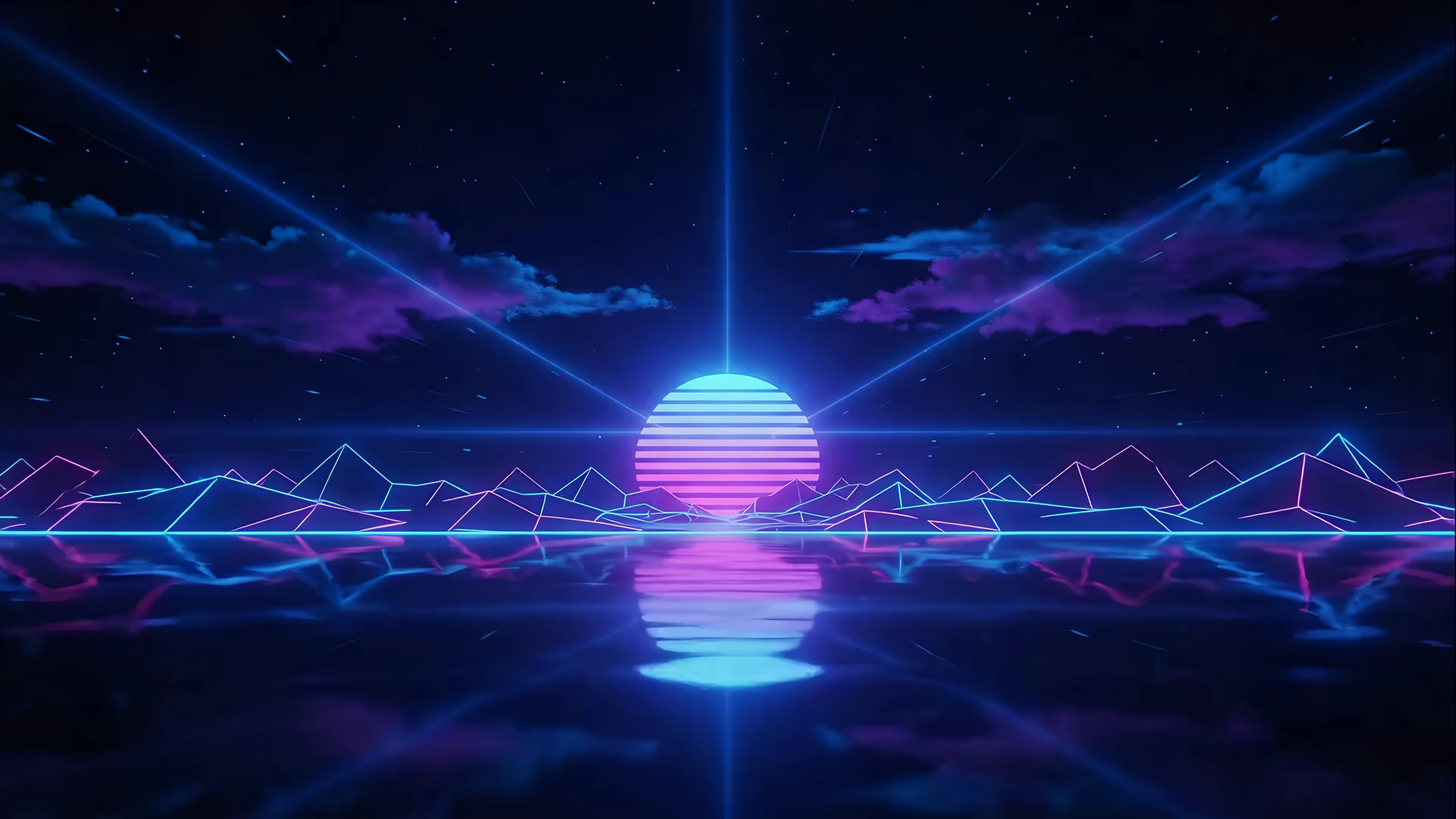
The synthwave aesthetic is a nostalgia-fueled love letter to the 1980s—specifically, the version of the '80s that existed in action movies, sci-fi flicks, and video game arcades. It's a retro-futuristic style built on analog synth music, vibrant neon colors, and the feeling of driving a DeLorean into an endless digital sunset.
It's the '80s, but cooler than they actually were.
So, What Is the Synthwave Aesthetic Exactly?
At its core, the synthwave aesthetic is an earnest, almost heroic homage. It doesn't mock the '80s; it celebrates an idealized, high-octane version of them. Somewhere out there, a teenager in 1987 is drawing this exact scene in a notebook during math class.
This earnestness is what separates it from its often-confused cousin, Vaporwave. While they share a similar color palette, their attitudes are polar opposites. Synthwave is optimistic and action-packed. Vaporwave, on the other hand, offers an ironic, often melancholic critique of '90s consumer culture. Synthwave loves the thing it references. Vaporwave is laughing at it from a distance.
Here's a quick cheat sheet to finally settle the debate with your friends.
Synthwave vs. Vaporwave: A Quick Guide
| Element | Synthwave (Earnest Homage) | Vaporwave (Ironic Commentary) |
|---|---|---|
| Vibe | Heroic, optimistic, driving toward a neon future. | Melancholy, nostalgic, lost in a digital shopping mall. |
| Imagery | Fast cars (DeLoreans, Ferraris), chrome grid landscapes, sunsets. | Glitched-out Windows 95 UI, Roman statues, Arizona Iced Tea. |
| Music | Driving synth-heavy movie soundtracks. | Chopped & screwed smooth jazz, elevator music. |
| Inspiration | Blade Runner, Tron, '80s action movie posters. | Early internet, '90s consumerism, corporate Muzak. |
The visual language of synthwave art is unmistakable:
- Color Palette: Dominated by electric pinks, deep purples, and vibrant cyans, often blended in smooth gradients. Everything is purple. You don't make the rules. You can see dozens of examples in our purple wallpaper and neon wallpaper collections.
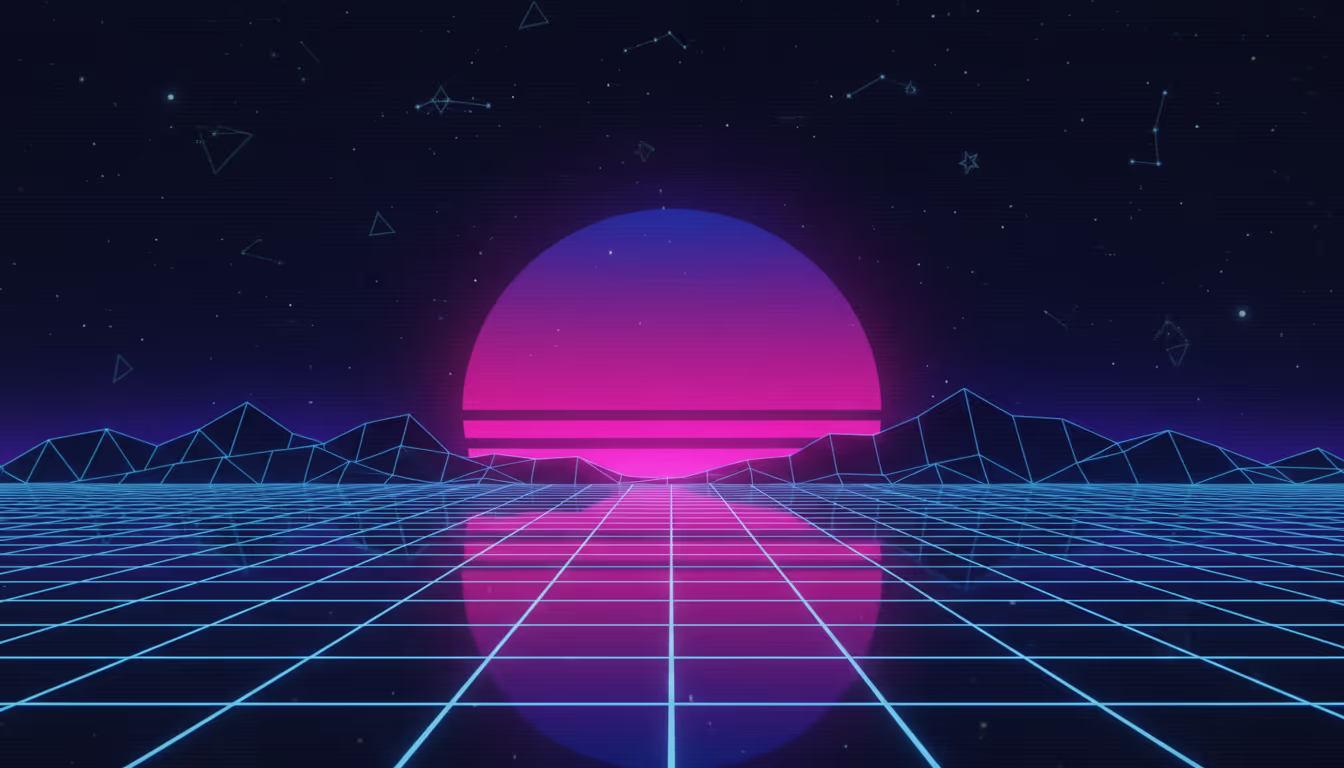
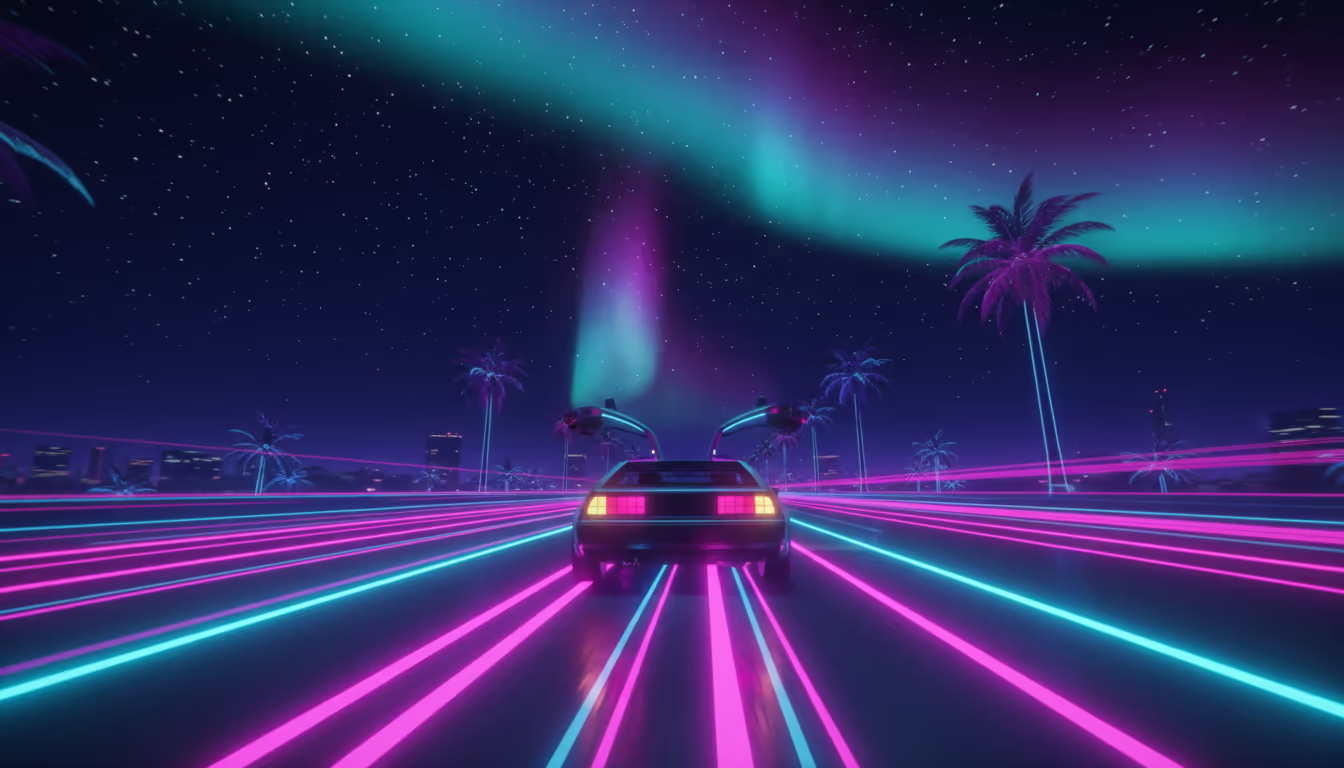
- Iconic Imagery: Expect to see chrome grid floors stretching to the horizon, wireframe mountains, speeding DeLoreans, and silhouetted palm trees against a massive setting sun.
- Atmosphere: The vibe is pure retro-futurism—a vision of the future as imagined by someone in 1985, listening to a movie soundtrack on their Walkman.
The whole aesthetic feels like the cover of a VHS tape for a blockbuster movie that never existed. It's the feeling of driving at night with the windows down, heading toward a city soaked in neon.
The Unlikely Origins of a Retro Future
Synthwave didn't just materialize out of nowhere. Its DNA comes straight from the 1980s, specifically from sci-fi films that imagined the future through a screen of neon and analog static. Movies like Blade Runner (1982) and Tron (1982) laid the visual groundwork: rain-slicked digital grids, towering neon-drenched cityscapes, and moody, synth-heavy soundtracks that felt both futuristic and lonely. The cyberpunk aesthetic digs deeper into this lineage.
For a long time, though, '80s nostalgia was a punchline. Then, in 2002, Grand Theft Auto: Vice City changed everything. It wasn't a parody; it was a love letter. It made '80s culture genuinely cool again for millions of people and primed the pump for what was coming next.
The Holy Trinity of Modern Synthwave
While the seeds were planted in the '80s, the synthwave you know today was born from a perfect storm in the early 2010s. Three specific pieces of media collided and cemented the entire aesthetic.
- Kavinsky's "Nightcall" (2010): This track became the unofficial anthem. With its moody, pulsing synths and robotic vocals, it perfectly captured the feeling of a solitary night drive through a sleeping city. It was the sound of the aesthetic before it had a name.
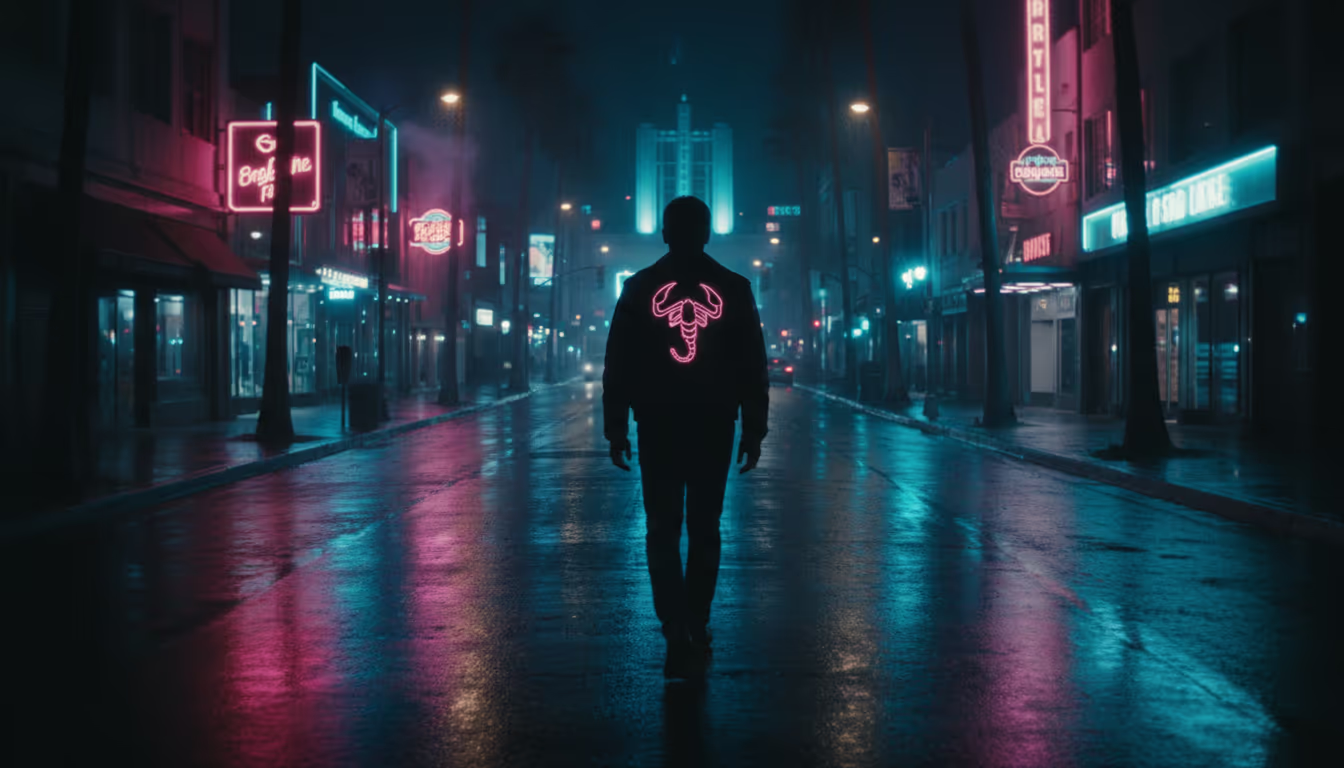
- The Movie Drive (2011): When "Nightcall" blasted through the opening credits of Nicolas Winding Refn's neo-noir masterpiece, the aesthetic went nuclear. Ryan Gosling's silent driver, the scorpion jacket, the neon-soaked visuals—it gave the sound a face, a story, and a whole moodboard to pull from.
- The Game Hotline Miami (2012): This brutal, top-down indie game threw players into a surreal, hyper-violent vision of 1989 Miami. Its pixelated style, paired with a relentless soundtrack from artists like Perturbator and M.O.O.N., solidified the synthwave aesthetic in gaming culture forever.
Together, these three created the blueprint. They were propped up by a wave of musical pioneers like Perturbator, Carpenter Brut, Gunship, and The Midnight who helped grow an internet subculture into a global movement. It was the perfect fusion of sound and vision—a whole world you could get lost in.
Deconstructing the Synthwave Visual Language
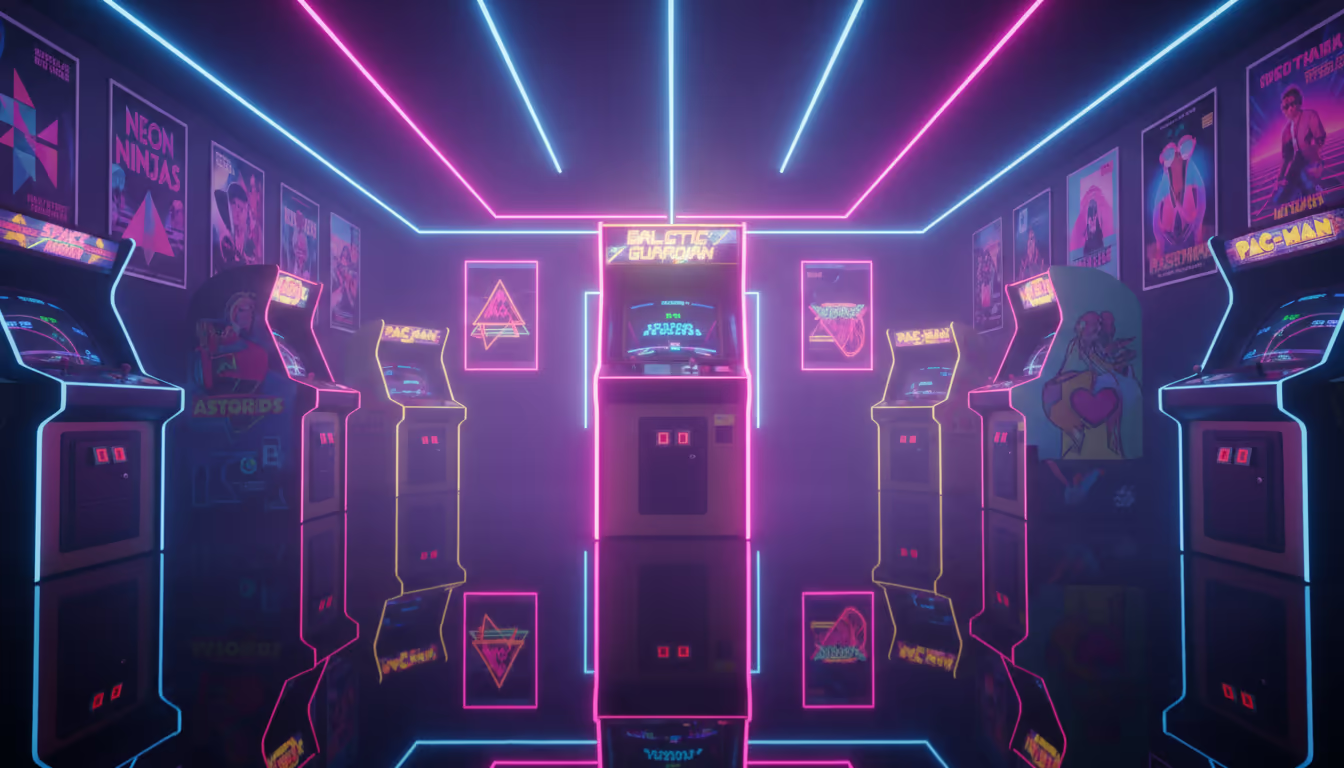
The synthwave aesthetic isn't just a vibe; it's a machine built from a very specific set of parts. To really get it, you have to pop the hood and look at the engine. It all starts with the color palette—a holy trinity of hot pinks, electric blues, and deep purples.
These aren't just colors; they're moods. They're the glow of an arcade cabinet in a dark room, the haze of a city at dusk, the colors of a future that never was. Everything in the synthwave design is drenched in this distinctive neon light.
The Sacred Icons of Synthwave
Beyond the colors, synthwave leans on a set of recurring motifs that instantly signal its retro-futuristic world. Once you see them, you can't unsee them. They're everywhere, from album covers to motion graphics.
- The Grid: An endless chrome or neon grid stretching to the horizon. It's the digital frontier, the road into a virtual world ripped straight out of early computer graphics from movies like Tron.
- The Sunset: Not just any sunset. It's a massive, low-hanging sun rendered in a perfect pink-to-purple gradient. In the world of synthwave, it's always twilight.
- The Car: Almost always a DeLorean or a Ferrari Testarossa, cruising down an empty highway. This is the central icon of freedom and escape that defines the outrun aesthetic, a subgenre built entirely around the feeling of driving.
- The Landscape: Silhouetted palm trees and wireframe mountains finish the scene. They create a sense of place that's part Miami, part computer simulation.
These pieces snap together to create a powerful sense of idealized nostalgia. It's a world built to feel like an escape—a drive into an endless, perfect 1980s night.
How Synthwave Went Mainstream
For a long time, synthwave was an internet secret. A niche scene for music nerds and retro gaming fans who remembered a future that never quite happened. It was cool, but it was small.
Then, on July 15, 2016, a show called Stranger Things hit Netflix, and everything changed. Its title sequence alone—that glowing red text, the ominous, pulsing synth score—was a perfect shot of the aesthetic, served up to the entire planet.
Suddenly, synthwave wasn't a secret anymore.
The Stranger Things Effect
Stranger Things was the ultimate gateway drug. It wasn't just a show set in the '80s; it felt like a show from the '80s, channeling the spirit of Stephen King and Steven Spielberg through a pure synthwave filter. The soundtrack, by Kyle Dixon and Michael Stein, became just as iconic as the kids on their bikes.
The show's success was a tidal wave. Stranger Things proved there was a massive, hungry audience for this sound, and the scene exploded. You can get the full story on the genre's rise with these insights on synthwave's history.
From Niche to Headliner
This new mainstream attention gave artists who had been grinding for years the spotlight they deserved. Bands like Gunship, The Midnight, and Timecop1983 went from making tracks in their bedrooms to building entire careers. They cultivated die-hard fanbases who didn't just listen to the music—they lived the aesthetic.
The visual language of synthwave—cool, retro, and futuristic all at once—became a go-to style for other media. You could see its DNA in films like Blade Runner 2049 and games like Cyberpunk 2077, proving it had serious staying power. The neon aesthetic became a permanent fixture in modern design.
The synthwave aesthetic wasn't just a fleeting trend anymore. It had officially logged on.
Bringing the Neon Sunset to Your Mac
Alright, you get the history. You understand the visual language. So why just admire the synthwave aesthetic when you can wrap your entire digital life in it? A static JPEG of a neon sunset is fine, but it's just a photograph of a feeling. The real thing should move.
This is where the experience shifts from passive to immersive. A true synthwave desktop isn't just a background; it's an environment. It's the subtle drift of a car down an endless grid, the slow pulse of a neon sign, the constant motion of a digital sun that never quite sets.
More Than Just a Pretty Picture
The goal is to make your Mac feel less like a tool for answering emails and more like the cockpit of a futuristic ride. A living, breathing synthwave scene is infinitely more captivating than a static image. While you can start with physical touches like cool Macbook decals, the screen itself is where the magic happens.
For that, you need motion. You need a 4K looping video that turns your entire workspace into a portal to 1988.
That's precisely why I built gifPaper for Mac. It's not just another app that sticks a video on your desktop. It uses Apple's native wallpaper system—the same one Apple uses for its own Aerial screen savers.
This means your synthwave wallpaper can run on your desktop, your lock screen, and as your screen saver. Wake your Mac, and you're greeted by a living scene. It's seamless.
How to Create the Ultimate Synthwave Desktop
Getting the look is straightforward. It's all about layering the right elements to build the complete vibe. You can explore a full range of options in the depth effect wallpaper collection, but here are the key ingredients:
- The Wallpaper: Start with a classic. A looping video of a car driving toward a purple sun or a grid stretching into infinity sets the foundation.
- The Lock Screen: With gifPaper, the same wallpaper on your desktop appears on your lock screen. Waking your Mac feels like booting up a terminal in a sci-fi movie.
- The Ambient Audio: Many wallpapers include subtle, atmospheric sounds that complete the immersion without being distracting.
The whole point is to turn a space you stare at for hours into something genuinely cool to look at.
Your Mac Is Now a DeLorean
So, you've soaked up the history and cracked the code on synthwave's visual language. You get it. But admiring the aesthetic from a distance is one thing; living inside it is another. A static JPEG is a postcard from a cool place. A living wallpaper is actually being there.
The whole point of this vibe is motion—that feeling of driving endlessly toward a neon horizon. It's an experience a still image just can't deliver. That's exactly why I built gifPaper for Mac. It's the only app that uses Apple's native wallpaper system to bring seamless, 4K looping synthwave scenes to your desktop, lock screen, and screen saver.
How to Get Started in Two Clicks
Forget hacky workarounds or complicated setups. Other wallpaper apps run as a clunky window floating over your desktop, but gifPaper integrates directly into macOS itself.
When you wake your Mac, a vibrant synthwave city greets you on the lock screen. Unlock it, and the same living world is waiting on your desktop. It's the immersive experience the aesthetic was made for.
Look, you've read this far. You're clearly into this. The next step is to actually see it for yourself.
gifPaper has a 7-day free trial, and you don't even need a credit card. You get full access to all 150+ wallpapers and every single feature. If you dig it, it's a $4.99 one-time purchase—not another one of those soul-crushing subscriptions.
It's time to turn your Mac into the retro-futuristic command center it was always meant to be. Download the trial and see how it feels to have the best-looking screen in the room. For a more detailed walkthrough, you can learn more about how to get live wallpapers on Mac.
Still Have Questions About Synthwave?
Got a few things you're still wondering about? Let's clear up some of the usual suspects.
Is Synthwave the Same as Retrowave?
Pretty much. Think of Retrowave as the big umbrella for all this '80s-inspired art and electronic music. Synthwave is just the most famous kid under that umbrella, sitting alongside cousins like the outrun aesthetic.
So, yes and no. All synthwave is retrowave, but not all retrowave is synthwave. For most people, though, the terms are interchangeable.
Why Are Cars So Common in Synthwave Art?
Because nothing screams '80s freedom like driving at night. It's a core theme in the synthwave aesthetic—that feeling of escape, of moving forward, perfectly matched by the driving basslines in the music. The whole vibe is pulled straight from classic '80s car culture, shows like Knight Rider, and old-school arcade racers.
Is the Synthwave Aesthetic Still Popular?
Absolutely. Its big mainstream moment might have been in the mid-to-late 2010s, but it's settled into a comfortable spot with a die-hard global fanbase. You can still see its fingerprints all over modern music, movies, and games.
Bands like The Midnight and Gunship are still dropping new albums and selling out tours to huge crowds. The neon sunset isn't fading anytime soon.
Ready to stop admiring the aesthetic and start living in it? gifPaper is a Mac app that brings your screen to life with over 150 seamless, looping 4K wallpapers for your desktop, lock screen, and screen saver. Try it free for 7 days.