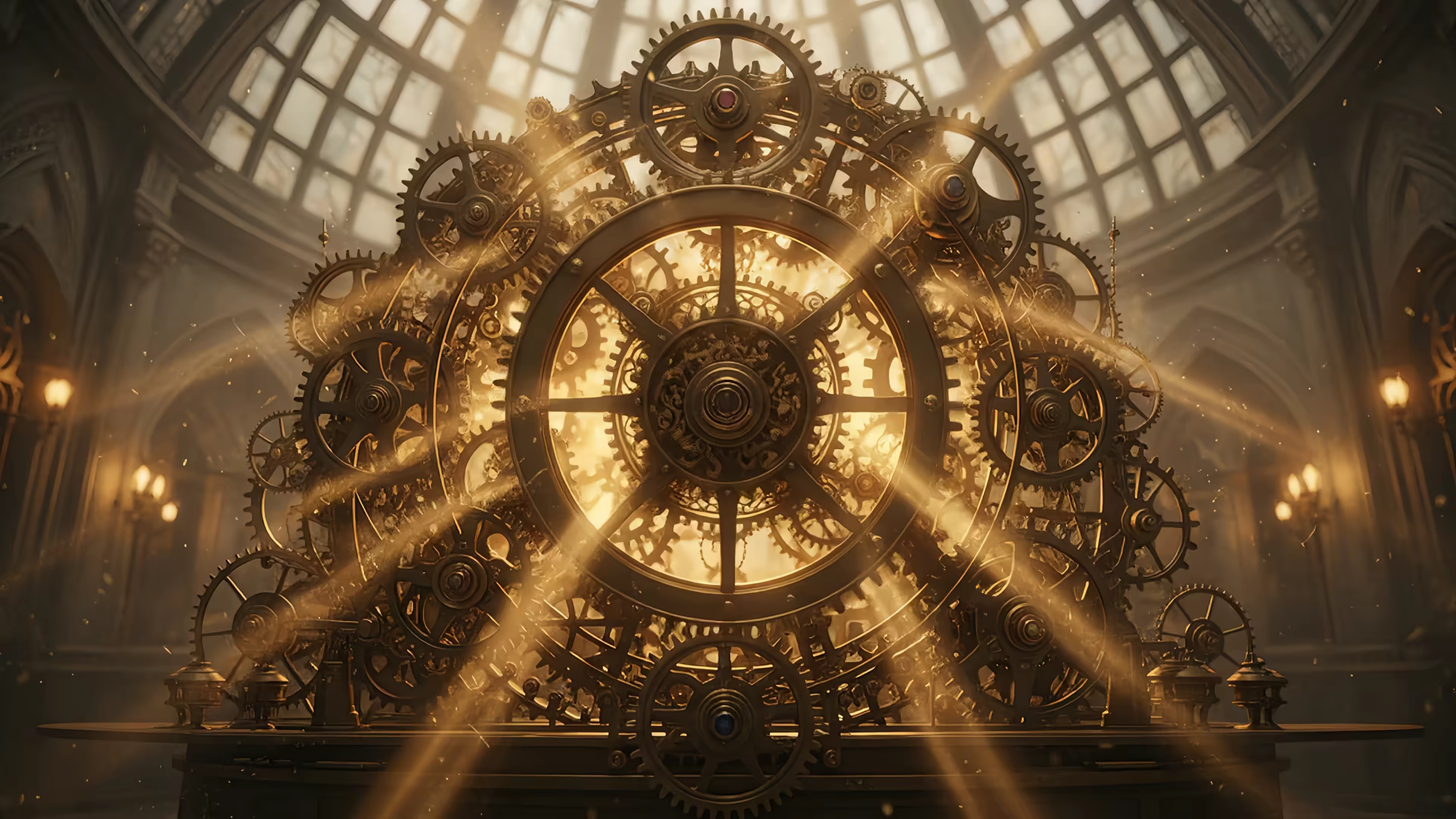
Art Deco Aesthetic: A Guide to Gatsby-Level Glamour
Art Deco isn't just "old-fashioned." It's a very specific flavor of design from the 1920s and 1930s built on glamour, geometry, and a roaring belief in the future. Think of it as the whole world putting on its sharpest suit to celebrate modernity, technology, and progress after the grim years of World War I. It looked at the fussy, nature-inspired curves of Art Nouveau and said, "No thanks," choosing machine-age symmetry and unapologetic opulence instead.
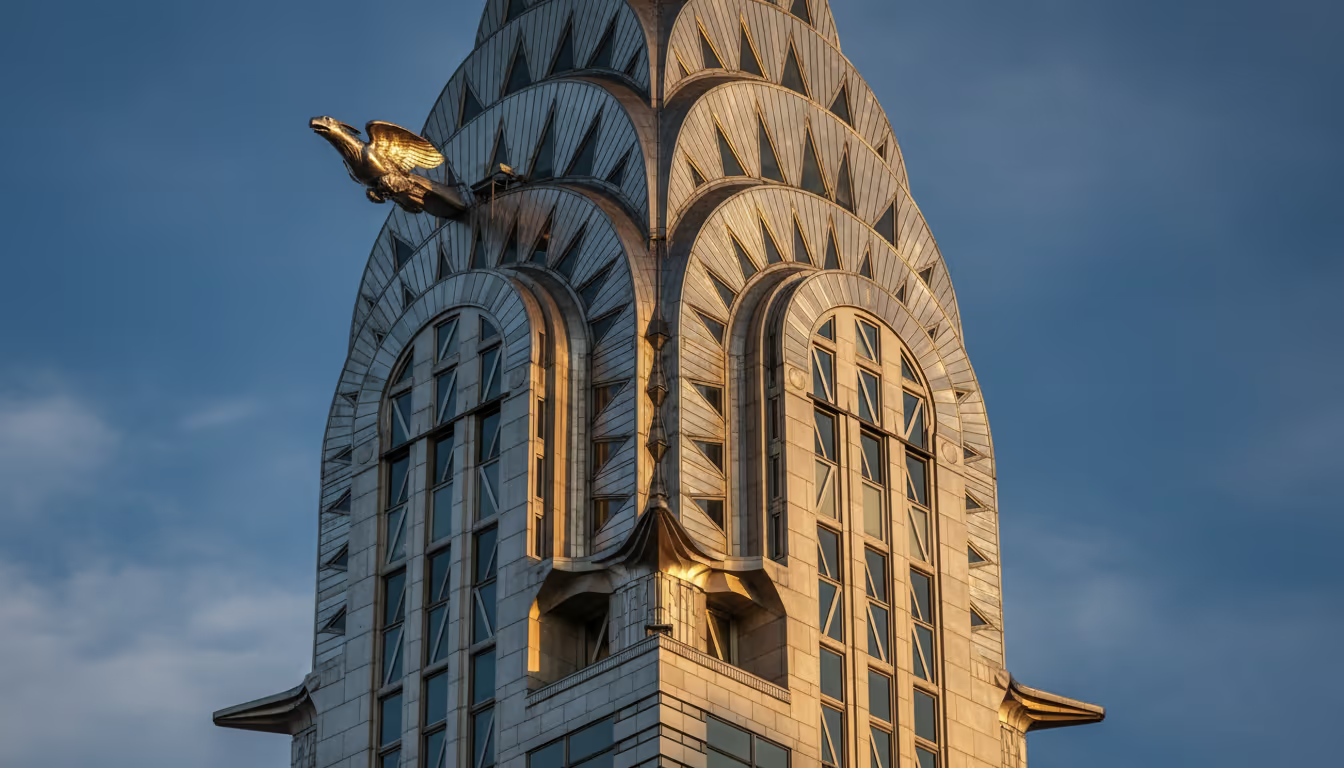
The ultimate Art Deco object might be the Chrysler Building. Its gleaming, terraced crown isn't just a spire; it's a statement—a monument to ambition, industry, and the kind of sleek confidence that defined an era.
What Is the Art Deco Aesthetic?
The art deco aesthetic is a loud declaration of luxury and a forward-thinking spirit. Born in an age of rapid industrialization and social change, it embraced the machine, celebrated speed, and wasn't afraid to show off.
While it shares some DNA with the broader vintage aesthetic, Art Deco is in a league of its own, defined by a few core ingredients:
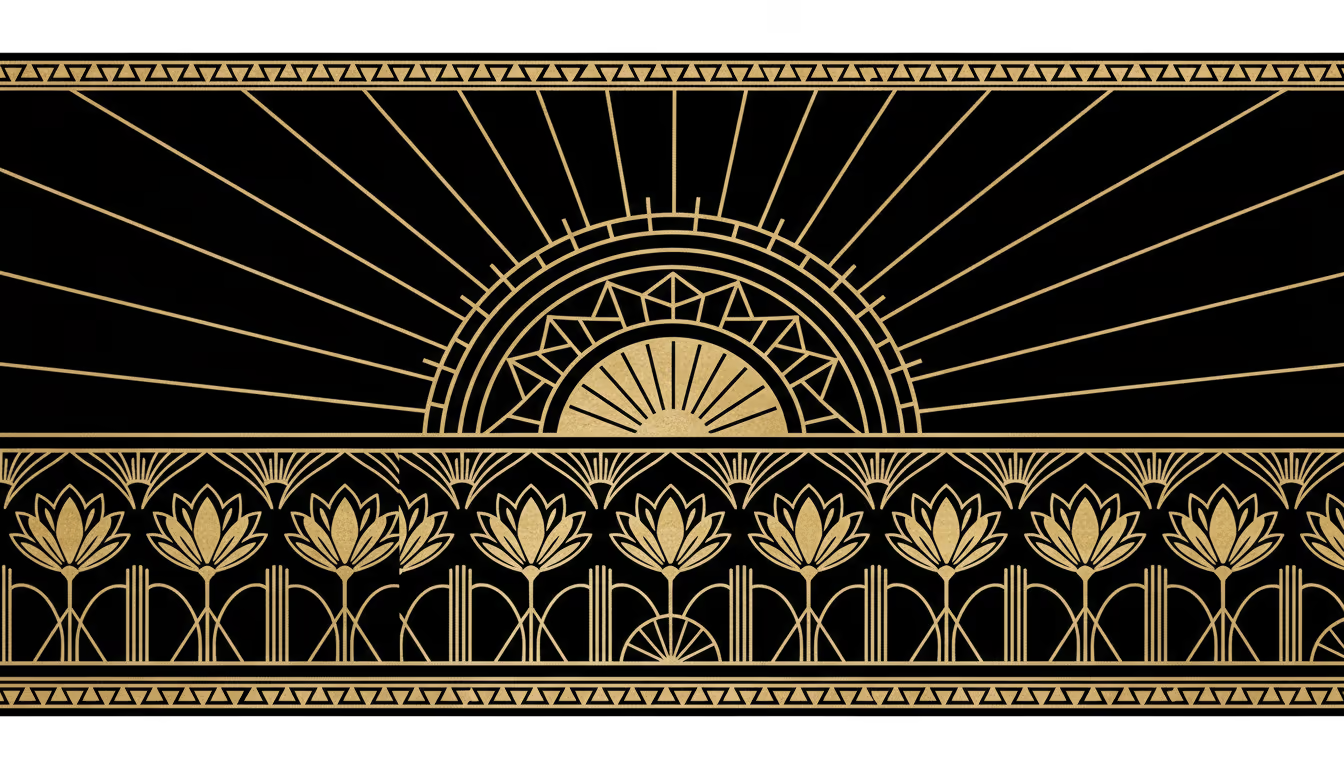
- Geometric Precision: Bold, repetitive patterns are everywhere—sunbursts, zigzags, chevrons, and stepped forms. These weren't just decorative; they were symbols of the machine age, celebrating the power of precision.
- Luxurious Materials: Designers mixed natural and man-made materials to create a palpable sense of richness. Gleaming chrome and glass sat next to exotic woods like ebony and mahogany, alongside lacquer, marble, and polished metals. It was all about high-contrast glamour.
- Symmetry and Order: Unlike the flowing, asymmetrical look that came before it, art deco design is almost always balanced. It reflects a desire for structure in a world that was changing at breakneck speed.
The Parisian Party That Kicked It All Off
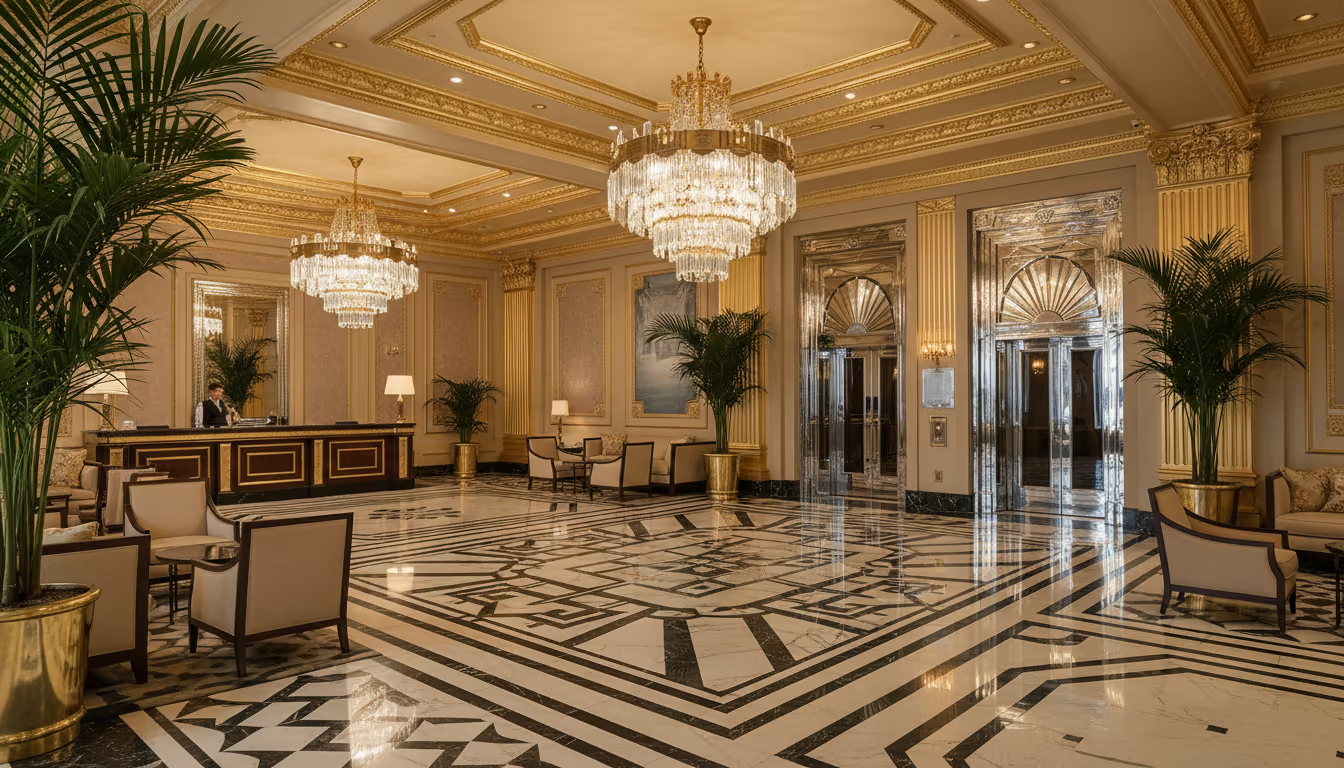
Every great style needs a launch party. For Art Deco, it was a six-month-long global spectacle in Paris. Picture it: 1925. The city hosts the Exposition Internationale des Arts Décoratifs et Industriels Modernes. This wasn't just some fair; it was a statement. A coordinated push away from wartime austerity and toward a future that was sleek, luxurious, and unapologetically modern.
It was here, surrounded by pavilions of gleaming metal and lacquered wood, that the movement literally got its name. The exposition crystallized a visual language that would soon define everything from New York skyscrapers to the waterfront of Shanghai's Bund. The party in Paris set the tone for a decade of design that still feels potent and glamorous today.
The 1925 Exposition cemented the geometric shapes, lavish materials, and forward-looking spirit of Art Deco into the world's consciousness, proving that everyday objects—from a toaster to a grand building—could be works of art.
The Visual Hallmarks of Art Deco Design
So, how do you spot Art Deco in the wild? It's not a style that whispers. Art Deco announces its arrival with a few unmistakable signatures—a visual language built on confidence, order, and a fascination with the future.
Once you know the code, you'll start seeing it everywhere. Here are the core elements that give art deco style its iconic look.
Core Elements of Art Deco Design
| Element | Description | Examples |
|---|---|---|
| Geometry | Strong emphasis on clean lines, sharp angles, and repeating mathematical shapes. | Sunbursts, zigzags, chevrons, stepped forms (ziggurats). |
| Symmetry | A near-obsession with balanced, mirrored designs that create a sense of order and grandeur. | Building facades, radio grilles, furniture design, wallpaper patterns. |
| Materials | Fearless mixing of luxurious, natural materials with new, man-made industrial ones. | Chrome, glass, lacquer, marble, exotic woods. |
| Color | Dramatic, high-contrast palettes like black and gold, or later, soft pastels in Miami. | Black and gold, deep blues and reds, seafoam green, flamingo pink. |
| Motifs | Stylized representations of nature, mythology, and the machine age. | Sleek animals (gazelles, greyhounds), stylized fountains, gears, airplanes. |
| Typography | Sans-serif fonts with a vertical emphasis, often with decorative flourishes or sharp angles. | Broadway, Parisian, and other geometric, high-contrast typefaces. |
These building blocks are the DNA of the style. You see them in the fashion of Erté and Chanel, the architecture of the Empire State Building, and even the fonts used on movie posters. It's a complete visual system.
From New York Skyscrapers to Dystopian Futures
Art Deco didn't just stay in the drawing room; it conquered skylines. Its most famous playground was New York City, where the aesthetic gave the Chrysler Building and the sheer vertical ambition of the Empire State Building. Rockefeller Center is the full vision realized: a city-within-a-city where art, commerce, and art deco architecture lock into a cohesive statement. This was design as a declaration of progress. The look was so powerful it inspired countless cozy fireplace designs in penthouses, both real and imagined.
The style also found a second life under the Florida sun, morphing into a softer, curvier version known as "Streamline Moderne." In Miami's South Beach, sharp angles gave way to smooth lines, and the color palette exploded into vibrant pastels.
But the aesthetic wasn't all sunshine and optimism. In 1927, Fritz Lang's silent film masterpiece Metropolis imagined a darker version: a towering, oppressive city of stark geometric forms and staggering scale. It was a dystopian future built with an Art Deco blueprint, a vision that directly inspired work in retro-futurism and the gothic aesthetic.
Decades later, the glamour returned. Baz Luhrmann's 2013 film adaptation of The Great Gatsby reignited a global fascination with the Roaring Twenties, serving up the classic art deco aesthetic to a new generation.
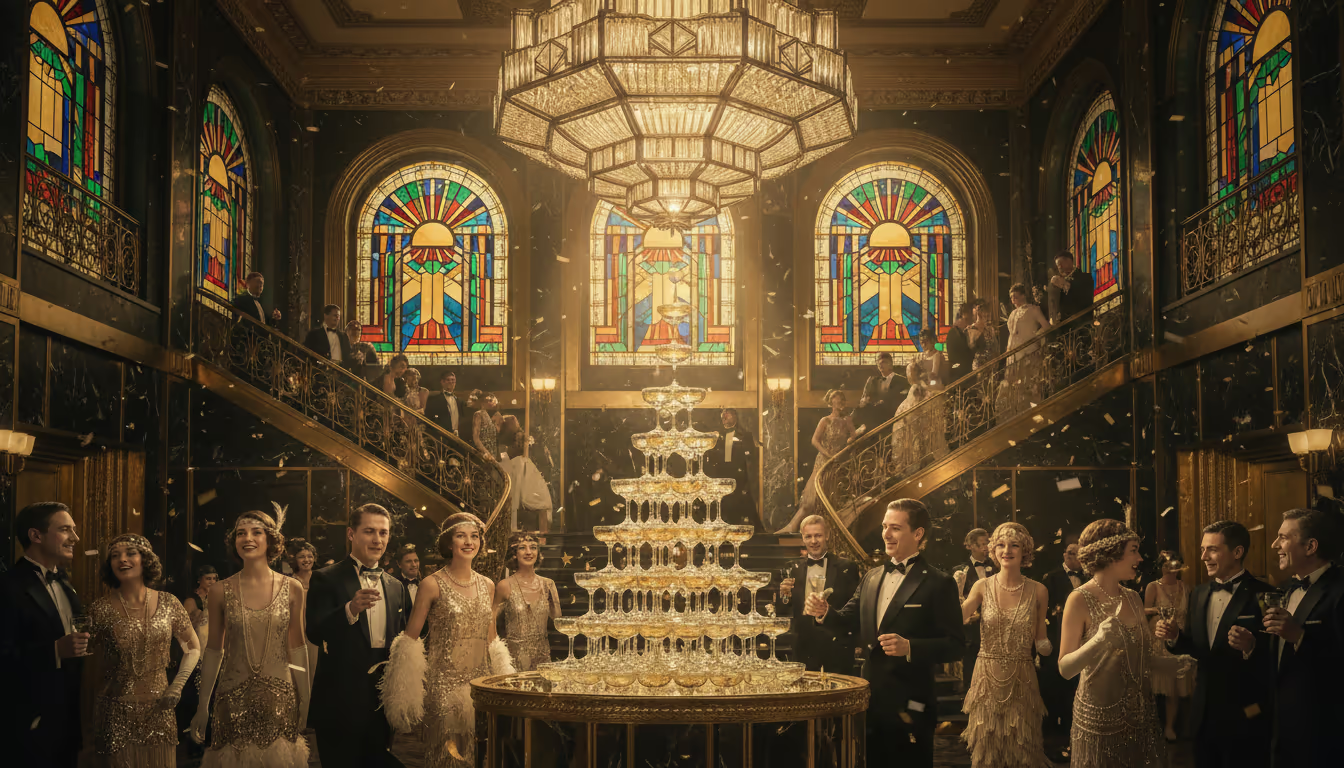
From imposing skyscrapers to futuristic cities, its legacy is as grand and varied as the style itself, proving its appeal is timeless.
Bring the Art Deco Aesthetic to Your Mac
Alright, theory's over. You're going to stare at your Mac for hours anyway; it might as well look like the lobby of the Chrysler Building while you do it. This is where the aesthetic moves from museum piece to actual living thing in your workspace, translating all that focused sophistication into your digital environment.
This isn't about grabbing some static JPG from a museum website. It's about capturing the dynamic, forward-looking energy of the era. A live wallpaper can turn your screen into a piece of living art, making the simple act of checking email feel a little more like an event. See our guide to creating a cohesive MacBook wallpaper aesthetic for more on matching your setup to a specific mood.
The trick is to zero in on the core elements. Look for wallpapers that lean into bold geometry, high-contrast colors, and a real sense of refined opulence. The right choice makes your desktop feel intentional, not accidental.
You're not just setting a background; you're curating an environment. And honestly, your Mac deserves better than the default mountain range.
That's the entire idea behind gifPaper for Mac. I built it because I wanted my own digital space to feel as thoughtfully designed as my physical one. It's the first and only app that lets you set a seamlessly looping 4K video as your native lock screen wallpaper. You know, the kind that elegantly slows to a stop as you unlock, exactly like Apple's own Aerials—but with a wallpaper you actually chose.
It also sets your desktop and screen saver from the same library of 150+ wallpapers. Most other wallpaper apps feel like clunky overlays. Because gifPaper is built using Apple's native wallpaper format, it's lightweight and perfectly integrated. Your Mac thinks these wallpapers are its own.
By default, the desktop shows a beautiful still frame to save resources. But if you want the full effect while you work, you can toggle on the full video animation anytime. The art deco style, as it happens, is built on that very same principle of deliberate, beautiful design.
For a launch price of $4.99—a one-time purchase, not a subscription—you can give your Mac the upgrade it's been waiting for. There's a 7-day free trial with no credit card required, so you can explore the entire collection and see how it feels. Download gifPaper and finally make your screen something worth looking at.