Retro Futurism: A Guide to the Future That Never Was
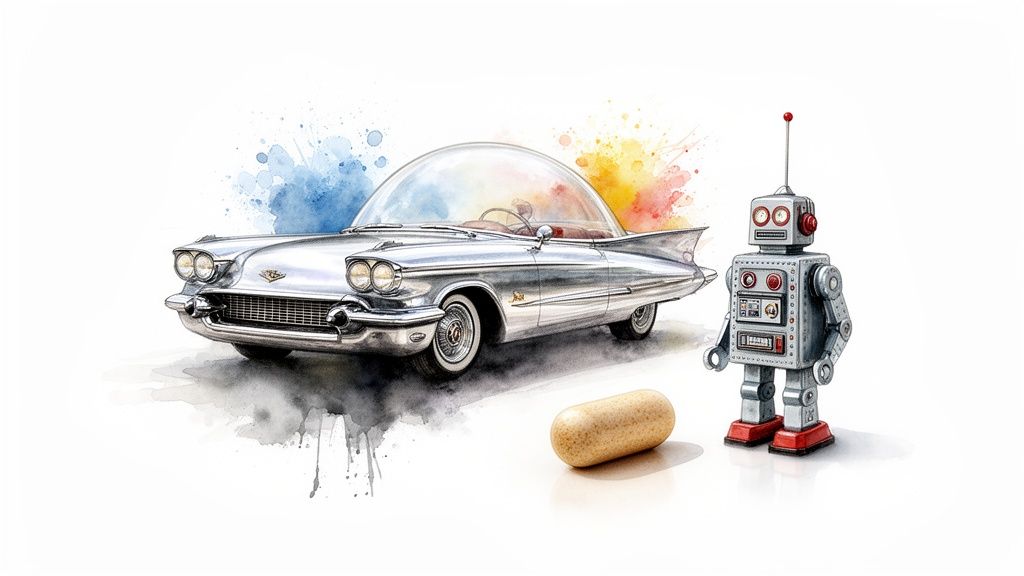
Retro futurism is that wonderfully clunky vision of the future imagined by people in the past. It's the aesthetic of predictions frozen in time—think flying cars that look like 1950s Cadillacs, robot butlers with antennae, and entire meals served in a single pill. It's the future, as seen from a past that was brimming with a kind of earnest, analog optimism.
What Is Retro Futurism, Anyway?
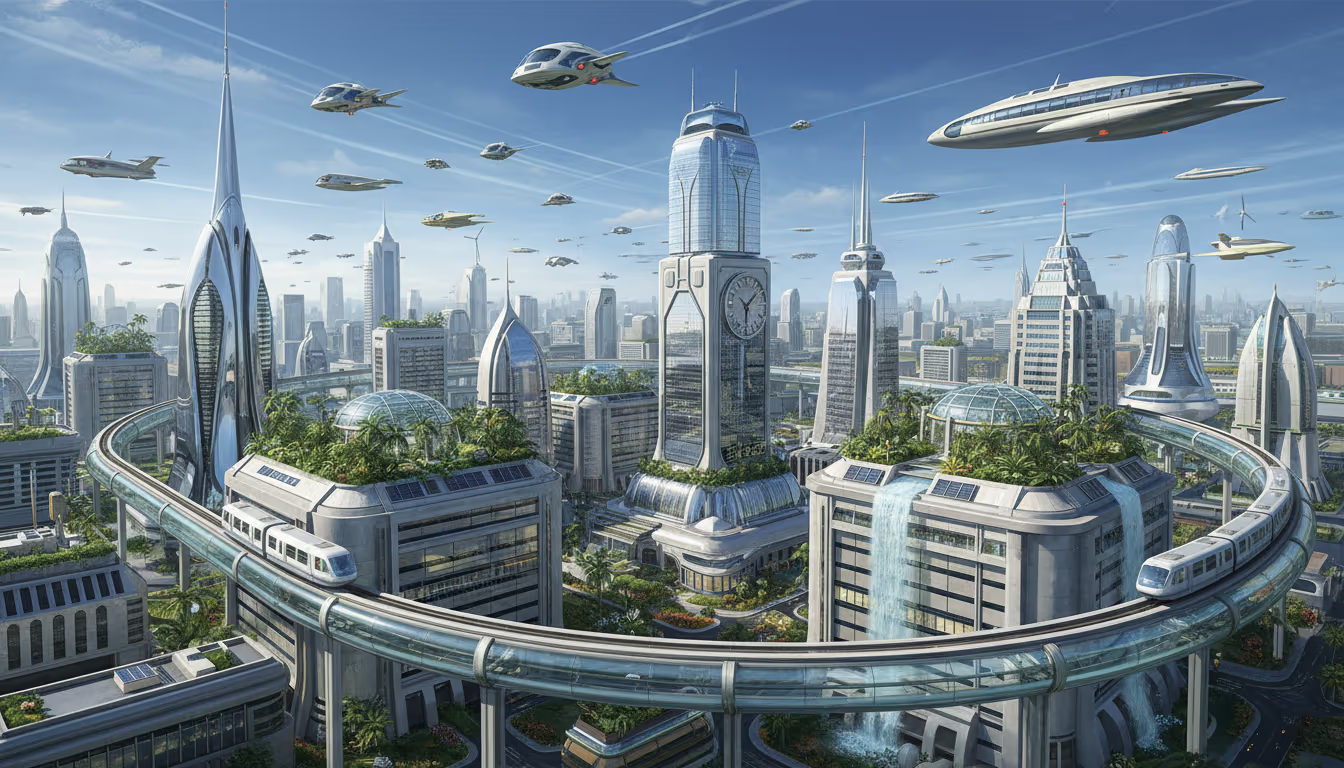
Retro futurism isn't just a style; it's a feeling. It's the delightful absurdity of a world filled with personal jetpacks and bubble-domed cities, all designed with the materials and sensibilities of the 1950s or '60s. These weren't just idle fantasies; they were earnest, optimistic predictions about the utopian world of tomorrow, as imagined at a World's Fair.
The real charm of retro futurism art is in its tangible, almost handmade quality. Unlike today's sleek, minimalist, and often invisible tech, retro-futurist worlds are full of:
- Chunky hardware: Lots of polished chrome, warm brass, and thick Bakelite dials.
- Visible mechanics: Gears, levers, and vacuum tubes are proudly on display, not tucked away behind a smooth surface.
- Optimistic shapes: Swooping curves, dramatic fins, and bold geometric patterns borrowed from Art Deco.
This aesthetic is less about accurately predicting the future and more about celebrating the act of dreaming about it. It's a self-aware nod to the gap between those grand, analog visions and our current reality of just trying to remember our passwords. The appeal is in the clunkiness—the bold optimism that feels both naive and inspiring. It's a future that feels handmade, not algorithmic.
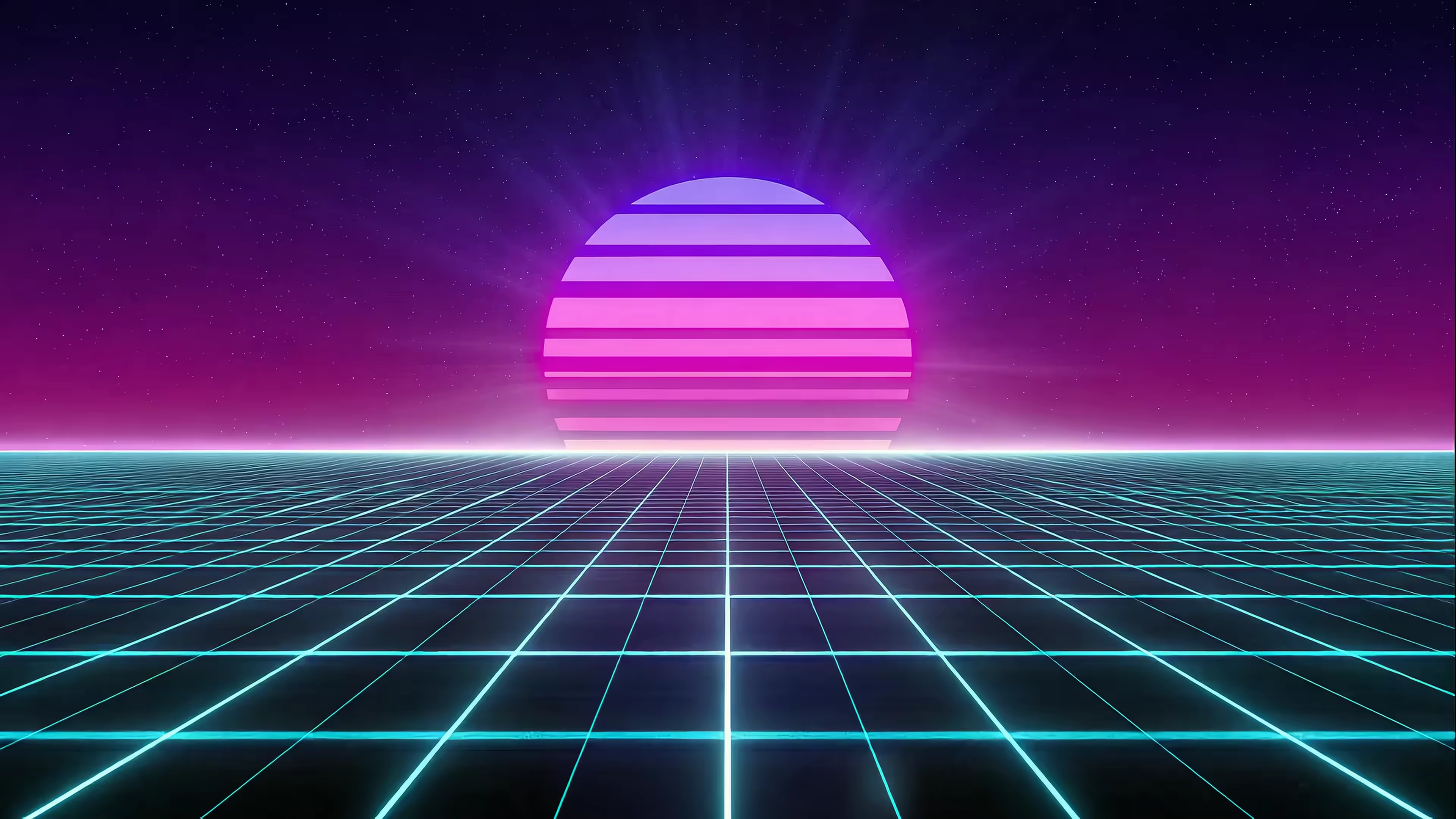
These old visions of the future often overlap with newer aesthetics that are nostalgic for them. A crucial distinction exists between retro-futurism (old visions of the future) and synthwave (new nostalgia for old futures). They're related, but not identical. The same goes for the vaporwave aesthetic. Retro futurism is the source material; the others are modern tribute acts.
The Golden Age of Tomorrow's Optimism
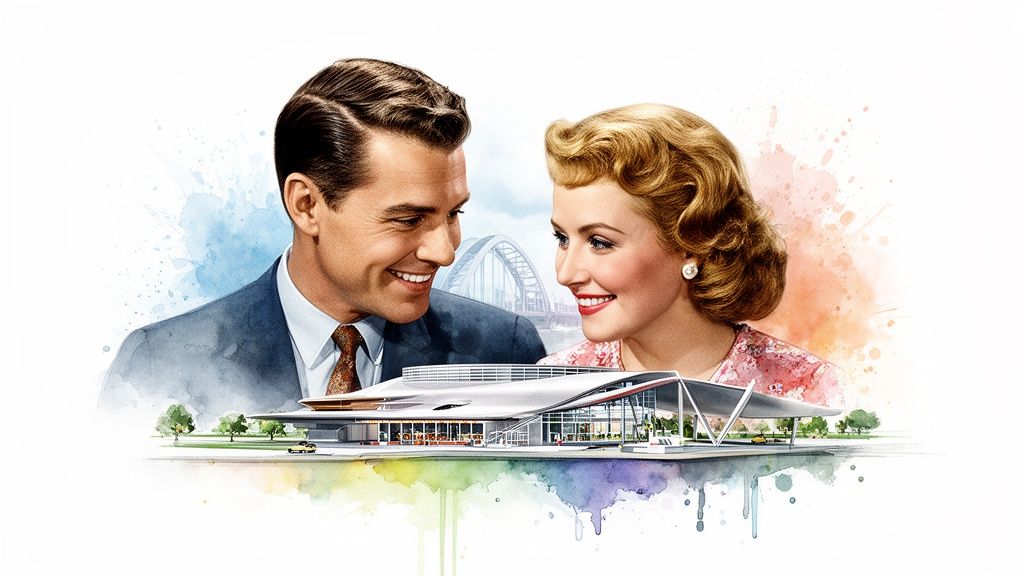
The optimistic flavor of retro futurism didn't just appear out of thin air. It was forged in the 1930s to 1950s, a time when people desperately needed an escape from the Great Depression and World War II. Everyone was hungry for a vision of a brighter, automated, and easier future—and pop culture was happy to oblige.
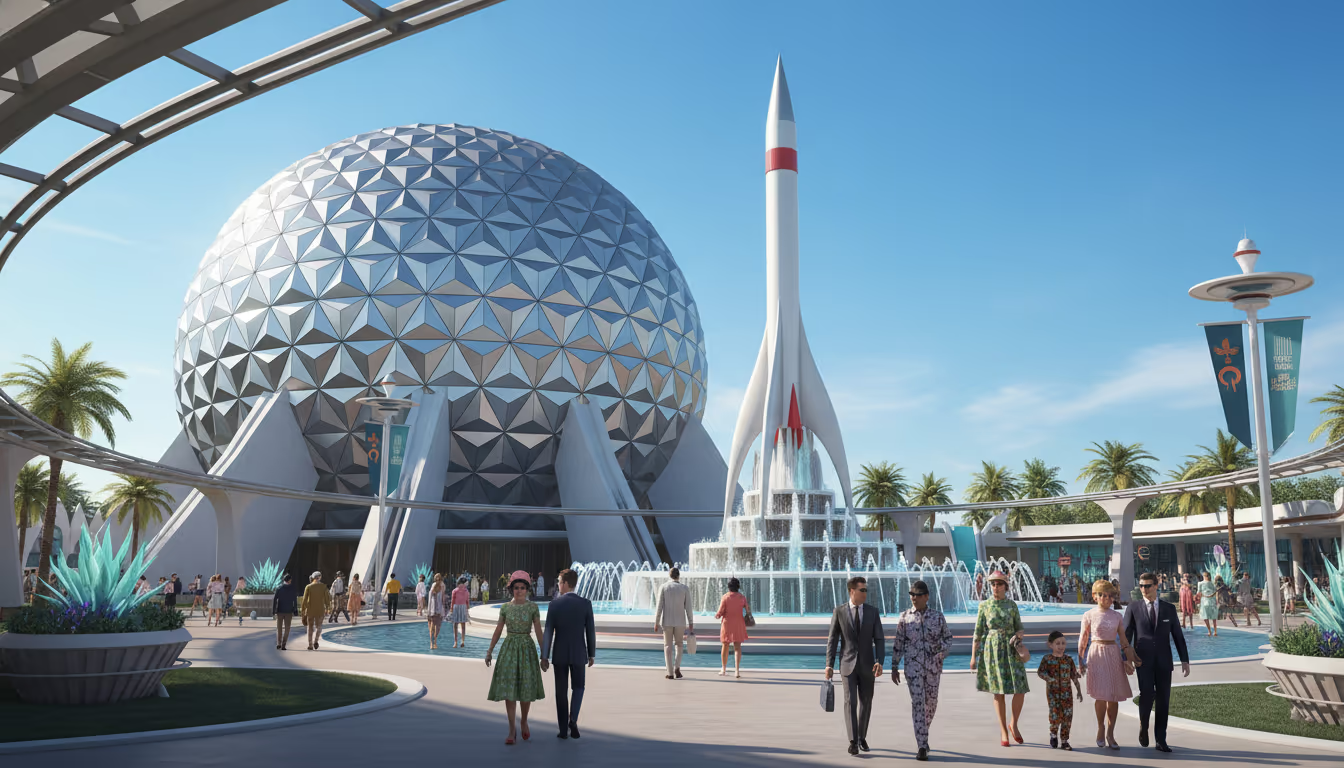
This explosion of hope was on full display at events like the 1939 New York World's Fair, whose "Futurama" exhibit sold millions on the dream of superhighways and streamlined cities. That optimism was built right into the landscape, most famously through Googie architecture.
Googie Architecture and the Atomic Age
Named after a Los Angeles coffee shop, Googie architecture was the Atomic Age and Space Race made into buildings. You'd recognize its signature moves anywhere:
- Upswept roofs and cantilevered structures that looked like they were about to take off.
- Starbursts, amoebas, and atomic models as decorative motifs.
- Bold use of glass, steel, and neon to signal futuristic glamor.
You saw it everywhere, from the swooping roofs of 1950s diners to the iconic Theme Building at LAX. Every building was a billboard for the future, a physical promise that tomorrow would be thrilling, efficient, and full of leisure time. This wasn't just architecture; it was propaganda for a better world.
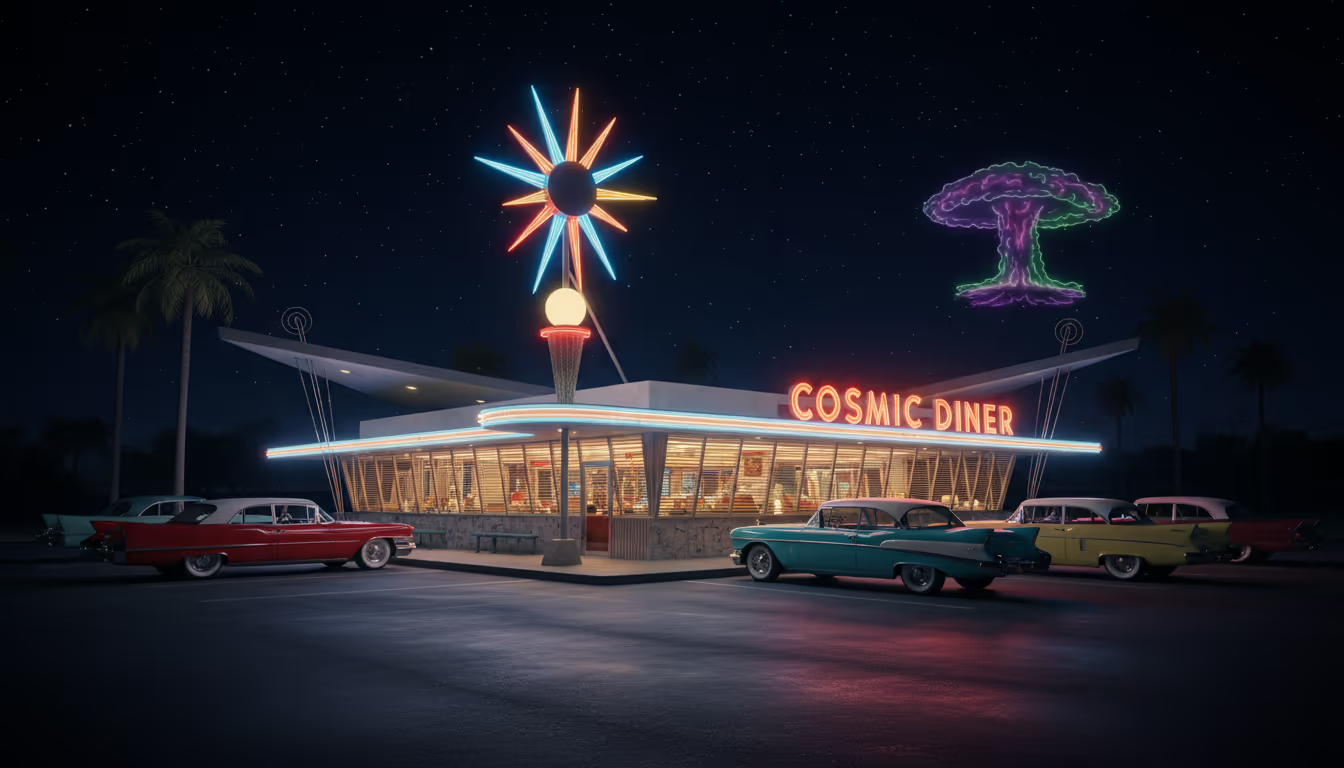
This was a time when the future felt deeply American—a world of chrome, fins, and endless possibilities. The clean lines and mechanical hope from that era are a huge inspiration for many of our space wallpapers, capturing a future you could almost reach out and touch.
Visual Hallmarks of Retro Future Design
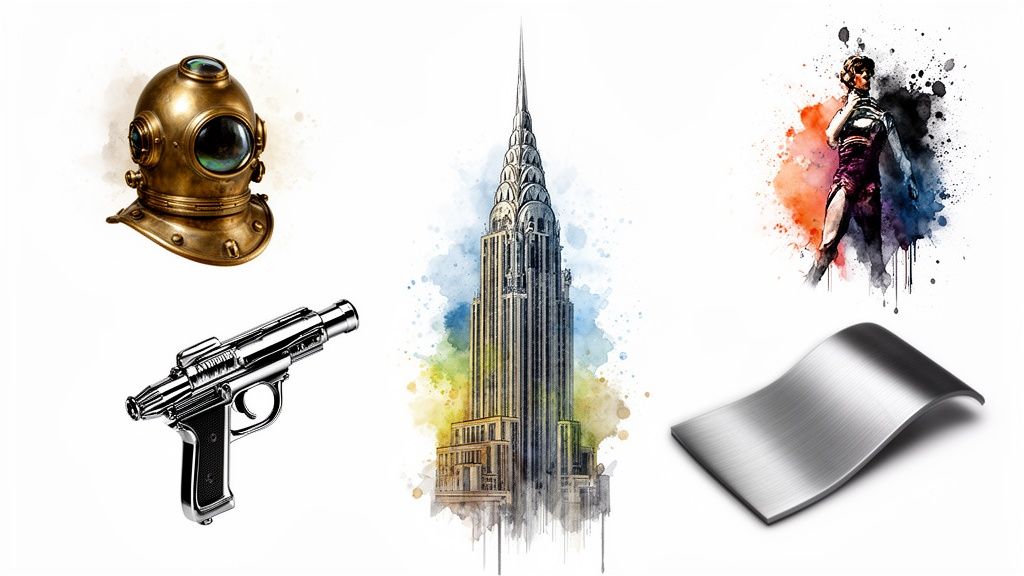
To really get retro futurism, you need to know its ingredients. The whole aesthetic is instantly recognizable because it draws from a consistent playbook of shapes, materials, and motifs. Think of it as a field guide for spotting the past's future in the wild.
The Art Deco Connection
You can't talk about retro futurism without mentioning Fritz Lang's 1927 masterpiece, Metropolis. The film's towering, vertically-oriented cityscapes and grand, geometric structures essentially wrote the visual script for every cinematic sci-fi city that followed. It wasn't just a film; it was an Art Deco aesthetic fever dream that defined the look of a high-tech, socially stratified future.
The strong symmetry, lavish ornamentation, and bold geometric forms of Art Deco were translated into a language of future technology. This DNA is everywhere in retrofuturism, lending it a sense of history and grandeur.
Materials and Motifs
The material palette is a dead giveaway. Forget today's matte black—retro future design is all about gleam and polish. The heavy use of chrome, polished brass, and Bakelite creates a world that feels both futuristic and tangibly mechanical.
This aesthetic also loves specific, recurring motifs:
- Bubble helmets: The universal symbol for "I am in space now." Non-negotiable.
- Raygun Gothic: A term coined by author William Gibson, it describes the fusion of sci-fi themes with Gothic architectural shapes, like rocket fins that look like cathedral spires.
- Concentric circles: You'll see them on everything from control panels to architectural details, implying radar, radio waves, or some kind of cosmic energy.
Beyond bold colors and sleek shapes, distinctive typography like a playful bubble font style is also a crucial part of the look. You can find more of this vibrant, high-contrast energy in our guide to the neon aesthetic.
Syd Mead: The Man Who Drew Tomorrow
You can't discuss retrofuturism without honoring Syd Mead. Often called "the visual futurist," his work on films like Blade Runner, Tron, and Aliens didn't just decorate sci-fi sets—it built the visual language of how we imagine tomorrow. He was the architect of worlds you desperately wanted to visit, even if they were perpetually rainy and full of grumpy replicants.
Before Hollywood, Mead was an industrial designer for companies like Ford. This foundation gave his futuristic concepts a sense of grounded realism. His genius was making the fantastic feel functional. You believed his flying "Spinner" cars worked because they looked like they were designed by an engineer, not just an artist.
Mead's signature was creating impossibly detailed, deeply atmospheric environments. His cityscapes were complex ecosystems with their own internal logic. That meticulous detail is what makes his art so timeless, and why he's a patron saint of the whole space aesthetic.
Bringing the Retro Future to Your Mac
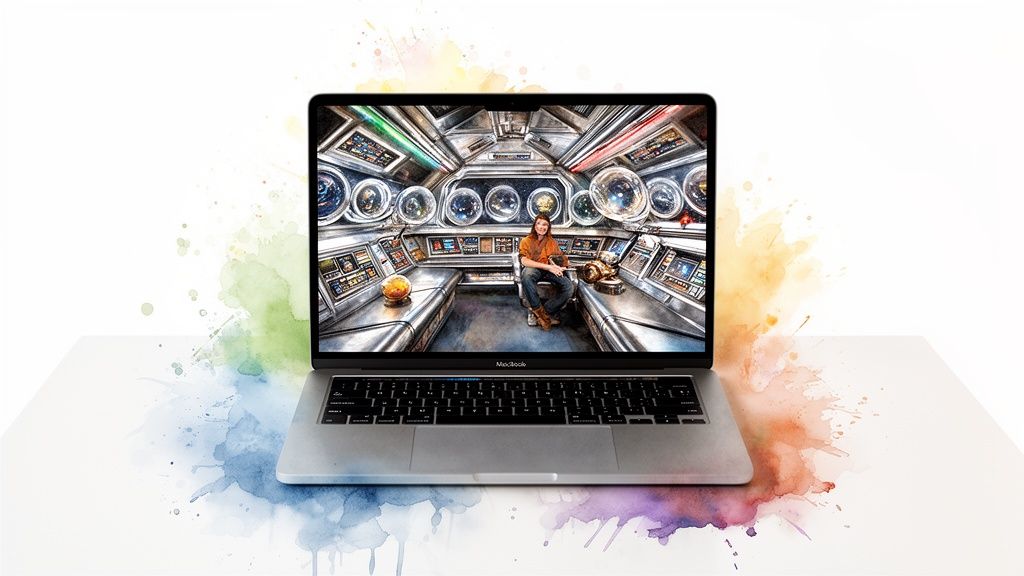
All this talk of rayguns and atomic-powered cities is fun, but theory is one thing. Living in it is another. Your Mac is the perfect canvas for a personal slice of the future that never was. You stare at this screen for hours a day; it might as well look like the bridge of a starship from 1979.
This is where you go from appreciating retrofuturism art to actually living in it. You're not just changing a static desktop picture. You're giving your daily routine a dose of handmade, analog charm with a living, breathing scene.
A Native Lock Screen Experience
Imagine waking your Mac, not to a boring static image, but to a living world. That's the entire point of gifPaper for Mac. It's the first and only app that uses Apple's native Aerial format—the same system Apple uses for its own video wallpapers—to set seamlessly looping scenes on your lock screen.
This isn't a clunky overlay like other wallpaper apps. When you wake your Mac, the video plays smoothly and slows to a stop as you unlock, exactly like Apple's own dynamic wallpapers. It's a small detail that makes a huge difference, turning a mundane action into a tiny moment of sci-fi wonder. Your Mac's lock screen and desktop become a single, cohesive portal to another time. One action sets both.
You're going to look at your Mac for hours anyway. Might as well make it pretty.
The gifPaper wallpaper collection is packed with retrofuturism art, drawing from every era of the aesthetic. From the polished Art Deco towers in the space wallpaper collection to the neon-drenched cityscapes in the neon wallpaper category, there's a flavor of the past's future for everyone. For a deeper look at the setup, the guide on how to change your Mac wallpaper covers all the basics.
This is about turning the most-viewed screen in your life into something that sparks a little joy. It's an upgrade from a picture to a place.
Alright, you've gone deep on the charming absurdity and stylish optimism of retrofuturism. Now it's time to stop just admiring the past's future and actually bring it home to your Mac. This is exactly why I built gifPaper in the first place.
The app is a one-time purchase of $4.99—that's the current launch price—not another subscription to manage. It also comes with a 7-day free trial with no credit card required, plus a 30-day money-back guarantee. You should be able to try the whole thing without reaching for your wallet.
For less than a fancy coffee, you can make your Mac look like the inside of Barbarella's spaceship or a city from a future dreamed up in 1927. That coffee won't do nearly as much for your aesthetic.
This is about making the hours you spend at your computer a little more enjoyable and a lot more stylish. Ready to pick your favorite future?
Download the free trial of gifPaper for Mac and turn your desktop and lock screen into a living piece of retrofuturism. Get started at gifpaper.com/macos-app.