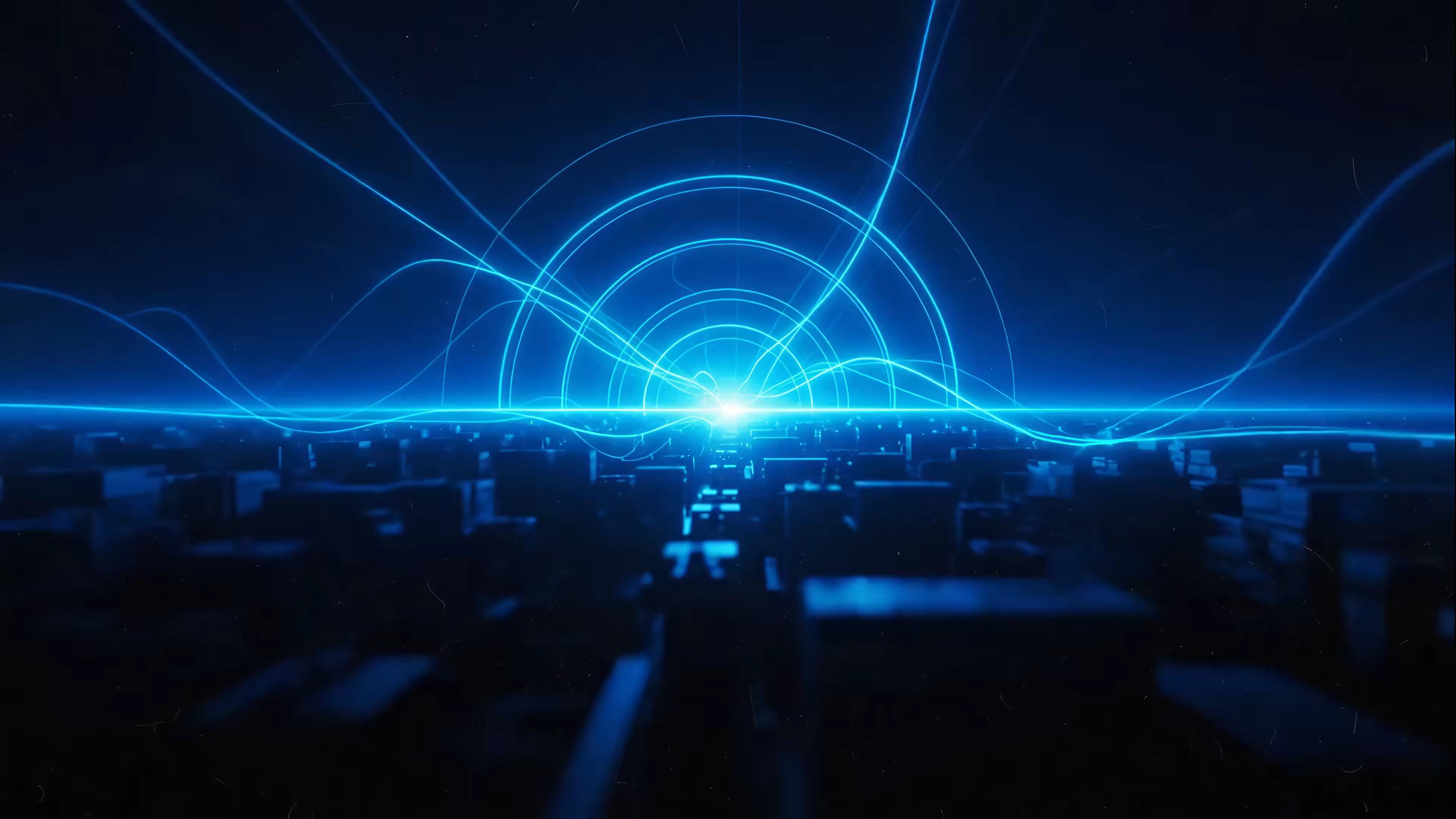
The Neon Aesthetic: A Guide to the Art of Electric Glow
The neon aesthetic is a visual style built around the hypnotic glow of neon lights, almost always set against dark backdrops to create moody, atmospheric scenes. It's a look that evokes rain-soaked city nights, retro-futurism, and that specific feeling of quiet solitude you only find in a metropolis after midnight.
Think of the dense, dazzling streets of Blade Runner, the vintage signs of Hong Kong's Kowloon Walled City, or the cozy vibe of a lofi hip-hop stream. It's a visual language that speaks of both the future and the past, feeling high-tech and nostalgic all at once.
The Unmistakable Allure Of The Neon Glow
There's a feeling that hits you when a neon sign cuts through the darkness. It's not just light; it's a living, humming color that paints the wet pavement with strokes of magenta and electric blue. That hypnotic pull is the very soul of the neon aesthetic.
It's a style that has captivated artists, filmmakers, and anyone who's ever found a strange comfort in the lonely glow of a city at night. This entire vibe is built on a century-old technology—noble gas trapped in glass tubes—that has somehow become a modern symbol for everything from a cyberpunk dystopia to the focused calm of a lofi study session.
From Gas Tubes to Digital Glow
Funnily enough, most of what we call the "neon aesthetic" today isn't made with actual neon gas. It's usually modern LEDs, meticulously designed to mimic that signature warm, fuzzy bloom of light.
The original name stuck because it perfectly captures a feeling—the texture of the light itself. The word "neon" became shorthand for the warm glow against dark streets. This style is a powerful tool for setting a scene, which is the whole point of good mood lighting in any context.
This entire aesthetic validates a simple truth: you're going to be staring at your screen for hours anyway. It might as well look like something beautiful, something with a mood.
Over the rest of this article, I'll trace the journey of this captivating light—from its invention in a Paris lab to its starring role in science fiction, and finally to the digital glow on your Mac screen. Because a well-chosen wallpaper isn't just decoration. It's an environment.
A Brief History of Liquid Fire in a Tube
Before it was an aesthetic, neon was just an element. A noble gas, perfectly happy being left alone. Then, in 1910, a French engineer named Georges Claude decided to do something wonderfully strange: he trapped it in a glass tube and shot a jolt of electricity through it. The result was a startling, liquid-fire red that would go on to define the look of the 20th century.
This wasn't just a lab curiosity; it was accidental art. It only took two years for the world's first commercial neon sign to light up a Parisian barber shop, and from there, the glow spread like a rumor.
From Paris to Times Square
The adoption rate was staggering. By 1923, a car dealer in Los Angeles had imported the technology, and by 1924, Times Square had its first glowing advertisement. Within a decade, neon transformed American cities into canyons of vibrant light. This wasn't a slow burn; it was an explosion of color that quickly became synonymous with progress, modernity, and the thrilling hum of urban life. You can read more about neon's incredible invention timeline from the historians at Neon Signs Now.
This rapid cultural takeover—from a lab experiment to the visual heartbeat of a metropolis in less than 20 years—feels a lot like how digital aesthetics spread today. Some ideas are just too good to ignore.
The Rise, Fall, and Rise Again
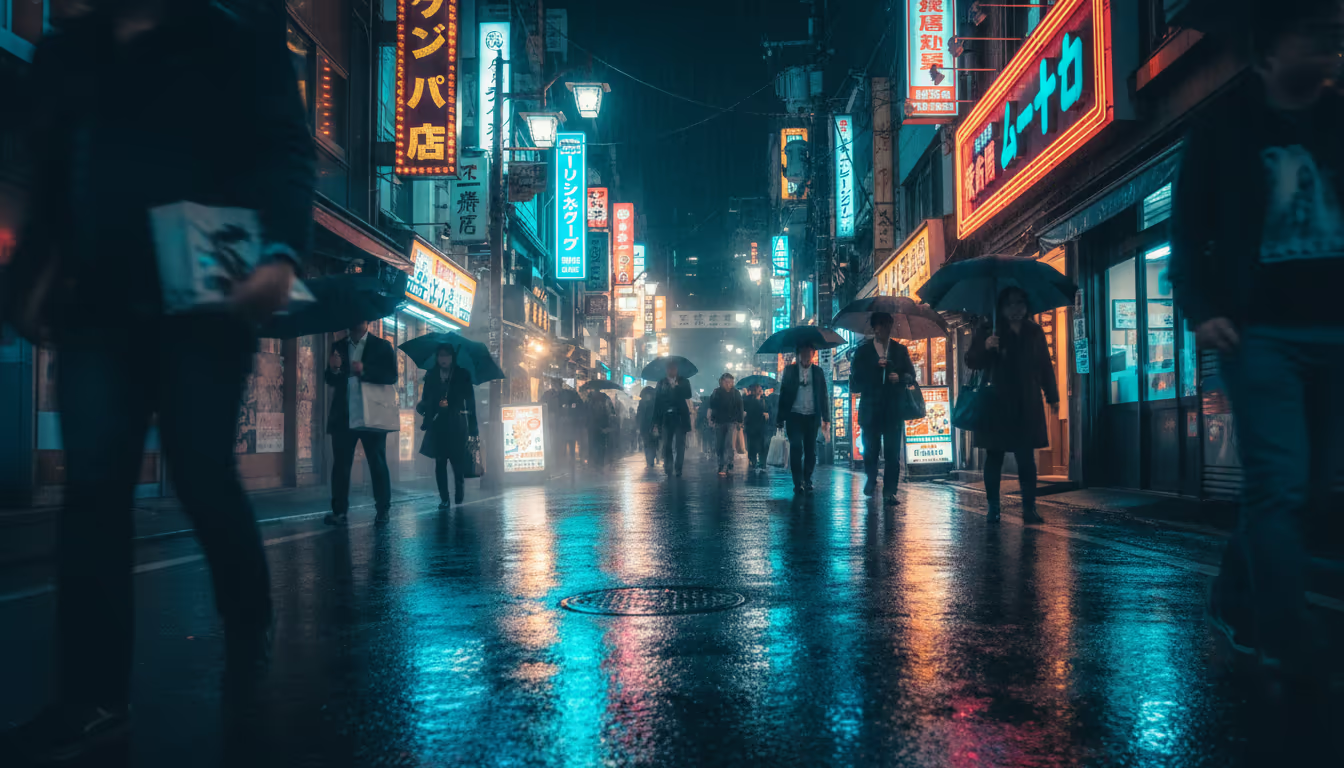
Neon's golden age burned bright through the 1930s and 40s, defining the look of cities from Tokyo's Kabukichō to Hong Kong's Kowloon. It was the look of the future, the glow of optimism. But by the 1960s, the mood shifted.
As cities changed, neon signs started to look less like progress and more like decay. They became shorthand for dive bars, seedy motels, and urban blight. The once-futuristic light was now a relic, a flickering ghost of a bygone era. For a while, it seemed like its story was over.
But aesthetics, like all good stories, love a comeback. What was once seen as dated became retro. What was once a symbol of decay became a symbol of authenticity.
The very things that made neon fall from grace—its association with the gritty, forgotten corners of the city—are what make it so compelling now. It carries a history of dreams, decline, and rebirth in its warm, electric hum. It's a timeless classic precisely because it spent so much time being a relic.
This history is why the glow feels so potent. It's not just a color palette; it's a narrative of innovation and nostalgia, all captured in a single, mesmerizing light that refuses to fade away.
The Visual Hallmarks Of The Neon Aesthetic
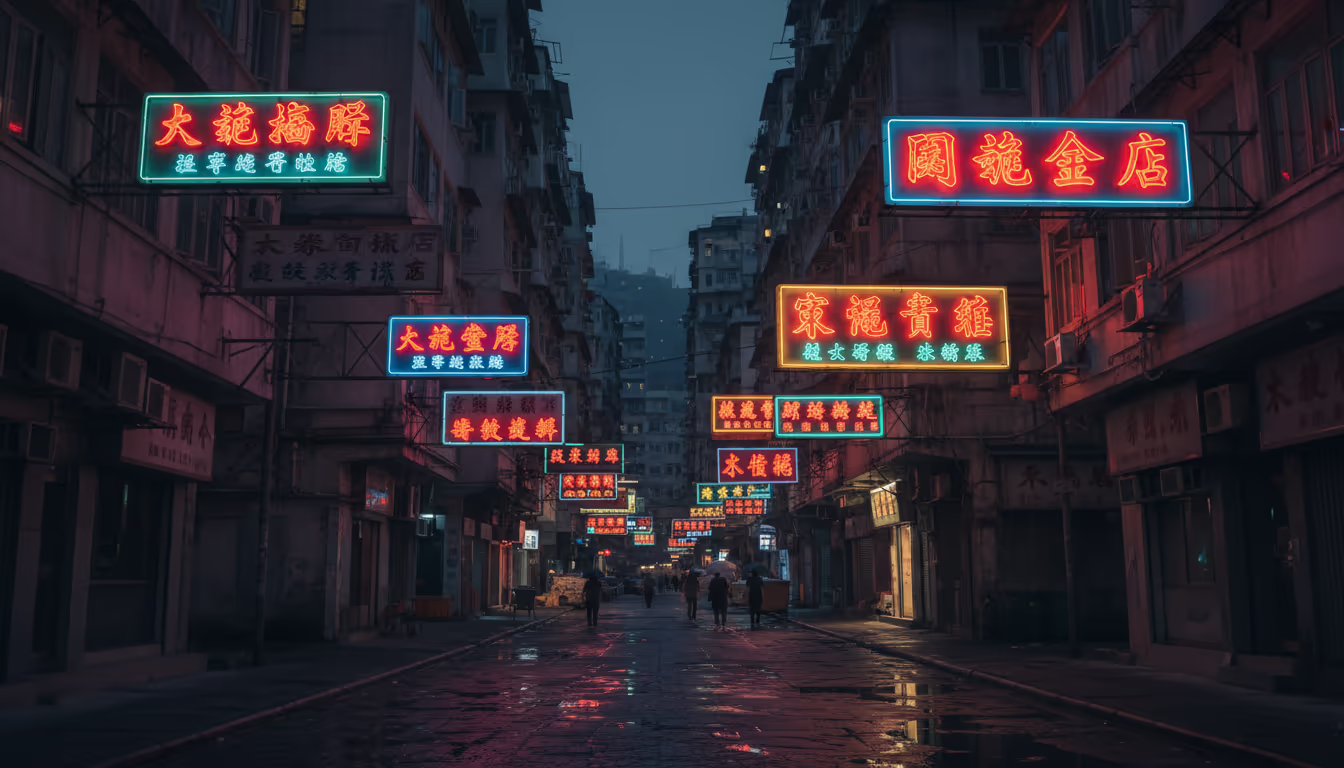
The neon aesthetic isn't just one thing. It's a very specific recipe of light, shadow, and texture that comes together to create a mood. At its heart is a high-contrast color palette: think electric blues, hot pinks, vibrant magentas, and deep purples clashing against near-total darkness. The best dark wallpaper often uses neon for exactly this reason.
This isn't just a stylistic choice; it's a deliberate technique to make the light pop. The intense contrast creates a phenomenon called halation—that soft, fuzzy aura that seems to bloom around a bright light against a dark background. It's the signature neon glow that makes the light feel alive, almost like you could reach out and touch it.
To really nail this look, you have to understand its core components.
Core Elements Of The Neon Aesthetic
This table breaks down the key visual components that create the signature look and feel of the neon aesthetic.
| Element | Description | Why It Works |
|---|---|---|
| High-Contrast Colors | Electric blues, hot pinks, and deep purples set against inky blacks or deep navy. | Maximizes the glow effect (halation) and creates dramatic, eye-catching scenes. |
| Reflective Surfaces | Wet asphalt, rain-slicked streets, puddles, and glass. | Doubles the light sources, scattering color and drenching the entire environment in a vibrant glow. |
| Urban Textures | Gritty brick walls, metal grates, and fire escapes. | Provides a rough, tactile canvas that contrasts beautifully with the smooth, ethereal quality of the light. |
| Signature Typography | Flowing cursive scripts and bold, stylized sans-serif fonts. | A direct nod to the hand-bent glass tubes of original, physical neon signage. |
Each piece plays a crucial role. Without the dark backgrounds, the colors wouldn't feel so electric. Without the wet surfaces, the light would just be a static sign instead of an entire atmosphere.
Why Rain Is The Perfect Partner For Neon
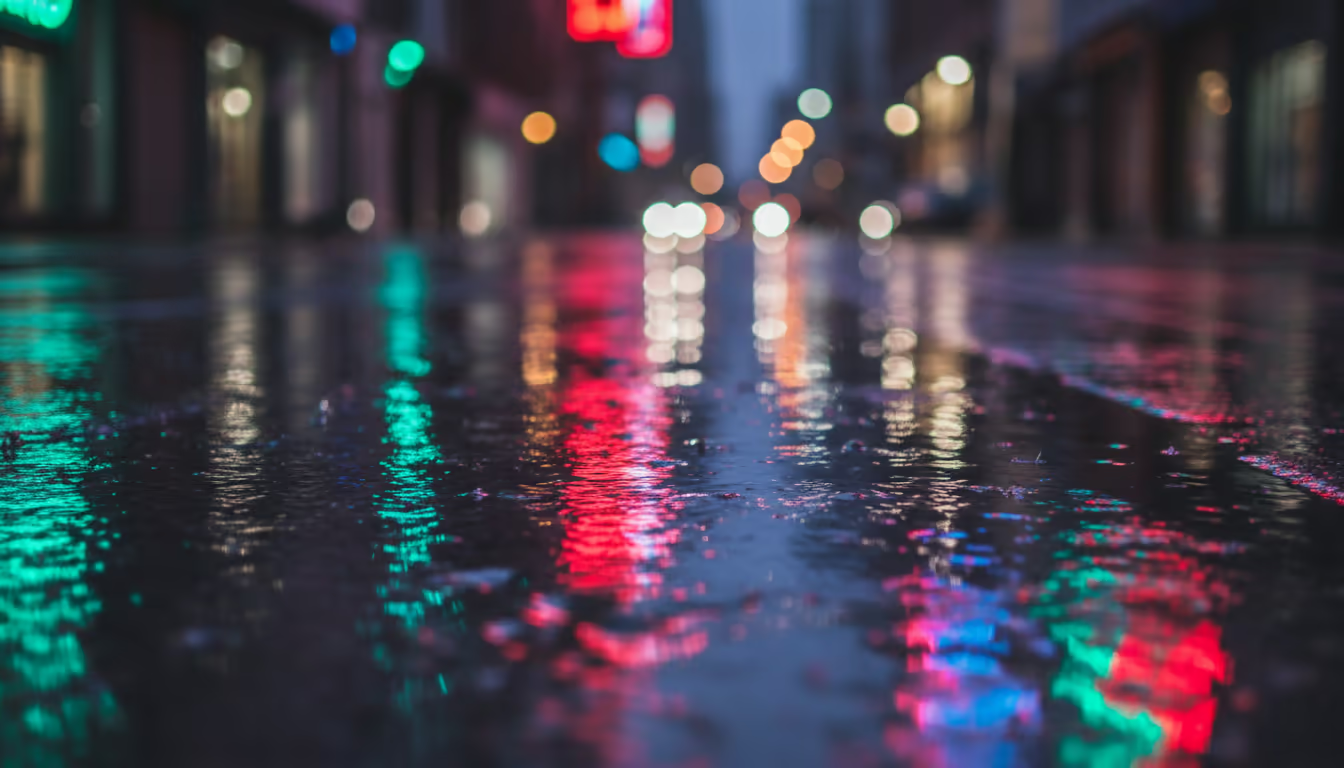
You'll notice rain is a frequent guest star in neon art, and for good reason. Water is the ultimate amplifier for light. Wet surfaces like asphalt, brick, and glass act as imperfect mirrors, smearing and stretching the light across the scene.
Every puddle and rain-slicked street effectively doubles the number of light sources. The light doesn't just illuminate; it refracts, scattering and deepening the color saturation until the entire environment is drenched in that signature electric glow.
A single neon sign in dry weather is just a sign. The same sign in the rain becomes a full-blown environment, painting every surface with reflected light.
This careful combination of color, light, rain, and texture is what makes the style so complete. It's not just "bright lights at night"—it's a full visual language. You can see these principles in action all over the neon wallpaper space, especially in the purple wallpaper options where the glow is everything.
How Blade Runner Defined A Generation Of Neon Noir
If real neon signs gave the aesthetic its light, Ridley Scott's 1982 film Blade Runner gave it a soul. Before this movie, neon was just an architectural detail, a sign in a shop window. After Blade Runner, it became a complete visual language for a very specific kind of future: dense, beautiful, lonely, and perpetually soaked in rain.
Blade Runner basically invented what we now call neon noir. It took the glowing, chaotic energy of its real-world inspirations—like Tokyo's Kabukichō district and Hong Kong before the demolition of Kowloon Walled City—and splashed it all over a dystopian Los Angeles. The film's world wasn't just decorated with neon; it felt like it was built from it.
A Future Painted With Light
The real genius of Blade Runner's look is how it uses light to tell a story about feeling alone in a crowd. That giant, animated geisha on the side of a skyscraper isn't just an ad. She's a colossal, beautiful, and totally impersonal face looking down on the tiny, isolated figures below.
And the constant rain? It's not just for mood. It turns every surface into a mirror, endlessly reflecting the commercial glow and trapping the characters in a maze of artificial light. This is the emotional core of the whole neon aesthetic: the clash between visual beauty and a deep sense of urban melancholy.
The film cemented a powerful idea: the more visually dazzling and technologically advanced a city gets, the more isolated its people can feel. The neon glow is both captivating and cold.
This visual blueprint became the foundation for countless future worlds. It's hard to imagine works like Akira, Ghost in the Shell, or The Matrix looking the way they do without Blade Runner paving the way. The film provided a universal shorthand for "the future," one that's still being copied and remixed four decades later.
The Birth Of An Enduring Vibe
The look of Blade Runner resonated so deeply it started bleeding into other styles. Its blend of high-tech grit and retro-futurism laid the groundwork for entire movements that followed. You can see its DNA all over the moody cityscapes of the synthwave aesthetic, which pairs those neon visuals with an 80s-inspired electronic soundtrack. It also heavily influenced the cyberpunk aesthetic and even trickled down into the vaporwave aesthetic.
The film's influence is so total that for many people, the neon aesthetic is the Blade Runner aesthetic. It's a world where technology has outpaced humanity, leaving behind a beautiful, glowing ruin. It proves that neon is more than just pretty lights—it's a storytelling device, a mood board for the future we imagined back in the 80s, and a vibe that just refuses to fade.
The Modern Revival and The Dying Art of Neon Bending
The neon aesthetic is having a moment. Thanks to places like Instagram and TikTok, that electric glow has found a whole new generation of fans, flooding feeds with moody cityscapes and vibrant art. It's a full-blown revival, turning what was once a symbol of urban decay into a sought-after style for the digital age, a key component of the broader night aesthetic.
There's just one small irony here: while the idea of neon is more popular than ever, the actual craft of making it is quietly fading away. The art of neon bending—the painstaking, delicate process of heating and shaping glass tubes by hand—is a rare and specialized skill. We can fake the look with LEDs and pixels, sure, but the original craft is a dying art, practiced by a dwindling number of dedicated artisans.
That contrast is what makes today's love for neon so interesting. We're all celebrating a digital echo of a disappearing physical reality.
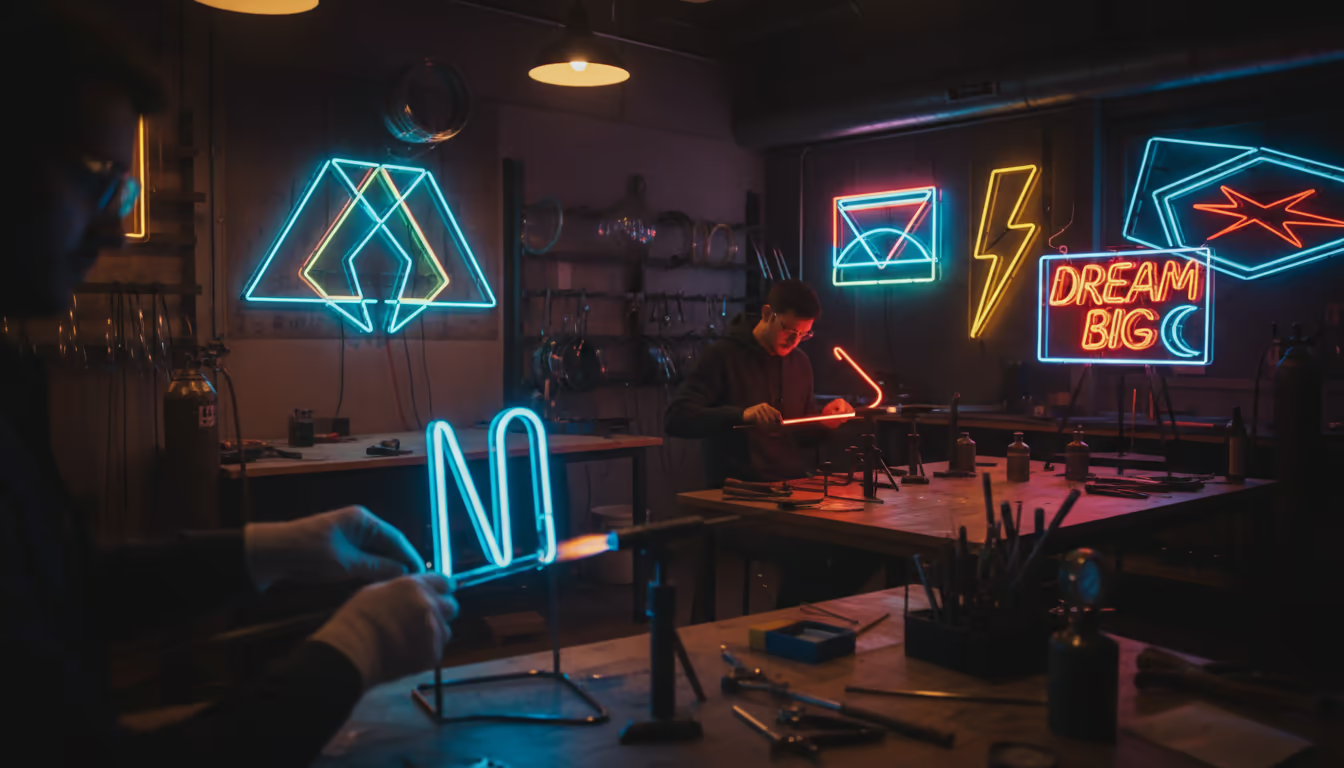
From Artifact to Aesthetic
The shift from a humble commercial sign to a cultural artifact didn't just happen. This modern revival has roots stretching back decades, really kicking off in the 1980s as people began to see the historic and artistic value in those old glowing signs. The founding of the Museum of Neon Art in 1981 was a huge moment, officially framing neon as something worth preserving.
That recognition helped legitimize the craft and paved the way for its comeback. By the 2010s, neon had fully transformed from an urban eyesore into a vintage treasure. Collectors even started setting up open-air sign parks as tourist attractions. You can see the whole journey laid out in this comprehensive neon history timeline.
A Full-Circle Moment
Today's neon aesthetic feels like a full-circle moment. It's a sincere appreciation for the craftsmanship and nostalgia baked into those glowing tubes. For those of us who spend days in front of a Mac, neon wallpapers offer that perfect blend of retro cool and modern style. The lights that once advertised diners and casinos now light up lofi study playlists and aesthetic mood boards.
What was once cutting-edge, then became a relic, is now timeless. The appreciation has evolved from ironic retro-cool into a genuine love for vintage craftsmanship.
Choosing a high-quality live wallpaper from a collection like the neon wallpaper gallery is a way to take part in this revival. It's a nod to the art form's entire journey—from the artisan's workshop to the glowing pixels on your screen—and brings a little piece of that history and artistry right into your own digital space.
Bring The Neon Glow To Your Mac
You've seen the history, from Georges Claude's lab to its starring role in Blade Runner. You get what makes the neon aesthetic tick. Now you can actually live in it.
Let's be real: you're going to stare at your Mac for hours anyway. It might as well look incredible.
This is where gifPaper for Mac comes in. I built it to be the best way to get the neon aesthetic on a Mac, not just another wallpaper app. Other apps often feel like a clunky overlay, but gifPaper is the first and only app that uses the same native system Apple built for its own video wallpapers.
More Than Just A Pretty Picture
The whole idea was to capture the constant, subtle motion that is the neon glow.
- Live Lock Screen: Wake your Mac to a living, breathing neon world. It's a piece of kinetic art that slows gracefully as you unlock, turning a mundane action into a small moment of visual satisfaction.
- Desktop & Screen Saver: By default, the desktop shows a beautiful still frame to save resources. A simple toggle brings the full video animation to life. And when you're away, the screen saver turns your idle monitor into a captivating neon display.
- Seamless Loops: Every wallpaper is a perfectly looping 4K scene. Rain falls endlessly, lights pulse with a steady rhythm, and fog drifts through alleys without a single jarring cut. It's the constant hum of a city that never sleeps.
gifPaper's neon wallpaper collection has over 52 options, from moody cyberpunk alleys to vibrant cityscapes. You can find more practical info in the guide on how to get live wallpapers on a Mac.
The whole point is to make your screen a place you actually want to look at. A combination nobody asked for, but everyone secretly needed.
You can try gifPaper for free for 7 days—all features, all wallpapers, no credit card needed. If you like it, it's a $4.99 one-time purchase, not a subscription. It's a direct download, notarized by Apple, because the Mac App Store's rules prevent apps from setting live lock screen wallpapers. A straightforward offer for people who appreciate good design.
Answering Your Neon Questions
People ask a lot of the same questions when they first dive into the world of the neon glow aesthetic. Let's clear up a few of them.
Is Neon The Same As LED?
Nope, they're completely different technologies. Real neon involves electrified noble gases (like, you know, neon) sealed inside glass tubes. It's what creates that classic, warm, continuous glow of a real neon sign.
LEDs, on the other hand, use semiconductors. They're brighter, way more energy-efficient, and can blast out a massive range of colors. The funny part? Most of what we call the neon aesthetic today is actually just clever LEDs doing a really good impression of old-school neon tubes.
What's The Difference Between Neon And Cyberpunk?
Think of it this way: Cyberpunk is the whole movie, and the neon aesthetic is the signature lighting.
The cyberpunk aesthetic is a massive genre that digs into themes of "high tech, low life"—dystopian futures, cybernetic implants, and gritty societal collapse. The neon art style is just the visual language used to tell those stories. It's the signature look of those worlds, like the rain-soaked, glowing cityscapes in Blade Runner. You can absolutely have a neon look without all the cyberpunk baggage, but you can't really have cyberpunk without the glow.
How Does Neon Fit In With Synthwave Or Vaporwave?
They're all cousins in the big, weird family of retro-futurism. They borrow from each other, but the vibe is totally different.
Synthwave grabs the neon aesthetic and pairs it with the soundtrack of an imaginary 1980s action movie. It's all about fast cars, grid lines, and heroic sunsets. Think Drive or Kung Fury. See the synthwave aesthetic for more.
Vaporwave also uses those bright neon colors, but it leans into a much more surreal, glitchy, and often satirical take on 90s internet culture and consumerism. They might share a color palette, but the moods are worlds apart. Check out the vaporwave aesthetic to see the difference.
Ready to bring that iconic glow to your own screen? With gifPaper for Mac, you can set your Mac's desktop, lock screen, and screen saver to a living, breathing neon world. Try it free for 7 days.